



For businesses or investors with advertising and marketing needs, there are typically two options: digital and static billboards.
Different types of billboards deliver different advertising results for businesses. How do these two formats differ? How should businesses choose between them for their promotional campaigns?
The following section provides a detailed introduction to both billboard types to help businesses make a more informed decision.
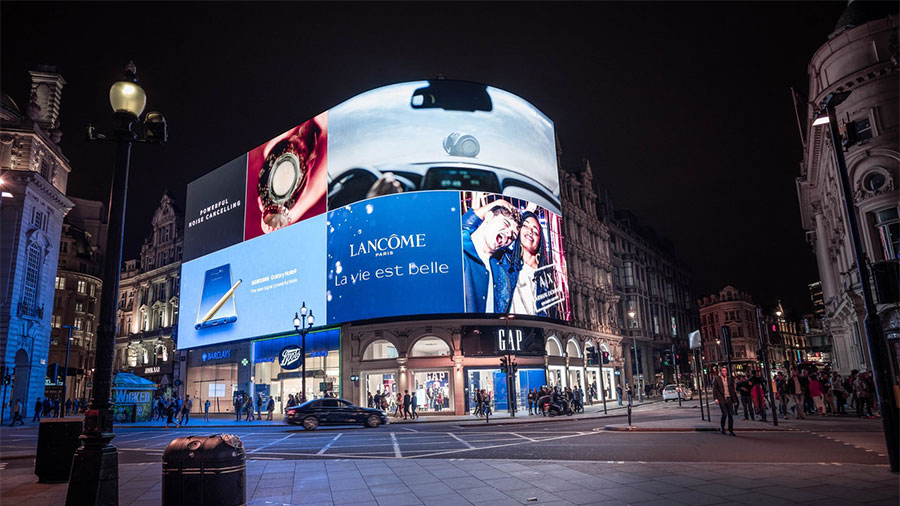
What Is a Digital Billboard?
A digital billboard refers to a digital display that can play advertisements—such as text, images, and videos.
For example, you can connect a large LED display to a content management system to rotate content from different advertisers on the screen according to a set schedule and sequence.
Advertising content can be updated without the need to reprint posters; it is a form of digital signage that displays advertisements electronically.
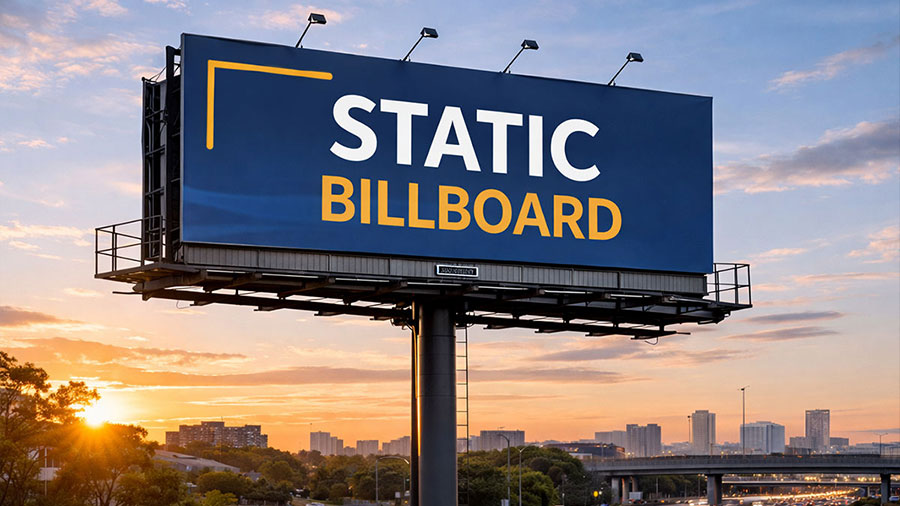
What Is a Static Billboard?
A static billboard, also known as a traditional billboard, is a form of advertising where a single advertisement is printed on plastic and mounted on a building wall or a freestanding frame, remaining unchanged for an extended period (typically weeks or months).
Digital Signage vs. Static Billboards: Key Differences
Advertising Effectiveness
Digital signage utilizes more vivid and visually appealing images, along with the freshness provided by constantly updated content, to attract the attention of a large number of passersby in a short period of time.
Static billboards display the same advertisement continuously for weeks or even months; passersby can see them simply by walking by.
If the billboard is located along a route people frequently travel, repeated exposure creates a sense of familiarity and helps the advertisement stick in their memory.
Digital billboards can display dynamic content, whereas static billboards show completely still images; the visual appeal of static advertisements is far lower than that of dynamic ones.
Creative Flexibility
Digital billboards can be remotely controlled via a control system, allowing ad content to be updated at any time without the need for additional manual labor to reinstall the billboard, effectively enhancing the flexibility of advertising campaigns.
Some high-end digital billboards can also be equipped with custom, advanced control systems that enable scheduled ad placements and responsive playback based on weather and traffic conditions, offering greater convenience.
Updating the content on static billboards requires reprinting new materials and manually removing the old billboards and installing the new ones, which takes significantly more time.
Furthermore, once installed, the same content remains on display for an extended period, resulting in lower creativity and flexibility compared to digital billboards.
Timeliness
The ability to update content at any time allows digital billboards to promptly display and publish information—whether for short-term event promotions, new product launches, seasonal product releases, or promotional offers—making them highly timely.
Replacing static billboard content—from printing to completion—can take days or even weeks, making it impossible to meet the timeliness requirements for sudden or short-term events.
Exposure
Static billboards typically display the same advertisement throughout the entire promotional period. Since changing the advertisement is cumbersome, no other advertisements are rotated or displayed in its place, allowing a single advertisement to achieve long-term, stable exposure.
Digital billboards, with their constantly updated content and vivid dynamic displays, can generate a large volume of exposure in a short period of time; moreover, thanks to their high-brightness features, advertisements remain clearly visible even in direct sunlight during the day or in unlit environments at night.
In addition, digital billboards can be customized in terms of screen size and shape based on the floor area of a specific project, ensuring that the screen dimensions and shape fit the installation environment perfectly.
Furthermore, these billboards can leverage elevated placement to achieve broader exposure.
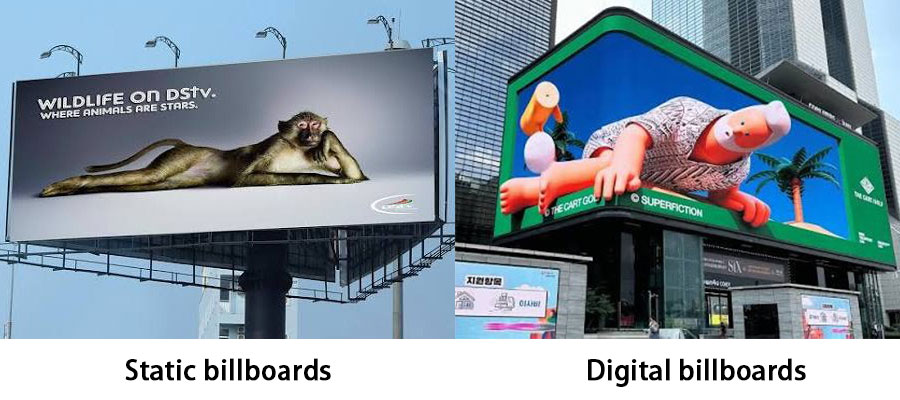
3D Advertising Displays
In addition to standard flat-panel displays, high-end shopping malls and urban areas often utilize naked-eye 3D screens or stereoscopic billboards.
Digital naked-eye 3D anamorphic billboards are achieved by installing two LED screens at a 90° angle or using curved LED panels. These stereoscopic LED panels ensure that viewers can see three-dimensional images without wearing 3D glasses, enhancing the advertising’s appeal and visual impact.
The 3D effect of static advertisements relies on stereoscopic billboards. This effect is achieved through modifications to traditional physical structures—such as relief techniques and three-dimensional panels—combined with advanced technology.
Although the stereoscopic effect and visual impact of these static billboards are slightly less pronounced, they remain a solid choice for low-cost 3D advertising projects.
Return on Investment
According to research from AVIXA and the Digital Signage Alliance, the average return on investment (ROI) for most digital billboards in the first year is approximately 33%, and this figure continues to grow as the billboards remain in use.
Depending on the advertising industry and the scale of deployment, ROI also increases over the lifespan of the billboard.
The article “Billboard Advertising in 2025: 41 Must-Know Statistics” states that the average ROI for static billboards is around 40%.
However, their lifespan is relatively short—typically ranging from a few weeks to a few months, and never exceeding one year. They often need to be replaced due to changes in advertising campaigns or a decline in display quality, unlike digital billboards, which can be used continuously over the long term.
Consequently, their ROI does not increase with usage duration, and the overall return on investment is significantly lower than that of digital billboards.
Materials Used
Static billboards are primarily made of plastic banner fabric. After the advertising content is printed on the fabric, it is secured in one of two ways: either by using a frame to support the banner and display the advertisement, or by attaching it directly to an exposed wall using concrete nails or adhesive.
Digital billboards primarily use LED displays, which are assembled from multiple LED cabinets and contain a large number of electronic components, such as driver ICs, PCB designs, and receiver cards.
Service Life
The service life of static billboards varies depending on the type of vinyl material used and the operating environment. However, standard outdoor static billboards typically last about 1–3 years.
The theoretical service life of digital billboards is 100,000 hours; however, actual service life is subject to environmental factors and natural wear and tear. When used properly and in compliance with regulations, a high-quality LED screen generally has a lifespan of up to 13.5 years.
Digital Billboards vs. Static Billboards: Quick Comparison Chart
| Differences | Static Billboards | Digital Billboards |
| Advertising Effectiveness | Static Display | Dynamic Display |
| Creative Flexibility | Lower | Higher |
| Timeliness | Poorer | Better |
| Exposure | Relatively lower but more stable exposure | Greater exposure and wider reach |
| 3D Advertising Display | Average results | Better results |
| Return on Investment | Higher initially, lower over time | Lower initially, higher over time |
| Materials Used | Polyvinyl chloride (PVC) | LED modules and electronic components |
| Service Life | 1-3 years | Theoretical: 100,000 hours( ≥13.5 years) |
| Cost of Use | Lower production costs, higher operating and maintenance costs | Higher production costs, lower operating and maintenance costs |
| Digital billboards are more expensive for short-term use, while static billboards are more expensive for long-term use | ||
Comparison of Operating Costs Between Digital and Static Billboards
Operating costs consist of three parts: production and installation costs, content updates and operational costs, and ongoing maintenance costs.
Billboard Production and Installation Costs:
The production process for static billboards is simpler, and the cost of the display is lower. The price of outdoor digital printing varies depending on the raw materials used for the banner, ranging from approximately $16 to $86 per square meter.
Digital billboards have a more complex structure and contain more electronic components. Since specific requirements vary by project, the price for a standard outdoor display typically ranges from $500 to $1,500 per square meter.
In terms of installation, static billboards have a simpler structure and can be installed more quickly; digital billboards, however, have a more complex structure with more wiring, requiring a longer installation period.
Overall, digital billboards involve higher upfront costs compared to static billboards.
Content Updates and Operating Costs:
When updating a static billboard, new advertising content must be reprinted, and labor is required to remove the old signage and install the new one. Depending on the duration and difficulty of installation and removal, the total cost ranges from $200 to $500.
Digital billboards allow for content updates via a content management system, requiring only simple operations, so the cost of updates is extremely low.
A comprehensive comparison shows that, in terms of mid-term content updates and operations, digital billboards are less expensive than static billboards.
Long-Term Maintenance Costs:
The vinyl banner material used in static billboards is not electronic equipment and therefore does not have a standardized IP protection rating.
However, the material itself offers a certain level of physical protection and can withstand a wide range of harsh environments.
After prolonged use, the graphics will fade and become damaged, requiring replacement. In addition, static billboards may be subject to tearing or vandalism, which also requires reprinting and replacement, resulting in higher maintenance costs.
Digital billboards primarily use LED screens, and outdoor LED screens have high protection ratings (such as IP65), effectively blocking rain and dust. They require minimal daily maintenance, consisting mainly of routine inspections.
In terms of long-term maintenance costs, static billboards are slightly higher than digital billboards.
Through a detailed comparison of costs across production, operation, and maintenance, we can conclude that, in terms of short-term cost-effectiveness, digital billboards are more expensive than static billboards; however, from a long-term perspective, digital billboards are more cost-effective than static billboards.
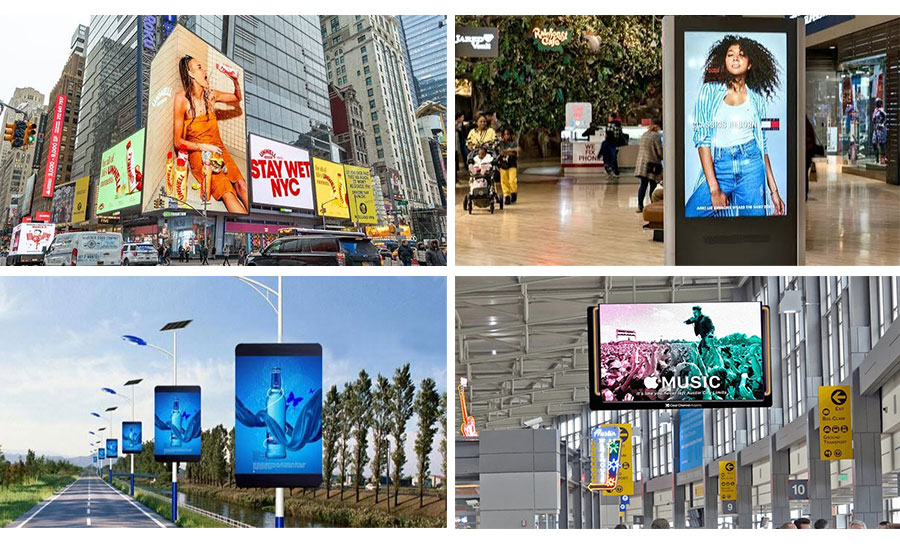
Real-World Applications of Digital Billboards
Digital billboards are ubiquitous in our daily lives. Below are several typical application scenarios, which we will introduce one by one.
Highways
LED pole screens are often used as digital billboards along highways, mounted on the sides of streetlights. Typically installed on sections with heavy pedestrian and vehicular traffic, they illuminate alongside the streetlights at night.
Their bright colors and dynamic content not only enhance visual appeal but also effectively capture the audience’s attention, thereby increasing ad exposure.
Commercial Districts
In commercial districts, the digital LED displays often appear as video walls on the facades of large buildings. Through high-definition, smooth visual effects, they provide passersby with a stunning and novel visual experience, thereby attracting their interest and enhancing the effectiveness of advertising.
Shopping Malls
Digital billboards can be found inside large shopping malls as well as at the entrances of some high-end brand stores.
By rotating advertisements for different brands or products, LED displays in shopping malls help consumers identify the mall’s key brands and promotions, leaving a lasting first impression; they can also convey brand philosophies in depth, thereby increasing consumer brand loyalty.
Airports
In public transportation settings such as airports, digital signage not only rotates advertisements but also serves as airport LED displays to broadcast flight information, facilitating widespread information dissemination.
At the same time, airports offer ample space and high foot traffic, so installing digital billboards can generate significant exposure for the advertisements displayed.
Furthermore, as airports are environments for short-term stays, arrival times vary among different audiences, and passenger volume fluctuates by season.
This requires billboards to be able to adjust content in real time based on the time of day, passenger volume, special holidays, and other factors, making them better suited for short-term advertising campaigns.
How to Choose the Right Digital Signage
Different types of digital signage have their own unique advantages and areas of application. You can select the most suitable option based on your project’s specific needs.
Project Budget
If your budget is limited but you still want good visibility, static signage is a good choice; if your advertising budget is ample and you require extensive exposure, consider digital signage.
Event Scale
Determine whether a large-scale promotional campaign is needed based on the event’s scope.
For large-scale national or global events requiring extensive brand exposure and high-frequency visual impact, digital billboards deliver superior promotional results. They can also be combined with static billboards for long-term placements in various regions, thereby enhancing audience familiarity with and recognition of the brand.
For medium-sized events at the city or prefecture level, digital billboards can be used to cover specific areas, enabling precise targeting of the audience. They can also be adjusted based on foot traffic in different regions, eliminating the need to waste excessive time on ad placement.
If static billboards are chosen, changing the ad content requires significant production and installation costs. For medium-sized events with limited budgets, this is not cost-effective and offers a low return on investment.
For small-scale events such as local lectures or regional promotions, where the venue is nearby, there is no need to incur the higher costs of installing digital billboards to achieve broad coverage and high-intensity exposure; static billboards with lower installation costs can fully meet these communication needs.
Ad Campaign Duration
Digital billboards are better suited for brand advertisements with shorter campaign cycles, as they allow for timely content updates and the display of multiple messages, meeting short-term communication needs.
The greatest advantage of static billboards lies in their ability to display a single advertisement for an extended period, ensuring consistency and repetition in brand messaging. This makes them a better fit for businesses with longer advertising cycles.
Content Update Frequency
If the campaign involves seasonal promotions, limited-time comebacks, or flash sales—where the duration is short, and content requires frequent updates—digital billboards are more suitable due to their shorter lease terms and flexible content adjustments.
If the advertisement is intended to build brand familiarity or enhance brand awareness—requiring long-term visibility to the audience with low content rotation frequency—choosing static billboards can deliver stable promotional results while also saving you some procurement costs.
The table below will help you better understand the scenarios for which different types of billboards are suitable.
| Scope of Application | Digital billboards | Static billboards |
| Project Budget | A higher budget | A modest budget |
| Scale of the event | Large, medium, and small-scale events | Large-scale and small-scale events |
| Advertising cycle | Shorter cycles | Longer cycles |
| Frequency of content updates | Frequent adjustments | Adjustments are made less frequently |
Summary
There is no absolute superiority or inferiority between digital and static billboards. Static billboards are better suited for low-cost projects that require long-term display of a single ad to enhance brand image.
Digital billboards are better suited for the large-scale distribution of multiple ads to boost campaign visibility. Different billboards have their own specific applications, so choose based on your needs.
If you have a need for custom digital billboards, please feel free to contact JYLED. We will provide you with the most professional service and the highest-quality custom solutions.
FAQs
Have static billboards been phased out today?
No, they are still widely used. The repetitive and consistent nature of static advertisements can, over time, enhance brand awareness and recall to a certain extent.
Are digital billboards more expensive than static billboards?
Digital billboards have higher upfront production costs than static billboards, but static billboards incur higher costs for maintenance and content updates over time. When comparing the total costs of both, digital billboards are slightly lower than static billboards.
How long does a static billboard campaign typically last?
Static billboard campaigns generally last several weeks or months, but the exact duration depends on the company’s marketing plan or campaign cycle.
Are static billboards less effective at catching the eye than digital billboards?
Yes. In most cases, digital billboards feature constantly changing content, brighter and more vivid colors, and more varied formats—all of which effectively capture consumers’ attention and generate higher engagement.
How many advertisers typically share a single digital billboard space?
Digital billboards typically feature 6–8 ads in a rotation cycle, with the standard format being an 8-second ad looped every 64 seconds. The specific playback duration and number of rotations can be customized to meet the needs of different advertisers.
How can the effectiveness of digital billboard advertising be improved?
Adjustments can be made in the following areas:
- Optimize the visual effects of the digital billboard by ensuring the displayed content complements the surrounding environment to create a more comfortable viewing experience.
- Use higher-resolution video sources to make the ad content clearer and more visible.
- Select prime heights and more precise placement locations to set it apart from other billboards.
- Dynamically adjust the displayed content based on foot traffic and the external environment to create a sense of novelty.