



We must have seen LED matrix display and LED wall in our life, their components are also light-emitting diodes, do you know their working principle and the difference between them?
What is LED matrix display
LED matrix display is a kind of electronic display, the main components are light-emitting diodes (LED) in the form of a grid pattern to arrange, each light-emitting diode can be self-luminous, light-emitting diodes adjacent to the smaller the spacing, the higher the resolution of the display. The LED matrix display grouping controls these LEDs, such as turning them on or off and changing their brightness, to produce images, numbers, text, etc. that illuminate the entire display.

What is LED Wall
LED wall is made up of many LED modules to be spliced together to provide a perfect display effect can also be achieved without obvious module gaps. The focus of the LED wall is on its size, these modules can be spliced together to form a very large LED wall, and then the pixel pitch is also greatly reduced, to be able to present a finer image of details, but also to present a wider color gamut and more vibrant colors.
The working principle of LED matrix display
A LED matrix is a low-resolution display consisting of rows and columns of small individual LEDs that work together to display characters, symbols, and numbers. LED matrix display consists of three main parts, which are the matrix board, the anode, and the cathode.
LED matrix display current flows from the anode to the cathode, the matrix board is responsible for displaying the information we can see; the anode is responsible for controlling the board’s rows and receive and send signals through the corresponding LEDs, the data to be printed will be transmitted through the board; the cathode is responsible for controlling the board’s columns will also be based on the signals sent to the multiplexer to tell the board to turn on or off which LED.
The working principle of LED wall
LED Walls are larger than LED Matrix Displays and consist of a grid of individual LED modules that work in concert with each other to display high-quality, high-resolution video and images.
The modules are the core components of an LED wall, and each module contains multiple LEDs that display the overall image or video portion of the display. The modules can be customized and expanded until they meet the desired dimensions and form a seamless display.
Comparison between LED Matrix Display and LED Wall
Pixel Density and Resolution : Each LED represents a pixel. Generally speaking, the resolution and pixels of LED matrix display will be lower than LED wall. Because, LED matrix display is designed for simpler applications, it will have lower pixels and resolution. However, each of its LED pixels can also work independently, so the overall LED matrix display can also present good clarity.
Whereas an LED wall is built from multiple modules and usually has excellent performance, each module of an LED wall has a high pixel density, providing a seamless sense of the viewing experience even at close range; its high resolution provides clear, detailed images and vibrant colors, making it ideal for action videos and high-resolution video content.
Display effect: LED matrix display LED modules are very conspicuous, we can see that there is a large gap between the modules, especially when using larger displays. The integration of the LED wall will be more even without any seam gap, which can provide a seamless visual experience.
Flexibility and versatility: the flexibility of the LED matrix display is limited, in the size of the configuration we have to consider some of the obstacles brought about by the modular characteristics; on the contrary, in providing a variety of functions will show its another kind of flexibility, such as displaying static content, dynamic content, playback of video, support for interactive elements, the modular characteristics of the LED matrix display also supports a variety of creative configurations, such as curved surface displays or unique shapes.
The LED wall offers extensive customization and flexibility in terms of size configuration, when you want to display different content on the LED wall, you can change it according to the demand.
Size and Scalability: LED matrix displays are composed of a grid of individual LED pixels arranged in a matrix format and can come in a variety of sizes, from small panels to large screens that can span multiple floors of a building. The modular design of LED matrix displays also allows for easy scalability and customization based on the needs of our business.
The LED wall is seamlessly integrated by LED panels, which are stacked together to form huge high-resolution, high-pixel panels, which we can also customize according to our needs, although the size increases the corresponding maintenance costs will also increase.
Installation and maintenance: LED matrix display has relatively low maintenance costs, its modular design can speed up the installation, because the panels can be easily connected and arranged in accordance with the desired configuration, when the panel is faulty or damaged, it can be replaced or repaired individually, thus reducing downtime.
In contrast, installing an LED wall requires careful planning, as it involves seamless configuration and the need to arrange many panels in such a way that if failure or damage occurs, the entire LED wall may have to be dismantled for the necessary repairs and replacements.
Durability and longevity: LED matrix displays are durable and have a long-term value, although the installation is not the fastest, but it can continue to operate, even if damaged can be replaced in a timely manner, the LED matrix display can also withstand the cold and heat and will not fade or lose its luster over time.
The probability of LED wall failure is very low, so the durability is strong, it is under normal circumstances life and LED matrix display are the same, to ensure that the investment can last for years and do not need to be replaced.
Brightness: Light emitting diode pixels are self-illuminating, LED matrix displays provide excellent levels of brightness, ensuring vivid images; LED walls are similarly unaffected by ambient light, and can emit suitable levels of brightness even in lightning or full sunlight.
Cost: LED matrix displays are generally more cost-effective than LED video walls. The pixel resolution, size, installation and maintenance of an LED wall can be more demanding than that of an LED matrix, and the expertise required for the panels themselves or the structure and setup of the installation can be reflected in the fact that an LED wall is much more expensive than an LED matrix display in terms of cost.
Application of LED matrix display and LED wall
Application of LED Matrix Display
LED matrix display applications and LED wall applications are both broader. LED matrix displays are usually in our public view, such as on buses, football scoreboards on traffic routes and other areas where simple text needs to be displayed to share information.
LED matrix displays are also very bright and work well outdoors without being affected by light, so they are generally used for billboards and signs. LED matrix displays are also used in art installations and decorations, and many hobbyists and artists incorporate LED matrix displays into their creative projects, such as light shows to interactive installations and so on.
LED Wall Applications
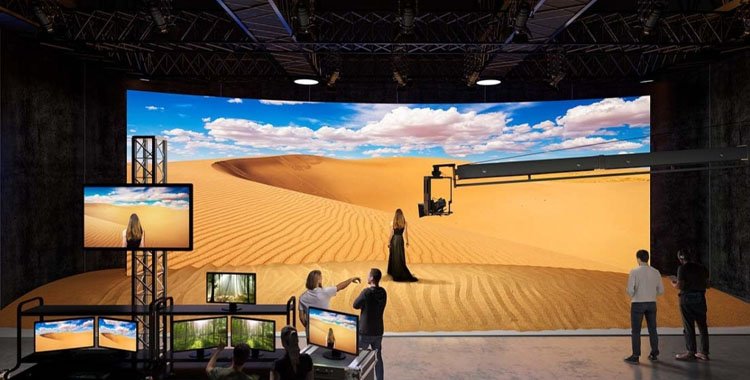
LED walls are often used as virtual backdrops for broadcasting, such as talk shows, news stations or off-site scenic shoots, etc. LED walls are also used in outdoor advertising and retail spaces, allowing us to see promotional content and highlight products on LED video walls, while also increasing brand awareness.
LED walls are also often used in entertainment venues such as concerts, stadiums, and eSports competitions, when the LED wall screens are oversized displays that allow the audience to be more engaged in the event.
Of course, the application of LED matrix display and LED wall is more than these, if you look carefully in life, you will find that every place may exist their figure.
Choose LED matrix display or LED wall to make the factors to consider
Budget: In the case of tight budget, LED matrix display is the economic choice, it is not only affordable, but also brightness and life expectancy and other aspects can meet the demand. If you are on a budget, you can choose to invest in a LED wall with higher resolution and clearer pixels.
Your own business needs: the choice between the two is largely determined by their use. For example, if you need clearer images and playback of videos to showcase your brand, then you may want to choose an LED wall. If you just want a simple signage for communication, then LED matrix is the best choice.
Summarizing
Overall, LED walls are the best option for those who want to increase audience engagement in a big way; however, LED matrix displays are also bright and maintainable and cost less. But still, you need to really evaluate your budget and needs before choosing.

