



When we buy devices, we prioritize their specifications, which often include words about brightness, such as “lumens,” “nits,” and so on.
For this aspect of brightness, many people often confused lumens and nits, can not recognize what is the difference between them. In order for you to better understand the difference between lumens and nits, this article will provide you with an introduction.
Definition of Lumens
The amount of visible light emanating from a light source in all directions is called a lumen, which is measured in lm. lumens are generally measured for equipment with a light source, such as incandescent lamps, spotlights, and other lighting equipment.
Based on scientific measurements, we know that lumens will be directly proportional to the brightness on the equipment, i.e. the smaller the lumen, the smaller the brightness on the equipment; the larger the lumen, the larger the brightness on the equipment.

Definition of nits
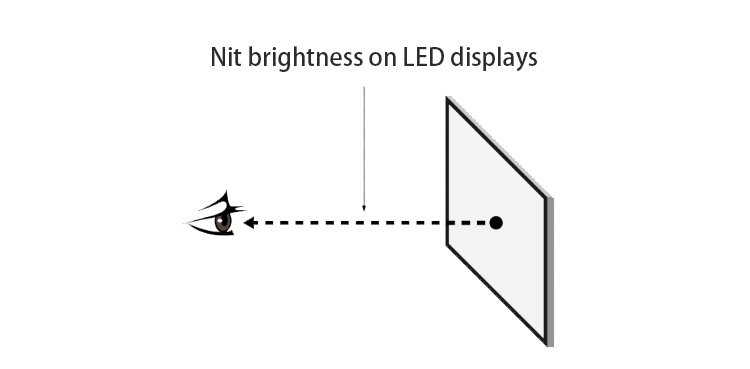
The amount of visible light emanating from the surface of a device in a given area is known as a nits, and it can also be a unit of measurement for measuring the brightness of a device.
In relation to the brightness of a device, the nits will have a positive contrasting relationship with it. When the nits are large, the brightness of the device will be brighter; when the nits are small, the brightness of the device will be darker.
What is the main difference between lumens and nits?
In fact, through the definition of lumens and nits, we can probably know that they are both expressions of brightness, but in order to let you better distinguish between lumens and nits, we will introduce you from the following points:
Application of equipment
Lumens and Nits are both measurements of the brightness of a device. Lumens are mostly used to measure the brightness of lighting devices, such as light bulbs, and to a lesser extent, other devices.
Nits, on the other hand, are mostly used for brightness measurements of display devices, including but not limited to display devices such as LED displays, LCD and OLED monitors, and to a lesser extent for brightness measurements of other devices.
Brightness Measurement
Before we measure the brightness of a device, it is important to consider the essential difference between lumens and nits.
Lumens are used to measure the total amount of light emitted by a device as a whole, and it does not have to take into account the angle and distance of the light distribution on the device, or the size of the bright and dark areas of the device.
Therefore, in the measurement of equipment, lumens can be measured from any direction on the brightness of the device as a whole.
Nit needs to consider the light scattering and emitting area on the surface of the equipment, therefore, when measuring the equipment, the nits need to maintain a perpendicular relationship with the surface of the equipment, in order to ensure that the measured nits are more accurate, and can provide customers with accurate brightness parameters.
How to convert lumens and nits?
If you know the brightness on your device, but you want to convert between lumens and nits, then you can use the following conversion formula:
- 1nits = 3.426Lumens
- 1Lumens = 1/3.426nits
An example:
Once you have an LED display capable of producing 550 nits of brightness, you can divide 550 by 3.426, which works out to about 161, meaning the LED display can produce about 161 lumens.
When you have an LED display that produces 450 lumens, you can multiply 450 by 3.426, which calculates to a value of 1713, which represents the nits of brightness of the LED display.
If you want you want to according to the light-emitting area of the display, to carry out the calculation between lumens and nits, then its calculation formula is as follows:
- 1nits = 1cd/㎡ = lumens (lm)/area (㎡)
Example:
Assuming that you are using the LED display, the screen length of 2m, height of 1.5m, and, the LED display can produce 800 lumens of brightness.
Then we can first calculate the screen area of the LED display, and then substitute the calculated value and lumen value into the formula, you can calculate the nits brightness of the LED display. The calculation process is as follows:
- LED display screen area:2*1.5=3㎡
- Nit brightness of ED display:800/3=267 cd/㎡=267 nits (rounded)
Lumens and nits solution design
LED display program design
We can pick the right LED display brightness according to the purpose of using LED display.
In case you are applying to stage activities or other outdoor activities, then you can choose the LED display with a brightness of 4000-5500 nits, this high brightness allows the LED display to see a clear and vivid display picture even under the strong light.
If you want to use it indoors, then you can choose the LED display with a brightness of 500-800 nits, which is lower and will not affect the lumen brightness indoors, and can provide you with high-quality images.
Indoor lighting program design
Indoor lighting solutions can be designed to suit different living areas. We will provide you with the following indoor lighting solutions for your reference:
- In the kitchen or bedroom area, you can choose 300-400 lumens lighting equipment.
- In the living room, you can choose 400-500 lumens.
- In the bathroom area, you can choose 700-800 lumens.
When you feel that the above lighting solutions are not suitable or they do not bring enough brightness, then you can replace them with higher lumen lighting fixtures, for example, 700-800 lumen lighting fixtures.
Outdoor Lighting Program Design
For outdoor lighting design, you can choose the lighting scheme according to the area of outdoor installation. Below are some references for outdoor lighting schemes:
- Around an outdoor swimming pool, lighting with 900-1000 lumens can be installed.
- In the garden, lighting with 800-900 lumens can be installed.
Lumens and nits: how to choose?
Reading through this article, I believe you can make a good distinction between lumens and nits. If you have a need for a monitor, then give preference to a monitor with nits of brightness. When you have a need for a lighting device, then prioritize a lighting device with lumen brightness.

