When researching LCD-related topics, you’ll often encounter technical terms like “Nano IPS” and “VA.” Both Nano IPS and VA are panel technologies used in LCD manufacturing, offering distinct display effects and functionalities. So what exactly sets these two panel technologies apart? Let’s explore the differences in this article!

What is VA?
VA is a traditional liquid crystal panel technology used in LCD manufacturing. It aligns each liquid crystal molecule on the display device perpendicular to the glass substrate.
By applying voltage, it stimulates the continuous movement of these molecules, enhancing the transmission rate of backlight illumination. This results in screens made with VA technology delivering high brightness and high-contrast images.
What is Nano IPS?
Nano IPS is an upgraded version of IPS technology developed by LG. While maintaining the basic parallel alignment of liquid molecules with the glass substrate, it incorporates nanoparticle elements in front of the backlight area.
These nano-particles effectively absorb and filter excess scattered light and wavelengths from the backlight, enhancing the screen’s color purity and accuracy to deliver vivid, true-to-life full-color images.

How to distinguish between Nano IPS and VA technology displays?
Having understood the differences in liquid crystal distribution and operating principles between VA and Nano IPS, we will now explore the variations in display performance and functionality between Nano IPS and VA!
Nit Brightness
VA displays primarily utilize CCFL (cold cathode fluorescent lamps) or LED (light-emitting diodes) as backlight components. Through multiple layers of panel refraction, they achieve brightness levels of 300-500 nits, ensuring clear visibility of screen content under typical indoor lighting conditions.
Nano IPS displays primarily use LED backlighting with KSF phosphor material. While this enhances brightness purity, the parallel alignment of liquid crystal molecules within the screen weakens transmitted light, resulting in brightness levels of 300-400 nits. This makes Nano IPS ideal for dimly lit indoor environments.
Contrast
We ordered a VA display and a Nano IPS display online. Placing both devices in a darkened indoor space, we visually compared the displayed content using the following method.
Step 1: Set both displays to a black background. Standing approximately 1–2 meters away, we observed: The Nano IPS display (left on the table) exhibited more noticeable light leakage around its corners and edges compared to the VA display.
Step 2: When the background of both displays was set to pure white or pure gray, the VA display showed a more natural transition in brightness from the center to the edges compared to the Nano IPS display.
Based on these two experiments and the observed phenomena, we can conclude that “the VA display offers higher contrast than the Nano IPS display”!
Color Gamut
Beyond the contrast experiments, we also measured the color gamut of both Nano IPS and VA displays using DisplayCAL software and a spectrophotometer. The following are the measured results:

The color gamut data above clearly shows that Nano IPS displays offer significantly broader color coverage than VA displays. This enables Nano IPS screens to deliver richly vibrant, vividly realistic images, providing us with lifelike immersive experiences.
Smoothness
Refresh rate information can be found in the display settings of both VA and Nano IPS screens. We observe that both VA and Nano IPS screens offer refresh rates ranging from 144Hz to 240Hz.
To test this, we set both displays to 240Hz and downloaded and played the same competitive shooter games, such as Escape from Tarkov or Valorant.
During gameplay, the VA display occasionally exhibited stuttering, ghosting, and slow response times. In contrast, the Nano IPS display avoided these issues, delivering smoother motion and providing a superior operational and viewing experience.
Viewing Angles
When placing either a VA display or a Nano IPS display on a desk, we positioned ourselves at the center of the display device and gradually observed it in a circular pattern from the same horizontal plane as the screen.
Through this controlled variable experiment, we discovered that an optimal viewing experience is achieved within a 130-degree angle centered on the VA display. Good display performance is maintained within a 150-degree angle centered on the Nano IPS display.
Energy Efficiency
VA displays directly sacrifice significant power consumption to achieve high brightness, resulting in only 54% energy conversion efficiency. In contrast, Nano IPS displays optimize internal liquid crystal distribution and circuit routing design, enabling high brightness with minimal power consumption, thereby reducing electricity costs.
Application Scenarios
VA displays deliver clear, detailed images with balanced light and dark contrasts in brightly lit or high-visibility indoor/outdoor environments, making them suitable for daily tasks like document editing, video viewing, and image browsing.
Nano IPS displays, characterized by a wide color gamut and high fluidity, are better suited for professional fields demanding superior color accuracy and smooth performance, such as gaming, modeling, and design.
Are there other displays with superior performance and features compared to Nano IPS and VA displays?
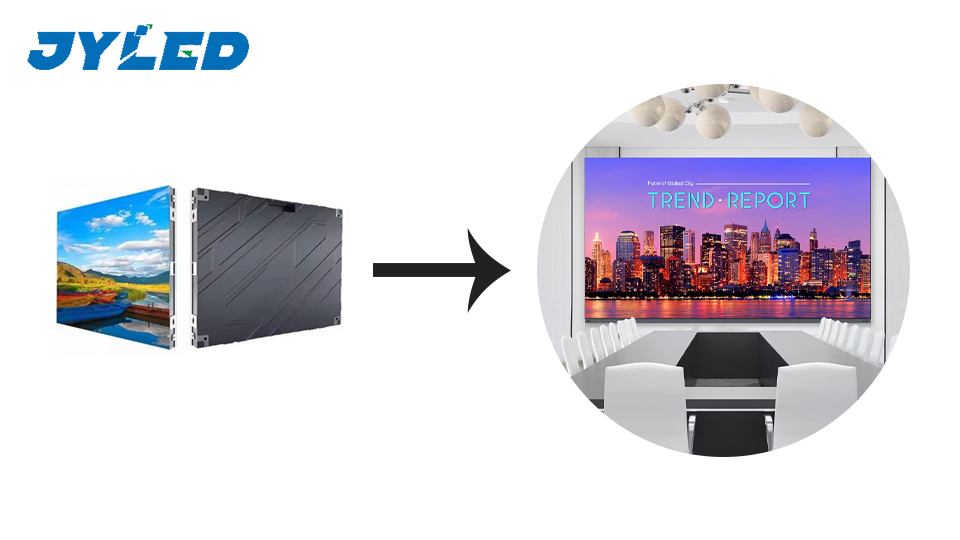
Yes. LED displays outperform Nano IPS and VA displays in both display quality, including contrast ratio, refresh rate, and color depth, and functional aspects like energy efficiency.
In display quality, LED screens achieve a 10,000:1 contrast ratio, delivering more perfect blacks and whites than Nano IPS or VA displays, enabling refined color and brightness effects. Simultaneously, their 3840Hz refresh rate provides seamless, fluid motion without motion blur, ensuring a smooth viewing experience.
For energy efficiency, LED displays utilize common cathode technology. This integrates all LED chip pins onto a single negative electrode. Applying a positive voltage enables precise voltage distribution and brightness control, reducing power consumption and boosting overall screen energy efficiency (83–88%).
Frequently Asked Questions
Are Nano IPS displays more expensive than those made with VA technology?
Yes, Nano IPS displays have a higher technological barrier than VA displays, so Nano IPS displays are more expensive than those made with VA technology.
Do VA displays have a longer average lifespan than Nano IPS displays?
No. Based on theoretical and practical data, VA displays have an average lifespan of approximately 40,000 to 50,000 hours, while Nano IPS displays typically last around 50,000 to 60,000 hours.
Nano IPS vs. VA: Which is easier on the eyes?
Both Nano IPS and VA display devices can cause eye strain. However, this can be mitigated through screen settings (adjusting brightness levels) and usage habits.
JYLED delivers LED displays with exceptional visual performance and functionality!
When selecting or purchasing LED displays, prioritize JYLED. As a renowned Chinese LED display manufacturer integrating production and sales, we design or customize LED displays that surpass Nano IPS and VA monitors to perfectly meet your expectations for visual quality and functionality.