



Glasses-free 3D display stems from our pursuit of visual immersion and the development of the realization of the need to wear glasses to enjoy immersive visual 3D images, in addition to knowing that it can give us a superior visual experience you also know what applications it has in which areas?
What is glasses-free 3D display
Glasses-free 3D, also known as autostereoscopic 3D, is a technology that allows you to see stereoscopic images without wearing special eyes or special helmets. Glasses-free 3D is a very clever science that uses various techniques to send different images to our left and right eyes, so that we can see the stereoscopic image no matter which angle we are standing at, for example.
For example, if you stand on the left side of the display you can see the left side of the object on the display, and if you stand directly in front of the screen you can see the front image, in short this image changes as you change the direction of your line of sight.
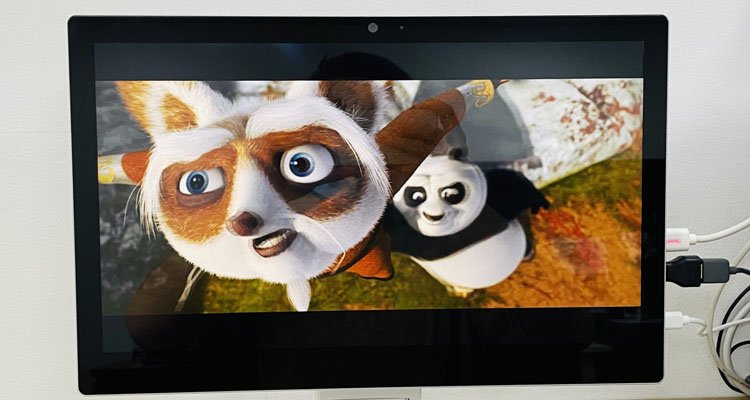
How glasses-free 3D display works
3D display technology utilizes the visual differences of the human body, there is a certain difference between the left and right eyes of our body, when we look at an object, the two eyes capture a slightly different world, and subsequently the brain will capture these two pictures and combine them to create a sense of depth, the glasses-free 3D display mimics this process, thus creating the illusion of three-dimensional space on the screen.
Here’s how 3D displays work
Layered Visual Effects: Glasses-free 3D visual effects are created by designing multiple visual layers that are animated to create a sense of depth, for example, when foreground objects may move faster or seem to pop off the screen, elements in the background move slower to add a sense of hierarchy.
Parallax effect: The inspection effect plays an important role in the working principle of 3D display, it imitates the perception of the human eye by moving different objects on the screen at different speeds, for example, you can feel the objects moving even if you move a small step in front of the screen, which further enhances the sense of three-dimensionality.
High brightness contrast: High brightness helps define the edges of objects more clearly so they can stand out clearly from the background, aiding in the perception of depth.
Frame Rate Synchronization: The glasses-free 3D experience relies on smooth frame rate synchronization to ensure a smooth screen. A high frame rate avoids any interruptions that might disrupt depth vision, making the 3D image more lifelike.
In short, glasses-free 3D displays combine advanced technology, strategic content design and human perception to give us a three-dimensional effect on flat vision without the need for special glasses.
What are the advantages of glasses-free 3D display
The most important feature of glasses-free 3D displays is that they eliminate the need for special glasses. Glasses-free 3D displays eliminate the need for special glasses to feel the visual depth of the experience, providing a more convenient and immersive feeling.
High brightness and contrast are among the features that glasses-free 3D displays have, providing a more dynamic and engagingly realistic visual experience that enhances the visual experience.
To appeal to a wider audience, glasses-free 3D displays offer a wider viewing angle, allowing viewers to focus on the content without having to crane their necks or roll their eyes, and provide consistent quality for video or image displays to cover all viewing angles and distances.
Installed outdoors, the glasses-free 3D display is also perfectly adapted to sunlight, heat, cold and rain, proving that it is highly weather-resistant and therefore has a long lifespan.
It also has the advantage of easy maintenance and upgrading, because the 3D display materials are made of high-quality manufacturing to ensure its durability and can do without frequent replacement parts and maintenance.
In terms of enhancing brand value, glasses-free 3D is a new technology that attracts the attention of a large number of viewers and can generate a huge number of views, which can quickly build brand awareness among the masses, thus increasing the impact and value of the product.
Naked eye 3D this display technology can also be used as a city landmark, for example, the world’s largest Guinness World Records certified 3D display billboards established in New York’s Times Square, has become a bright landscape of New York’s Times Square. It also makes people remember New York and understand this prosperous city.
The higher the influence of the glasses-free 3D display, the higher the advertising yield. For example, if you put the billboard into the crowded commercial street, even if the advertising rent is expensive, you can quickly increase to the profit in a short time.

Application of glasses-free 3D display
Game field: Now belonging to the information age, games have become a part of many people’s life. Glasses-free 3D games provide no need to wear special glasses can experience the wonderful world of naked eye 3D games, this innovative technology not only improves the convenience of the game experience, but also brings players an unprecedented sense of visual experience.
Game developers in order to achieve a more realistic, immersive game, using a variety of technical means, so that the naked eye 3D game for the depth of the optimization, in the visual effect is amazing, predicted that glasses-free 3D games can become a new favorite in the future game market.
Movies: We are no strangers to 3D movies, which allow us to immerse ourselves in new worlds, realizing a way to see different landscapes and many new things in ways we could never have imagined.
But whereas in the past it was necessary to wear bulky glasses, the introduction of glasses-free 3D movies is sure to be a boom, creating an immersive environment without the need to wear special glasses while watching a movie, enhancing the viewing experience by providing realistic 3D visual effects of characters, landscapes and objects.
Billboards: Glasses-free 3D displays are a popular choice for the advertising industry, with stunning visual effects that quickly capture the attention of passersby for increased exposure. Whether it is for displaying products or for publicizing movies and promoting brand activities, glasses-free 3D billboards are able to create a deep impression and thus enhance the brand’s market influence.
Because, glasses-free 3D advertisements are the result of a refined design of the content, which takes into account the effects of angle, light and perspective to ensure that viewers can see the content on the 3D display clearly from all distances, plus the superior color accuracy of the glasses-free 3D The display’s superior color accuracy and smooth transitions create a realistic animation that firmly captures the viewer’s attention, thus enhancing the viewer’s impression of the glasses-free 3D billboard.
Medical imaging: Naked eye 3D can provide rich stereoscopic depth information and viral tissue structure and other information in the field of medical imaging.
Medical imaging visualization can present realistic stereoscopic images and provide information such as depth and location of internal organs to help in the examination of organ lesions; it can also improve the accuracy of surgical treatments such as MRI scans, CT scans, or 3D anatomical models, and these 3D displays allow medical professionals to have a clearer understanding of the data, which can help in the diagnosis and development of treatment plans.
Engineering: 3D display technology has been a trusted industry standard in design and engineering. 3D technology allows for intuitive design and development of products, and this technology creates designs quickly and accurately, enabling informed decision-making solutions.
At the same time, enhanced surface creation improves the accuracy of surface models and geolocation by integrating real-world data; 3D modeling can be created with realistic models that allow other partners to gain a deeper understanding, such as distances, volumes, and overall color of the surface, etc. 3D technology has also been used to visualize civil engineering, allowing construction workers to quickly implement construction on houses or roads, etc. 3D LED displays and glasses-less displays allow for intuitive design and development of products.
3D LED displays and glasses-free 3D
3D LED displays and glasses-free 3D displays are both used to present 3D, but they use different technologies. However, they use different technologies. 3D LED displays are created using multiple layers of LEDs. 3D LED displays are often used for large displays that can be seen even from a distance, such as stadium screens, shopping mall billboards, and these large screens can also create stunning visual effects.
Glasses-free 3D displays use a combination of technologies to feed different images to each eyeglass, even with parallax barriers and columnar lenses. Glasses-free 3D displays are typically used in smaller displays, like smartphones and tablets.
To summarize
With the rapid development of glasses-free 3D displays, we can expect to see more innovative and exciting applications being created. From medical and engineering to entertainment design, glasses-free 3D display technology will continue to change the way we experience the world.

