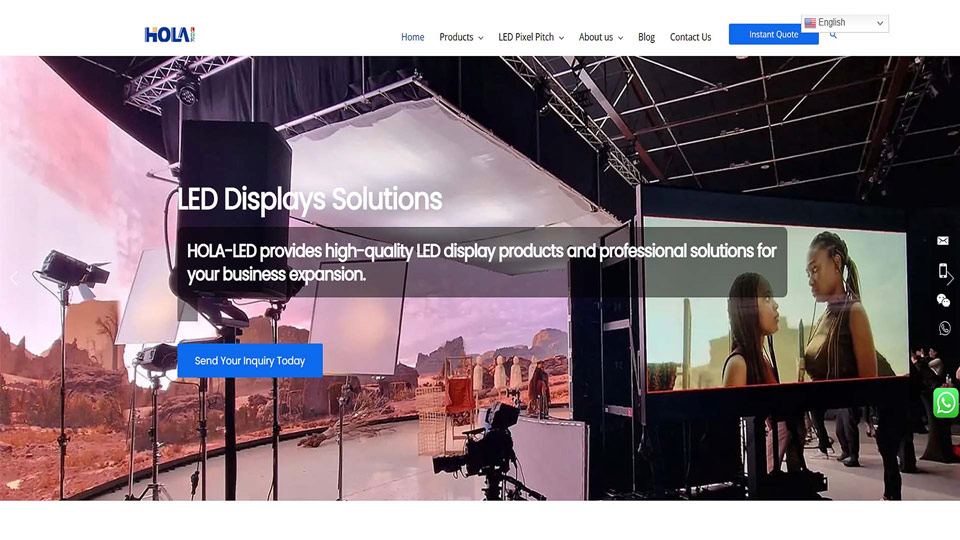
LED displays provide high-quality images and are highly durable and energy-efficient, making them the mainstream choice in the modern display industry. If you don’t know how to buy an LED display, then this LED display buyer’s guide is just what you need!

Usage scenarios
Usage scenarios are mainly divided into indoor and outdoor scenarios. LED display buyers should choose the usage scenario based on their own needs. If LED display buyers choose an indoor scenario, they should choose an indoor LED display, which emits relatively low brightness light and provides a comfortable close-up viewing experience. If they choose an outdoor scenario, they should choose an outdoor LED display, which has high brightness and a large pixel pitch, providing excellent visibility and a long-distance viewing experience.

LED display types
In addition to usage scenarios, LED display types are also an important factor that LED display buyers need to consider. There are many types of LED displays, and LED display buyers need to choose the appropriate screen type based on the characteristics of the LED display. The following are the most popular LED display types today, which can be used as a reference for LED display buyers:
| LED display types | Features | Main application scenarios |
| Rental LED display | Attractive appearance; easy to install and dismantle, highly mobile | Stage performances, trade shows, themed events, etc. |
| Transparent LED display | High transparency, allowing viewers to see both the display content and the scene behind the LED display | High-end retail and other product display projects |
| Flexible LED display | Flexible LED modules can be spliced together to form creative irregular shapes, such as rings, cylinders, spheres, etc. | Curved installation areas or places that need decoration, such as shopping malls and stages |
| Floor LED display | Can withstand a weight of 2 tons and is highly durable; can integrate interactive technology to bring interactive effects | Hotels, auditoriums, shopping malls, and other places |
| Poster LED display | High contrast, high brightness, high refresh rate; realizes multi-screen splicing display | Clothing stores, car 4S stores, retail stores, and other promotional scenes |
| LED video wall | High definition, high-quality display, takes up relatively little space | Home, hotels, conference rooms, monitoring rooms, and other indoor places |

Size
The LED display size should be determined based on the LED display buyer’s ideas or installation location. When the LED display buyer needs a smaller LED display, they should choose an LED display with a smaller pixel pitch, which can provide high-definition image quality. When the required LED display size is relatively large, the LED display buyer can choose a screen with a larger pixel pitch, which can provide a good display image while saving some costs for the LED display buyer.
Refresh rate
The refresh rate is one of the factors that many LED display buyers tend to overlook. An LED display with a high refresh rate can provide smooth and complete playback images, and when shooting the screen, there will be no obvious moiré phenomenon that affects the shooting effect.
Many LED displays on the market now use 1920Hz IC chips, which basically meet the refresh rate requirements of most LED display buyers. However, if LED display buyers want a higher refresh rate, they should choose LED displays made with 3840Hz IC chips.
Display effect
In terms of display content, there are two main types of LED displays available for LED display buyers to choose from: 3D LED displays and interactive LED displays.

As the name suggests, 3D LED displays can display images with 3D stereoscopic effects, bringing people a stunning immersive experience and catching the eyes of passersby. These screens are mainly used for product promotion projects.
Interactive LED displays can interact with crowds perceived by chips or radar to create interactive images. This design increases the fun of the screen and attracts more customers. It is mainly used in entertainment venues.
LED displays with different display effects can bring different effects to LED display buyers. Therefore, LED display buyers need to choose the appropriate LED display according to the desired display effect.
Conclusion
After reading this article, we believe that LED display buyers will be able to better choose the appropriate LED display. If LED display buyers find it difficult to make a decision, please contact JYLED, and JYLED will provide you with a satisfactory LED display solution.