


For large-scale LED displays, the power distribution box is an essential piece of equipment for maintaining stable operation. It supplies a steady current to the LED display and, in the event of a circuit malfunction, can quickly shut off the power to protect the display, preventing electrical damage to its components.
So, how do you choose the right power distribution box for your LED display? Let’s find out in this article.
What Is an LED Display Power Distribution Box?
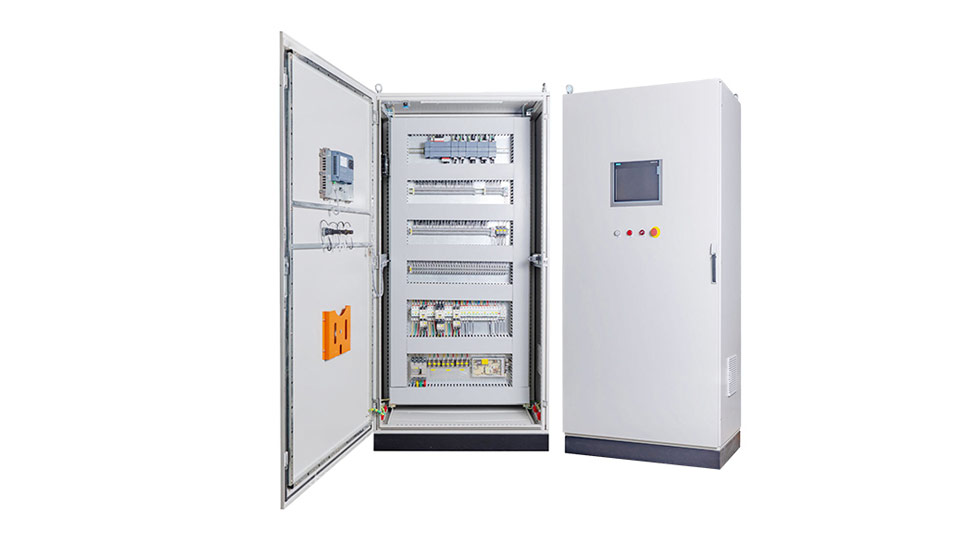
The power distribution box is a critical component of an LED screen’s power supply system. The electrical power required for the screen’s operation first enters the distribution box, where it is buffered and distributed. The current is then split into multiple sub-circuits and fed into the equipment to power it, thereby driving the LED screen’s operation.
Inside the metal enclosure of the distribution box, there is typically a main switch. Turning this switch on or off allows your screen to start up or shut down instantly.
The distribution box also contains multiple circuit protection devices that automatically cut off power in the event of a circuit malfunction, ensuring the safety of the LED screen’s circuitry.
Why Do LED Displays Require a Distribution Box?
LED screens are typically assembled from multiple LED cabinets, and each cabinet’s panel contains a high density of LED lamps. Consequently, the electrical system of an LED display is more complex than that of other types of displays.
With the exception of a few very small LED screens, such as LED posters, LED totems, LED banners, and retail store LED displays, which do not require an additional distribution box, most medium, large, and extra-large LED displays need a distribution box to ensure stable operation.
High Power Circuit Buffering
LED screens operate at high power levels, requiring multiple power supplies within a single display project to deliver the current needed to drive the LED cabinets. This electrical configuration involving multiple switching power supplies is referred to as a capacitive load.
Circuits with capacitive loads typically generate a massive surge of current the moment they are turned on, and conventional equipment often struggles to withstand this intense current spike.
Therefore, it is essential to install a distribution box for the LED screen in advance. This box acts as a buffer for the massive current generated during startup, supplying the screen with current and voltage within safe limits to prevent circuit damage to internal components.
Multiple Circuit Protection Designs Ensure Screen Safety
In addition to controlling the main power switch for the LED screen, the distribution box incorporates various protection mechanisms.
These designs ensure that the power supply is promptly shut off in the event of an accident, safeguarding both the LED screen and the safety of personnel.
The protection mechanisms integrated into the distribution box include:
- Overvoltage Protection: Immediately cuts off power and shuts down the screen when the circuit voltage exceeds the equipment’s rated voltage.
- Short-circuit protection: Shuts off the power supply when a short circuit occurs during circuit operation.
- Overheat protection: Cuts off the power supply promptly when the distribution box has been operating for too long, and the temperature of the enclosure and components becomes excessively high, preventing circuit burnout.
- Overcurrent protection: Automatically shuts off the power switch when the operating current of the screen exceeds the rated value.
- Electrical Leakage Protection: Although the distribution box housing is made of metal, its base features a special anti-leakage design to ensure sufficient safety for personnel when handling the box, preventing electrical leakage and electric shock incidents.
Switch for Controlling LED Screen Operation
The distribution box not only serves as the main power switch for the LED screen, allowing you to quickly control the screen’s power on/off, but also enhances management efficiency through an integrated multifunction card, providing multiple convenient management modes:
- Standard Control: Users can directly manage the screen’s power on/off via switches inside the distribution box.
- Scheduled Control: Pre-set the screen’s power-on and power-off times to allow the display to automatically power on and off according to the schedule.
- Remote Control: Use software on a computer to turn the distribution box’s power on or off with a single click, or set scheduled on/off times to manage the screen’s power supply.
Types of Distribution Boxes for LED Display Installation
There are various types of distribution boxes commonly available on the market. We categorize them into two main groups based on their control methods and installation styles:
Classification by Control Method
Manual Distribution Box
A manual distribution box is the standard type most commonly encountered in daily life. To manage the circuit switches, you must perform manual operations at close range. Although this method is not as smart, it offers the advantage of simple operation with no learning curve for users.
This type of distribution box is highly suitable for most LED display scenarios, such as LED displays in shopping malls and fixed LED displays. Additionally, manual distribution boxes are relatively more affordable, helping you save on project costs.
Timed Distribution Boxes
Timed distribution boxes allow you to directly set the power-on and power-off times via a timer switch, thereby enabling scheduled power management for LED displays.
This type of distribution box is suitable for displays that need to broadcast content during specific time periods, such as station LED displays and outdoor LED advertising screens.
It can control the screen to turn on and play content during the day when there is foot traffic, and turn off at night when there are no users, thereby saving energy consumption during operation.
PLC Smart Distribution Box
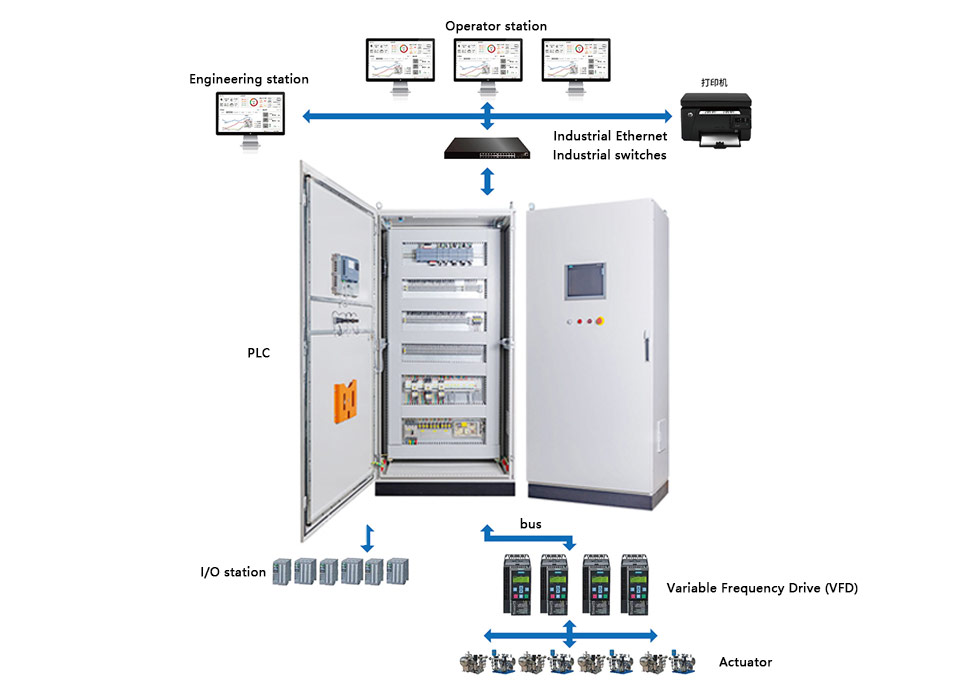
The PLC smart distribution box connects to a computer via an Ethernet cable. By installing specific software on the computer, you can program the distribution box to turn on and off at scheduled times or remotely control its power status.
This distribution box features timing functions similar to those of a standard timer-controlled distribution box. It is equally well-suited for LED displays that need to be activated and play content during specific time periods, as well as for large-scale events requiring remote management, such as LED displays at music festivals or in broadcast studios.
Multifunction Card Smart Distribution Box
The multifunction card smart distribution box incorporates a built-in multifunction card to provide comprehensive circuit protection, including overvoltage protection, overcurrent protection, ground fault protection, and overheat protection, ensuring the safety of both the LED screen and nearby personnel.
This distribution box is suitable for scenarios with high pedestrian traffic near the screen, such as sports LED displays, stage LED displays, and presentation LED displays. Its comprehensive and robust protection features ensure safer and more stable event operations.
Classified by Installation Type
Wall-Mounted Distribution Box
For small LED displays, the required distribution box is typically compact and lightweight, allowing it to be securely mounted directly on a wall. This type of distribution box is referred to as a wall-mounted distribution box.
Wall-mounted distribution boxes offer stable and secure installation while minimizing floor space, making them ideal for retail store LED displays and conference room LED displays.
Floor Standing Power Distribution Cabinets
Floor standing power distribution cabinets are suitable for installation sites with ample space. They can be placed directly on the floor without requiring additional support structures, so you don’t need to worry about the weight of the cabinet or structural load issues.
This type of power distribution cabinet is suitable for large LED displays and outdoor LED displays. Floor standing power distribution cabinets typically have very high power ratings, capable of meeting the power supply needs of large-scale projects.
Flight Case Mobile Power Distribution Cabinet
The flight case mobile power distribution cabinet is designed to be housed inside a flight case, allowing for easy transport and relocation anytime, anywhere. It is particularly well-suited for LED displays that require frequent movement.
Especially for rental LED displays and event-based LED displays, the easily transportable flight case mobile power distribution cabinet enables rapid deployment across different regions, providing reliable power to the LED screens.
Summary Table of Different Power Distribution Cabinet Types: A 30-Second Quick Overview
We have summarized the common types of distribution cabinets, their features, and the applicable display types in the table below. By reviewing this table, you can quickly determine which distribution cabinet is best suited for your LED display project.
| Classification | Distribution Cabinet Name | Features | Recommended Applications |
| Different Control Methods | Manual Distribution Cabinet | Simple structure, easy operation, low cost | Supermarket LED displays, fixed LED displays, and indoor full color LED displays |
| Timed Distribution Cabinet | Allows for scheduled power on/off of the distribution box | Station LED displays, outdoor LED advertising screens, and commercial LED displays | |
| PLC Smart Distribution Box | Enables remote management of power on/off and scheduled power on/off | Music festival LED displays, studio LED displays | |
| Multi-Function Card Smart Distribution Box | Includes multiple protection features such as overvoltage protection, overcurrent protection, ground fault protection, and overheat protection | Sports LED displays, stage LED displays, and presentation LED displays | |
| Various installation methods | Wall-mounted distribution boxes | Compact size, lightweight, and space-saving, suitable for tight spaces | Retail store LED displays, conference room LED displays |
| Floor standing distribution cabinets | Stable load-bearing capacity and high power output, suitable for large-scale display projects | Large LED displays, outdoor LED displays, advertising LED displays | |
| Flight case portable distribution cabinets | Highly portable, easy to transport and move, offering great flexibility | Rental LED displays, event LED displays, wedding LED displays |

What Protective Designs Are Required for Outdoor LED Display Distribution Boxes?
For outdoor LED display distribution boxes, in addition to circuit overload protection, other protective measures must be implemented to ensure the distribution box can reliably transmit current in harsh outdoor environments.
Protective designs that need to be added to outdoor LED display distribution cabinets include:
- Lightning Protection: By integrating lightning protection devices into the distribution cabinet, it can operate stably during outdoor thunderstorms, preventing equipment damage from electrostatic breakdown caused by large-scale lightning strikes in the area.
- Surge Protection: After integrating surge protectors into the distribution cabinet, it can prevent equipment damage from instantaneous excessive voltage and current, ensuring stable operation even under extreme weather conditions.
- Waterproof Rating: Outdoor distribution boxes typically feature robust protection, with a standard IP 43 rating that effectively prevents rain and dust from entering the box and damaging electronic components.
- Grounding System: The grounding system ensures the stability and safety of circuit operations between devices when there are significant voltage differences.
- Heat Dissipation System: The transition from sunrise to sunset in outdoor environments can cause significant temperature fluctuations. Especially during direct sunlight, the operating temperature of the distribution box may rise significantly. A well-designed heat dissipation system is necessary to facilitate rapid cooling, prevent component damage from high temperatures, and ensure equipment safety.
Image: Outdoor distribution box and LED display
How to Calculate the Capacity of an LED Display Distribution Box?
If you wish to calculate the capacity of an LED display distribution box, follow these steps:
Calculate the Total Power of the LED Display
An LED display is assembled from multiple LED modules. The total power of the screen equals the sum of the power ratings of all LED modules. Since the power rating of each LED module is known, we need to calculate the number of LED modules to determine the total power of the LED screen.
Generally, the area of an LED module, i.e., its dimensions, is known, but we need to convert the module dimensions into meters.
LED screen area = Length of the wider side × Height of the taller side.
Number of LED modules = LED screen area ÷ Area of an LED module.
Total power of the LED screen = Power of an LED module × Number of LED modules.
Calculating the Total Power of the Distribution Box
Once you have calculated the total power of the LED display, you can directly calculate the total power of the distribution box.
It is important to note that to ensure the safety of the circuit operation, the total power of the distribution box typically needs to be 1.5 times the power of the LED screen. This margin is included to prevent circuit overloads from affecting equipment operation and safety in the event of unexpected situations.
Therefore, we can calculate the total power required for the distribution box as follows:
Total power of the distribution box = Total power of the LED screen × 1.5.
For large-scale LED displays, a single distribution box may not be sufficient for the project. In this case, you can check the power specifications of distribution boxes available on the market and then calculate the number of distribution boxes needed based on the total power requirement:
Number of distribution boxes = Total power of the distribution box ÷ Power of a single distribution box.
How to Select the Right Power Distribution Box for an LED Display?
To select a suitable power distribution box for your project, consider the following factors:
Determine the Scale of the LED Screen
For small to medium size LED displays, installing a single power distribution box is usually sufficient. However, for large-scale or ultra-large-scale LED displays, you need to gradually increase the number of power distribution boxes based on the project’s scale to ensure more stable circuit operation.
Matching the Power Rating to the LED Screen
The distribution boxes used for an LED display project must be matched to the power rating of the LED screen. The power rating of the distribution box should be 1.5 times the total power of the LED screen, as mentioned above.
If the distribution box has too high a power rating, it may result in:
- Wasted costs: Higher power distribution boxes are more expensive, and purchasing unnecessarily high power units will waste project funds.
- Increased operating costs: A higher capacity distribution box also means greater resistive power loss, which increases the energy consumed during equipment operation and raises electricity bills.
If the distribution box capacity is too small, this may result in:
- Unstable screen operation: Insufficient capacity may lead to inadequate current and voltage supply to the LED screen, causing issues such as screen flickering or dimming during operation, which can negatively impact your brand.
- Electrical damage to circuitry: Mismatched current flowing through the screen’s circuitry can also overload components, potentially burning out screen components or circuits.
Management Requirements
You can select the appropriate type of distribution box based on the project’s anticipated management needs. If you have no special requirements, simply choose the manual distribution box with the most cost-effective purchase price.
If you require remote management or scheduled power on/off for the screen, you can choose a timer controlled distribution box or a PLC-based smart distribution box. If you prioritize enhanced security, a multi-function card smart distribution box is recommended.
For small-scale indoor projects, a wall-mounted distribution box is suitable; for large-scale projects, a floor standing distribution box is necessary; and if your project requires frequent relocation, a flight case-style mobile distribution cabinet is the best choice.
Project Budget
Of course, your overall project budget is the key factor in determining which distribution box to purchase.
If your project budget is ample, you should opt for a higher performance distribution box to ensure more reliable screen operation. If your budget is limited, you can choose a cost-effective distribution box that meets your usage requirements.
Contact JYLED for Professional Customization
In addition to the many factors mentioned above that should be considered when configuring a distribution box for a screen, if you’re looking for a more time- and labor-saving deployment solution, and want a distribution box that perfectly aligns with your project’s requirements and budget, you can contact JYLED directly through the inquiry form on our official website.
Alternatively, you can reach out to our sales specialists via the contact information on our official website, including phone, email, WhatsApp, and WeChat, so they can configure a suitable LED screen power distribution cabinet solution based on your specific needs, budget, and project scale.
Beyond power distribution cabinet solutions, JYLED can also provide you with an ideal LED screen procurement plan, allowing you to resolve both power distribution cabinet and LED screen deployment issues in one go.
FAQ
Does Purchasing an LED Display from Jyled Include a Power Distribution Cabinet?
Yes, when you purchase an LED display from JYLED, our sales specialists will directly provide you with the most suitable power distribution cabinet, along with the corresponding control system, power supply, cables, and other components.
You can install and use the system immediately upon receipt, without spending additional time sourcing equipment.
Do the Distribution Boxes Support Remote Control to Turn the LED Display Off?
Yes, certain types of distribution boxes allow you to remotely control the circuit switches, enabling you to turn the LED display on and off from a distance.
Is It Better to Install More Distribution Boxes for an LED Display?
Theoretically, the more distribution boxes installed in a single LED display project, the stronger the buffering capacity for high power circuits, and the better the stability of the screen’s operation.
However, in actual projects, due to cost considerations, we do not recommend installing an excessive number of distribution boxes; the number should be appropriate for the project’s scale.
How Can I Purchase Higher Quality Distribution Boxes?
You can choose distribution boxes certified by international quality organizations, such as ISO, RoHS, and CE. Distribution boxes that have undergone professional quality certification are more reliable, operate more safely, and have a longer service life.
Is the Installation of Distribution Boxes Complicated?
The structure of distribution boxes is not complicated, and workers can efficiently complete the installation while the power is off. If you wish to further simplify the installation process, you can also choose color coded alternating sockets, which allow workers to install the distribution boxes more quickly and with fewer errors.
Is a Higher Wattage Distribution Box Always Better?
No. The distribution box’s wattage should best match the screen’s application requirements. If the distribution box is overrated, first, the procurement cost will be higher; second, the distribution box’s power consumption will increase, leading to higher project operating costs.
Summary
Selecting the appropriate distribution box based on the actual size and usage requirements of your LED screen ensures more stable operation and makes managing the screen’s power on/off cycles much easier.
If you would like to receive a free proposal for power distribution boxes for your LED screen installation, or if you are looking for a comprehensive LED screen deployment plan along with corresponding power distribution solutions, please contact JYLED through our consultation portal. JYLED’s sales team will develop a suitable procurement plan for you within 24 hours.