



When we are viewing LED displays, the LED viewing angle can give us a great viewing experience. When we view LED displays at different angles it can affect the viewing experience, even if you buy a very expensive display, if it doesn’t have a high viewing angle, it can lead to some troubles when you are viewing the display. Next, I’ll take you through everything you need to know about LED viewing angles!
What is LED Viewing Angle
LED viewing angle is the maximum viewing angle of a display without significantly reducing the picture quality, within which the content of the display remains clear, bright and color accurate.
The distance you are viewing from the display also affects the quality of the image or video on the LED display, but this does not mean that the closer the distance, the better the picture quality – there is an optimal distance between the viewer and the screen that will provide you with the best picture quality.
The LED viewing angle is very important for the solution of your LED display project, because the right angle will provide good video quality and even color.

Let’s look at the following four viewing angles:
Narrow Viewing Angle: Narrow Viewing Angle LED displays usually have a viewing angle of 10 degrees to 50 degrees, and the narrow viewing angle can be used to focus the light to make the display brighter; at this angle, the light scattering is more concentrated and the brightness is higher. However, the smaller the range of LED beads shining, the closer to the center of the display; narrow viewing angle is usually applied to prevent prying eyes of small machines, such as bank ATMs, LED combination locks and so on.
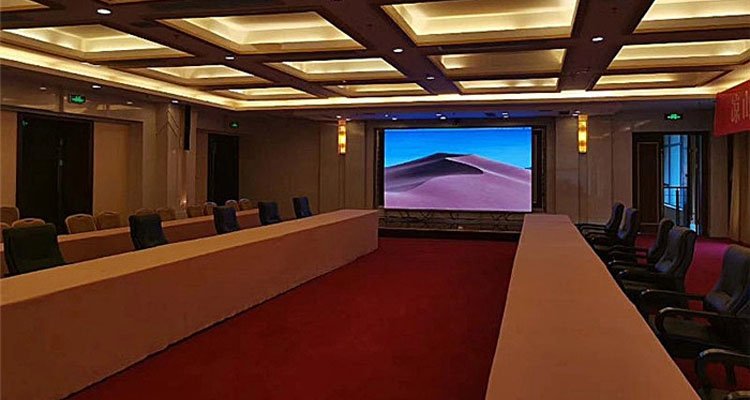
Medium Viewing Angle: The viewing angle is between 40 degrees and 80 degrees, which usually provides a wider range of light, and also keeps the viewers to have more optimal positions when watching the LED display, so that the viewers can watch the LED display from more directions; the medium viewing angle is more suitable to be applied in the home theater, meeting rooms, etc.
Wide viewing angle: wide viewing angle of the light range is usually 70 degrees to 130 degrees, nowadays some high-end products can also reach 160 degrees, wide viewing angle of the LED light irradiation to the field is broader, and then the effect of the LED display scattering will be more outstanding, very suitable for the need for a large area of the scene, for example, large-scale activities on site, stadiums, senior movie theaters, concerts and so on.
Ultra-wide viewing angle: is today described in all the viewing angle of the largest range of viewing angle is also known as the panoramic viewing angle, full viewing angle, the viewing angle of the viewing angle range is usually 120 degrees to 160 degrees.
Today’s technological development has been a number of products can be achieved to display 180 degrees of ultra-wide-angle visual angle of view. Ultra-wide viewing angle of the display in the development of technology needs to pursue a more extreme and wider viewing angle, need to be able to provide excellent viewing experience in any position.
How to Measure LED Viewing Angle
Want to know how to measure the LED viewing angle in which angle best suits you while still able to maintain a clear and bright, the next I will be how to measure the LED viewing angle of the four steps in order to explain:
Choose a color: First, we will set the LED display to a monochrome form, such as red. And the display brightness is set to the highest, convenient for us to measure the angle of view of the red color respectively.
Find the center: Secondly, we determine a center point on the red display, so that we can have a reference in the measurement, we will be the center point of the LED display, as the starting point of our measurement of the angle of view.
Measure the horizontal angle of view: again, when measuring the LED angle of view, you need to use the luminance meter or color analyzer these two tools.
It can help us accurately measure the angle of view of the LED, to avoid errors, from the center of our determination, we then slowly move to the left measuring meter, but also need to observe the number of measurement tools displayed on the number and color changes, when the brightness drops to the center of the brightness of half, we can stop and record the current position and the angle between the center point, which is to the left of the horizontal angle of view.
After measuring the left angle of view, we move the meter to the right with the center point as the starting point and repeat the steps of moving to the left to get the right horizontal angle. Finally, we compare the left and right horizontal angles and take the smaller of the two angles as the horizontal viewing angle of the display.
Measuring Vertical Viewing Angle: Finally, we use a luminance meter or color analyzer to measure the vertical viewing angle, which is very similar to measuring the horizontal viewing angle, which is measured by moving left and right, while the vertical viewing angle is measured by moving up and down.
So, we also need to find the position of the center line point of the mark, and then move upward, the brightness down to half of the mark down, downward measurement is the same way, and then take the smaller angle between the two points as the vertical angle of view.
Note: When measuring, we need to choose to measure in a dimmer environment, because too bright environment may lead to errors in our measurement results.
On the other hand, the luminance meter or color analyzer we use must be reliable and accurate so that we can get more accurate measurement results. Finally, in order to determine the accuracy of the viewing angle, we again use the meter to make several measurements, and then take out the parameters derived from the several measurements and calculate the average value to be our final viewing angle.
Importance of LED Viewing Angle
Visibility: LED viewing angle can make the audience in different positions can present clear content, and in many viewers at the same time to watch the content on the LED display, but also be able to not affect in the slightest because it is not right in the middle of the position of the reason, and lead to color shifts, uneven brightness or distortion and other phenomena.
Image consistency: in the narrower viewing angle of the display, LED display image quality may be in the audience away from the center of the display and degradation, resulting in color accuracy, contrast and brightness uniformity is reduced. Instead, a wider viewing angle can help to stabilize the image quality of the entire display, ensuring that viewers can clearly see the content on the display regardless of their location.
Better viewer engagement: A wider viewing angle allows viewers to have a more immersive viewing experience, as they can change their viewing angle at will with consistent color and uniform brightness, allowing them to view high-quality images.
Enhance the viewing experience and information dissemination: a good viewing experience can not only attract the audience can also do the effect of rapid dissemination.
Wide viewing angle so that the audience in the front of the LED screen to change the position at will can enjoy the high quality image, if the LED display is playing a brand of advertising, the audience in the enjoyment of video advertising at the same time you can also use a cell phone, a camera to record the dissemination of the network, so as to increase brand awareness and so on.
Reduce eye fatigue: inappropriate angle to watch the display content will lead to rapid eye fatigue, because our eyes in the inappropriate angle to watch, need to adapt to the distortion of the image and uneven brightness and horizontal perspective inconsistency and other reasons.
If the audience in the best visual display content can avoid rapid eye fatigue phenomenon, so that the audience can be more comfortable for a long time to enjoy the content of the display.
Cost-effectiveness: for many enterprises, with a wider LED viewing angle visibility of the display can reduce the operating costs of enterprises, thereby improving the return on assets, while a wider viewing angle can also reduce the splicing of multiple LED modules can also give the audience a better view of the effect, thereby reducing the cost of installation, purchase costs and the cost of post maintenance.
Application diversity: wider LED viewing angle makes LED display have a wider range of applications, so that the LED display has greater flexibility in the installation and placement. For example, from outdoor advertising to indoor meetings, or small retail store LED displays to large mall LED walls.
Professional applications: in the development of science and technology, medical imaging and other professional environments, for accurate color and always consistent image quality must need a wider viewing angle to maintain, especially in medical imaging, the great need for color accuracy, so that health care workers can make accurate judgment and assessment based on the content of the display, and faster for special patients to make treatment decisions.
Factors affecting the viewing angle of LED displays
A variety of factors can affect the viewing angle of a LED display, thus limiting the effectiveness of viewing content from different viewing angles. I’ll list the following points to give you an idea of these factors and help optimize the viewing experience to ensure that the intended message is more widely distributed.
Pixel Density: As a general rule, the higher the pixels, the wider the viewing angle will be; as smaller pitch LEDs produce a more even, clear and focused light.
Color deviation: When the vision or position gradually shifts the center point of the screen, the light scattering effect will also keep changing, and the color on the display may also be shifted or the picture distorted, so the light scattering pattern will change with the different visual angles, which will lead to color deviation.
Brightness and the intensity of different environmental light: in a bright environment or in direct sunlight, the LED display will need to adjust the brightness to reduce the contrast of the environment, after which the light emitted by the display may appear extra harsh.
And it will also reduce the visibility of certain angles, because the higher the brightness of the display, the more light scattering and refraction, which will lead to smaller visibility, so the angle of view will also be affected by the special environment.
LED chip package way: affect the angle of the LED display and LED chip package way, LED display package way is various, for example, COB, GOB, SMD, DIP, etc., different package way will lead to different angle of light scattering, thus affecting the angle of view of the LED display.
Surface treatment ability: some LED modules use special coating or surface treatment technology, these technologies can better reduce the reflection and scattering of light, thus improving the picture contrast and clarity of the LED display; if the surface treatment is not appropriate may make the picture distortion, color is not enough to restore and other phenomena.
Manufacturing process: the process of manufacturing LED modules will also affect the viewing angle of the LED display, so the manufacturer will optimize the optical design, so that it can do to reduce the scattering and reflection of light, thus improving the uniformity of light.
Ways to improve the viewing angle of LED display
Optimize LED chips and packages

We can choose the right LED chip according to our own needs, such as the horizontal and vertical viewing angle of 140 degrees or more. After that, we can adopt more excellent packaging technology, such as GOB, COB packaging technology, etc. These outstanding packaging methods can improve the effect of light scattering and reflection of LED chips, thus bringing wider viewing angle to the audience.
Adjustment of display modular design
Adjustment of the display module we explain in three aspects, the first aspect is to optimize the arrangement of the lamp beads, which can make the light distribution more uniform and improve the consistency of the display viewing angle.
The second aspect is to reduce the spacing of the lamp beads without affecting the cost of heat dissipation, thereby increasing the pixel density to improve the effect of the viewing angle. The third aspect is to ensure the flatness and precision of splicing when the modules are spliced to avoid the problems of light scattering and reflection caused by uneven splicing.
Adjustment of control system and driver
We adjust the circuit of the driver according to the actual demand of the display, so as to ensure that the LED chip can get the same current in different positions, so that the audience can get uniform brightness in any position to watch the display.
Perhaps the use of advanced control systems, so that the signal to improve the stability and speed of transmission, on the other hand, the benefits can also reduce the signal transmission is bad when the visibility caused by the lack of.
Applying Viewing Angle Optimization Technology
Manufacturers will view angle optimization film attached to the surface of the LED module, can make the light propagation and light distribution is better improved, thus can increase the LED display color uniformity, view angle optimization film also has a prominent advantage, can make the display of different colors of light more balanced, but also able to reduce the difference in the horizontal angle of view and different pixel density of the difference in the angle of view.
In short, in addition to the above can improve the viewing angle of the LED display, we can also according to the characteristics of the display and viewing angle, to adjust the brightness of the display, reduce or increase the contrast, improve the accuracy of the color, etc., to get a better visual effect.
What is the best viewing angle of LED display?
From the point of view of most viewers, the image quality is the best when the angle of view will be the best, when the audience is watching the LED display screen the best LED display angle of view is usually 100 degrees to 140 degrees for the horizontal angle of view, the vertical angle of view in 120 degrees or so; when the audience is in this range can get the best picture quality and color accuracy in this range of view not only can enhance the audience’s visual experience.
It also brings great benefits in some fields, for example, in the application of roads and highways and railroads, which can give drivers enough time to view the information and notices displayed on the LED radar warning signs.
How to choose the best LED viewing angle?
For companies that need to install billboards, the first and most important thing to consider is the location of the installation, taking into account all the obstacles that exist in the surrounding environment.
If the LED billboards are installed outdoors, it is important to take into account the uniformity of the brightness and the width of the viewing angle of the display, so that it is easier to attract the views of the audience.
To get the best viewing angle for the viewers, the company needs to check the location and geographical layout of the billboard and observe whether the placement of the display will be influenced by other businesses.
It is also important to make sure that the viewers will be viewing the display from more angles, which may result in an imbalance of brightness, before designing an excellent solution for placing the billboard and achieving the optimal viewing angle.
If you’re not sure what the proper viewing angle is for your LED screen project, you can ask us and we’ll give you a quick answer.

