



TFT and OLED are common technical terms in displays, both serving as fundamental components. Many may not fully grasp their distinctions,let’s dive deeper.
What is OLED?
OLED refers to an organic thin film compound sandwiched between two electrodes. As a self emissive material, it’s widely used in displays for computers, smartphones, smartwatches, and more.
What is TFT?
TFT is a common semiconductor material, specifically a type of field effect transistor. It is integrated into displays utilizing various display technologies, such as IPS, AFFS, MVA, and others.
TFT vs OLED: Display Comparison Across Multiple Aspects

Brightness
TFT displays can integrate various features to achieve different brightness levels. Many common TFT displays on the market incorporate HDR functionality, which further enhances performance beyond standard capabilities.
Conventional displays typically reach only 200-300 nits brightness. TFT based displays can surpass this range, achieving 600 nits or even 800 nits.
OLED displays, built using entirely different technology, achieve higher brightness through self emission. Many high end OLED models can reach 1000 nits or even 1500 nits.
Black Levels
TFT displays exhibit limitations in reproducing true blacks, as they currently cannot achieve perfect black levels.
This stems from their reliance on backlight control, which lacks the precision to fully switch pixels on or off.
In contrast, OLED displays independently control each pixel’s light emission, enabling perfect black levels.
Viewing Angle
I conducted a simple test comparing their viewing angles. I purchased both a TFT display and an OLED display online, placing them horizontally at a distance of 1 meter from my observation point.
I moved to my viewing position and recorded the differences between them. Ultimately, I found the OLED display offered significantly wider viewing angles than the TFT display.
The TFT display’s viewing angle was approximately 130-140 degrees, while the OLED displays ranged between 160-170 degrees.
From this informal test, I concluded OLED displays hold a slight advantage.
Contrast Ratio
Contrast ratio refers to the difference between the brightest and darkest parts of an image. TFT and OLED displays also exhibit significant differences in this aspect.
Since OLED displays can independently control each pixel’s on and off state, they can completely turn off pixels to produce deep blacks, achieving contrast ratios of 1000000:1 or higher.
When displaying black scenes, TFT monitors’ backlights slightly affect black areas, resulting in less profound black depth. Consequently, their contrast ratio typically peaks around 1000:1.
Response Time
TFT displays exhibit slower response times than OLEDs,particularly with IPS panels. Rapidly moving images take 5-20 milliseconds to render, often resulting in noticeable motion blur.
In contrast, OLEDs deliver significantly faster response times, switching images in just 0.1 milliseconds. This makes them ideal for high refresh rate applications like gaming and fast paced content.
Power Consumption
When displaying only a portion of the screen during movie playback, TFT displays illuminate the entire panel, resulting in significantly higher power consumption.
OLED displays achieve black backgrounds or scenes by turning off pixels, requiring minimal power. However, their power consumption increases when displaying vibrant colors.
Lifespan
TFT displays boast a lifespan of 50,000 to 100,000 hours and are resistant to burn in, making them more durable.
OLED displays, utilizing organic compounds, gradually degrade over time. Their lifespan is typically shorter, ranging from 10,000 to 30,000 hours, and they are susceptible to burn in.
Price
TFT displays benefit from mature, simplified manufacturing processes, resulting in lower production costs and more affordable prices.
They are ideal for budget friendly devices like the Skyworth 26L16SW TV and nearly all TCL TV models, which utilize TFT display technology.
OLED displays involve a more complex manufacturing process with higher technical demands, resulting in increased costs and prices.
Many high end devices utilize OLED technology, including Samsung’s S95F 4K and S90F 4K TVs, as well as LG’s SIGNATURE and evo M series televisions.
Image Quality
Having used both TFT and OLED displays for study and work, I observed the following specific differences in image quality:
TFT displays exhibit lower color fidelity when rendering diverse hues. This is particularly noticeable in deep blacks, which often appear as dark grays. Overall contrast levels are lower, resulting in slightly inferior image quality.
OLED displays, however, deliver vibrant, accurate colors and perfect blacks.
Consequently, their image quality surpasses that of TFT displays, making them particularly well suited for showcasing High Dynamic Range (HDR) content.
TFT vs. OLED in Practical Applications
Tablets

Most tablets on the market today utilize TFT displays. Offering a more cost effective price point and solid performance, they remain the ideal choice for the majority of users.
Meanwhile, OLED display technology, with its vibrant colors and superior performance, is gradually entering the computer sector.
It’s typically found in higher end tablets like Samsung’s Galaxy Tab S10 Ultra, Asus’ ROG Flow Z13 gaming tablet series, and the Vivobook 13 Slate OLED tablet.
Wearable Devices

Many smartwatches we commonly use are made with TFT and OLED technology. Lower priced smartwatches typically feature cost effective TFT displays, while premium brands like Apple and
Huawei opted for OLED screens.
Flexible Displays
The organic materials used in OLED enable the creation of various flexible display types. These can be molded into different shapes (circular, spherical, cubic, etc.) and freely folded or bent.
They are frequently employed in creative displays and foldable phones, with even greater possibilities emerging in the future.
Automotive
In the automotive sector, TFT display technology is favored by most due to its reliability and clear visibility under intense sunlight. However, some advanced instrument clusters and head up displays (HUDs) utilize OLED display technology.
Medical Devices
Most displays used in hospitals for patient imaging are OLED screens.
These displays offer high definition visuals that reveal intricate details, aiding physicians in rapid diagnosis and enhancing workflow efficiency.
How does LED display technology compare to TFT and OLED?
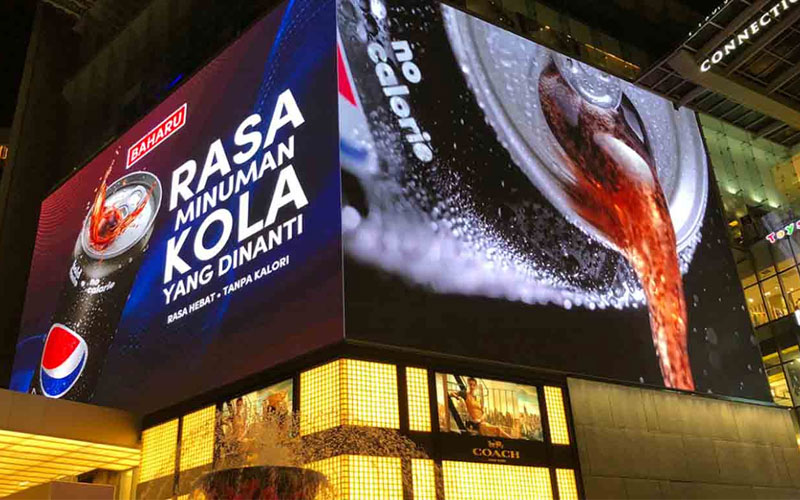
Compared to TFT and OLED, LED technology delivers significantly higher brightness. TFT and OLED screens typically peak at under 2000 nits, limiting their applications.
LED displays, however, can achieve peak brightness levels of 5500 nits, ensuring clear visibility even under intense sunlight.
Summary
The above outlines the key differences between TFT and OLED display technologies. We hope this overview has provided you with a clear understanding of their respective features and applications.
Frequently Asked Questions
What are the advantages and disadvantages of TFT compared to OLED?
Compared to OLED, TFT offers advantages such as affordability, longer lifespan, and resistance to burn in. Its disadvantages include lower contrast ratios and higher power consumption.
Which display is better suited for outdoor visibility?
TFT displays significantly outperform OLED in brightness. Even under harsh outdoor lighting conditions, viewing content remains unimpeded, making TFT superior for outdoor visibility.
When comparing TFT, OLED, and LED display technologies, which offers the best durability?
Among TFT, OLED, and LED display technologies, LED displays demonstrate superior durability. LED screens utilize high quality LED chips and specialized heat dissipation designs, extending their lifespan to approximately 10 years.
JYLED—Your Trusted LED Display Manufacturer
TFT and OLED display technologies are suitable for small devices like smartphones and computers. If you need to purchase larger scale displays, we recommend prioritizing LED display technology for its superior cost effectiveness.
We will tailor LED displays to your specific requirements. Our professional team provides comprehensive support throughout the entire process before, during, and after sales including assistance with LED display installation.

