With the wide array of Touch Screen products available today, this guide will be perfect for you when you’re faced with so many choices and don’t know which Touch Screen LED TV to choose.
This guide will take you through an in-depth look at how Touch Screen LED TVs work, their features, types and more.
What is a Touch Screen LED TV
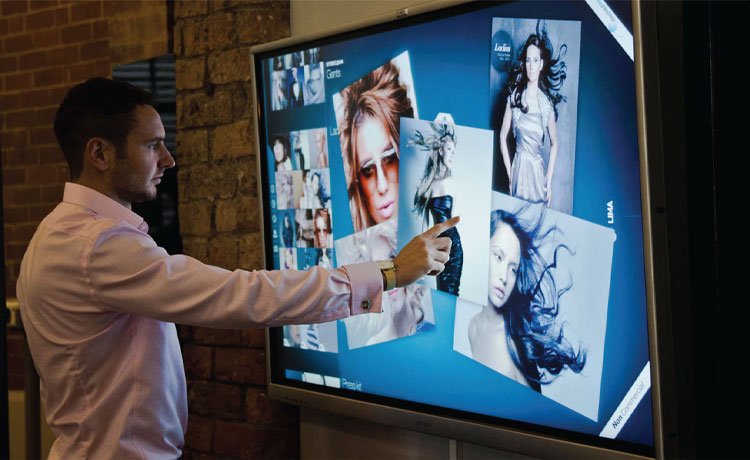
A Touch Screen LED TV is a TV display that combines the various features of a Touch Screen interface with light emitting diode technology. Some TVs currently require a remote control or voice commands to perform functions such as adjusting volume or switching channels, but Touch Screen LED TVs can perform commands by touching the screen.
Touch Screen TV Working Principle
The Touch Screen LED TV combines advanced display technology and interactive touch, enabling users to control the screen with their fingers. It works using both capacitive touch technology and infrared (IR) touch technology. Both technologies have unique advantages. Let’s learn more about them below:
Capacitive Touch Technology
Capacitive touch technology is often used in high-end display devices such as Touch Screen LED TVs, interactive LED displays, and other high-end devices that require extremely high response speeds and multitouch capabilities.
In capacitive screens, touch is detected by utilizing the electrical properties of the human body. When the user’s finger touches the surface of the display, the electrostatic field changes to indicate the point of contact.
However, it can only work when the skin and capacitive stylus are in direct contact with the screen, making it almost impossible to use with gloves on.
Infrared Touch Technology
An infrared Touch Screen is a set of invisible light-emitting sensors that cover the entire screen area. When a finger or other object interferes with these light beams, the sensors detect the location of the interference.
This method is better suited to large displays, making it ideal for commercial or industrial use. Infrared touch can be used with any object, so infrared touch has an advantage over capacitive screens.
Infrared (IR) Touch Screen

Unlike resistive Touch Screen LED TVs, IR Touch Screen LED TVs use an infrared sensor to detect touch. This type of Touch Screen LED TV has a bezel around the edge of the screen that emits infrared light, and any touch can trigger the sensor to detect it.
This technology supports multitouch and is also widely used in large displays because of its scalability and performance under various lighting conditions. In addition, infrared Touch Screen LED TVs are suitable for more collaborative environments such as interactive kiosks and educational areas.
Optical Touch Screens
Optical touch screens are known for their durability and ability to accurately detect multiple touchpoints. Optical Touch Screens work by utilizing a camera located at the edge of the screen to detect touchpoints through light interference.
Features of Touch Screen LED TVs
Intuitive Touch Controls
While many emerging remote controls are responsive, using a remote to click on every option on your TV can become tedious. Modern Touch Screen LED TVs not only allow for more intuitive touch control of the screen, but they also enable users to easily swipe, retract, and pinch for seamless interaction.
With the ability to control the screen with just your hands, you can feel more control over the screen and use it with ease and convenience.
4K and 8K Resolution
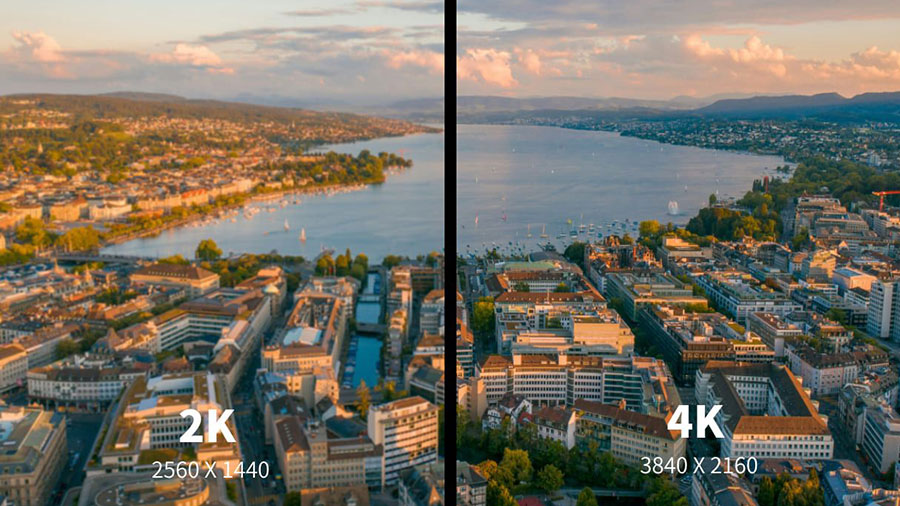
Today’s Touch Screen LED TVs are equipped with Ultra HD resolution. As a result, Touch Screen LED TVs offer greater clarity and better picture quality, whether you’re presenting at a meeting or watching a movie. Even with oversized displays, they are rich in detail.
Smart Integration
From streaming apps to smart home control, Touch Screen LED TVs can connect to Wi-Fi, Bluetooth and Internet ecosystems. Features like cloud storage access, screen mirroring, and AI assistant compatibility have also become standard on Touch Screen LED TVs.
Advanced Durability
The latest Touch Screen LED TV models now feature scratch- and impact-resistant tempered glass screens that can naturally withstand regular use in high-traffic areas. Touch Screen LED TVs are therefore very durable.
Multi-User Collaboration
Touch screen LED TVs support multiple touchpoints at the same time, enabling multiple users to interact with the display at the same time. This makes them a popular choice for education and corporate meetings.
What is the difference between a touch screen LED TV and an interactive LED display?
From the touch screen technology, touch screen LED TV natural gesture and touch use navigation and control is more simple and intuitive, although the interactive LED display also supports finger touch, but more through other interactive ways to realize the interaction with the user.
In terms of price and cost, the price varies because of customization and application of different scenarios. Touch screen LED TV is relatively affordable and suitable for home entertainment and individual users.
However, interactive LED displays are commonly used in commercial displays or professional event venues, which require specialized customization and can be relatively costly.
Touch screen LED TV applications

Advances in LED technology have made touch screen TVs more energy-efficient, lightweight, higher-end visual effects, and brighter. Today, they are mainly found in homes, offices, classrooms, conference rooms, retail stores, and more. Here’s a look at the role it plays in various industries.
Education
From the education industry, incorporating Touch Screen LED TVs into classroom activities can increase student engagement and motivation.
Not only do Touch Screen LED TVs turn classrooms into interactive learning environments, but they can enhance the learning experience by providing hands-on and interactive activities that cater to different learning styles.
As an educational collaboration tool, Touch Screen LED TVs integrate with educational software, thus enabling distance learning. As you can see, Touch Screen LED TVs add to education and facilitate efficient learning.
Retail
From retail stores, touch screen LED TVs can improve customer engagement on the one hand. Retailers can use touch TVs for interactive product displays, providing a more interactive and personalized environment.
Self-service kiosks on the other hand, where shoppers can browse catalogs or place orders through the Touch Screen display, thus enhancing the sense of autonomous operation.
In addition, features such as virtual try-on and seamless checkout processes help create a pleasant and efficient shopping experience.
Healthcare
Healthcare utilizes a Touch Screen LED TV-based information system to facilitate patient care, provide convenient services, and reduce the workload of healthcare professionals.
Enterprise
For enterprises, Touch Screen LED TVs not only provide professional presentations, but also allow teams to annotate directly on slides and share content easily. Video conferencing is also possible, as the Touch Screen LED TV has a built-in camera and microphone for seamless teleconferencing.
Home Entertainment
In terms of home entertainment, Touch Screen LED TVs simplify usability by allowing parents to quickly switch between apps while the kids enjoy interactive games.
Touch Screen LED TVs also enhance visuals, with stunning picture quality and intuitive controls combining to make watching a movie feel like you’re there.
Frequently Asked Questions
How do I clean my Touch Screen TV?
To clean your Touch Screen LED TV, gently wipe the TV screen with a soft, lint-free cloth. Avoid using abrasive materials or harsh chemicals that may cause damage to the screen.
Can an interactive LED display replace a Touch Screen LED TV?
Theoretically it can, because both interactive LED and touch screen LED TVs control the display of the screen by touching the screen. Not only does the touch screen LED TV support multiple touchpoints at the same time, enabling multiple users to interact with the display at the same time, so can the interactive LED display.
What are the common sizes of touch screen TVs?
Touch Screen LED TVs come in a variety of sizes, from smaller sizes suitable for personal use, to larger sizes suitable for commercial or educational environments.
Are there educational applications for Touch Screen LED TVs?
Yes, Touch Screen LED TVs are widely used in education for interactive lessons, timely feedback and engaging learning experiences.
Can I use Touch Screen LED TVs for video conferencing?
Yes, most Touch Screen LED TVs are equipped with cameras and support video conferencing apps for virtual meetings.
Conclusion
As technology continues to advance, Touch Screen LED TVs represent a major leap forward in display technology. With the above guide, we believe we have a clearer understanding of Touch Screen LED TVs. This makes us comfortable in choosing a Touch Screen LED TV to buy.