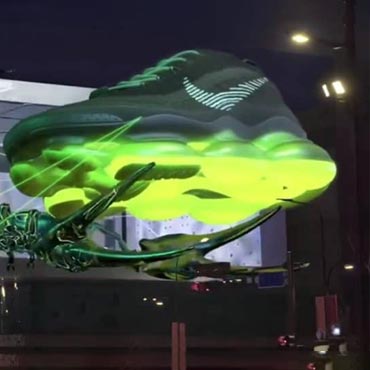
If you’re researching LED displays with a certain degree of transparency, you’ve likely come across references to transparent LED film and transparent screens on various websites.
As two very popular types of transparent display devices, what exactly is the difference between transparent LED film and transparent screens? Which one better suits your needs? Read on to find out the answers.
What Is a Transparent LED Film?
A transparent LED film is a lightweight, ultra-transparent LED display. Its substrate is made of a flexible, transparent material (PET/TPU), and all LED lamps are evenly arranged on this flexible, transparent substrate.
In screens with separate LED and driver circuits, each LED lamp has its own driver IC, whereas LED panels without this separation integrate a single master driver. As a result, transparent LED films do not require additional electronic components or equipment to drive the LEDs; the pixels can be mounted on the substrate with a very simple structure, resulting in extremely high screen transparency.
This screen is exceptionally lightweight, slim, and minimalist. It can be installed directly on glass structures without the need for a steel framework. The content displayed on the transparent LED panel is visually striking, making the transparent LED film ideal for applications such as shopping mall storefronts and exhibitions.
What Is a Transparent LED Screen?
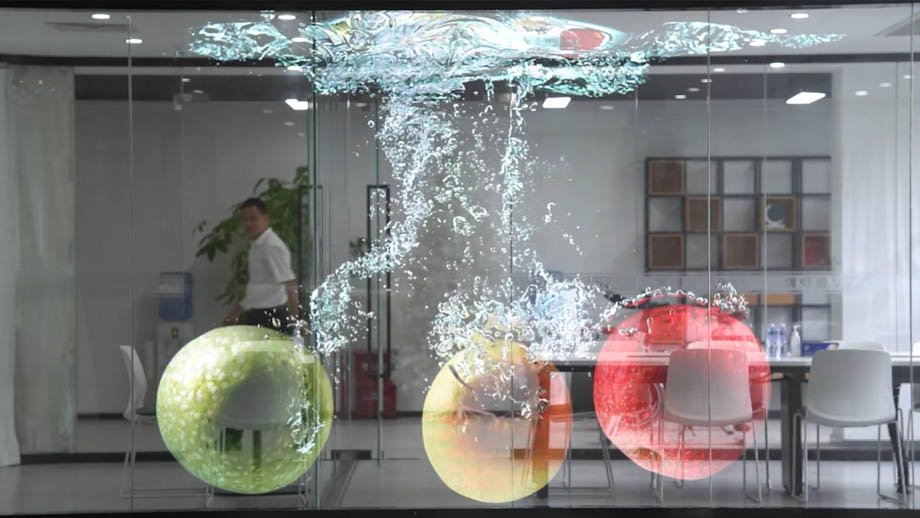
A transparent LED screen is an LED display that uses DIP or SMD technology to bond red, green, and blue LED chips onto a perforated structure. Like traditional LED screens, it requires the assembly of LED cabinets to form a complete display.
Its structure features a built-in perforated design, making it lighter than traditional LED screens and providing excellent light transmittance and natural heat dissipation.
DIP technology uses larger LED chips with higher luminance, delivering clear content display even in bright environments. SMD-packaged 3-in-1 LED lamps, on the other hand, offer vivid and bright colors and provide excellent value for money.
Thanks to the stunning visuals enabled by the screen’s transparency and its stable installation structure, transparent LED screens are ideal for commercial events, art exhibitions, glass curtain walls, and other settings, presenting viewers with vivid, clear, and bright floating images.
Transparent LED Film vs. Transparent LED Screen: A Detailed Comparison of Differences
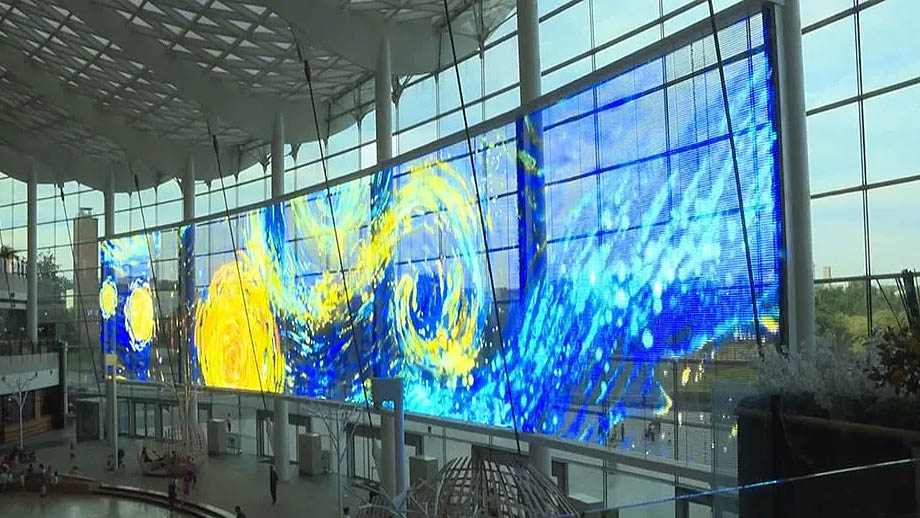
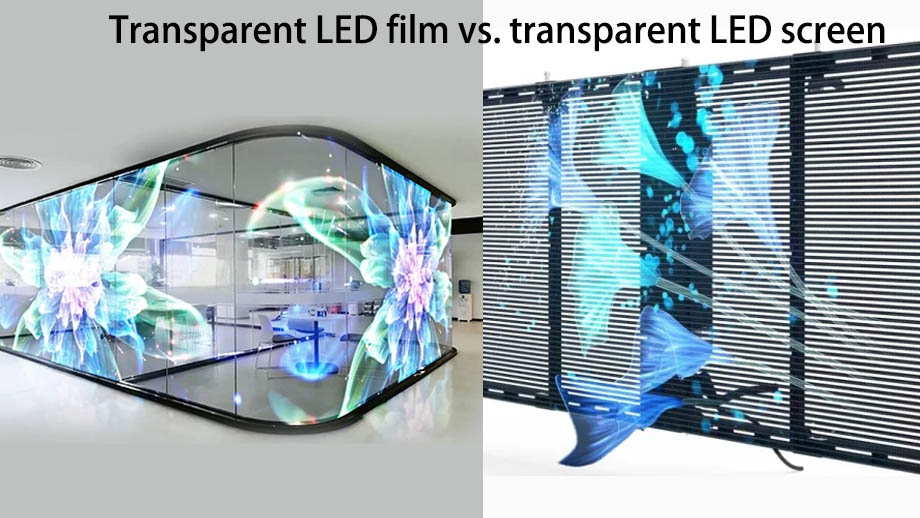
When it comes to transparent LED film and transparent LED screens, many users who are not very familiar with LED displays may mistakenly believe they are the same type of screen. In fact, the differences between the two are quite distinct, for example:
Screen Structure
Transparent LED Film
The screen appears as a soft, transparent film. The panel primarily integrates LED lamps, driver ICs, and circuitry. Because the screen is soft and lightweight, no steel support structure is required during installation. Some transparent LED films that utilize separate lamp-driver technology can be cut to size, offering great convenience and flexibility.
Transparent LED Screen
Transparent LED screens, on the other hand, are assembled from standard LED cabinets. These cabinets house components such as LED light strips, power supplies, and receiver cards. These components are compactly integrated into the rear of the cabinets and do not interfere with the screen’s display.
Transparency
- Transparent LED Film: Because the substrate of the transparent LED film inherently possesses high light transmittance and contains no other electronic components on its transparent surface that could block light, the LED panel is extremely transparent and clear, with screen transparency ranging from 80% to 95%.
- Transparent LED Screens: Transparent LED screens achieve high transparency by utilizing the gaps within the LED cabinet. Depending on the size of the gaps between the upper and lower LED strips in the cabinet, the screen’s transparency may vary; most transparent LED screens achieve a transparency of 50% to 80%.
Flexibility
- Transparent LED Film: With the exception of a small number of rigid transparent LED panels, most screens are highly flexible and can be mounted on curved glass surfaces with various radii, displaying clear and reliable images consistently. They support rolling for storage and transportation, significantly reducing shipping and storage costs.
- Transparent LED Screens: Transparent LED screens are assembled from rigid LED strips and lack flexibility; in most cases, they are only suitable for installation as flat screens. Of course, some products can achieve a slight curved effect by slightly angling the joints between LED cabinets.
Screen Thickness and Weight
- Transparent LED Film: The minimum thickness of transparent LED film can reach an impressive 1 mm. Common screen thicknesses on the market range from 1 to 3 mm, with a weight of 3 kg per square meter. These lightweight, thin, and transparent LED panels can be easily integrated into a variety of installation environments.
- Transparent LED Screens: Transparent LED screens typically range in thickness from 10 to 30 mm and weigh 5 to 8 kg per square meter. They require a steel support structure to ensure installation stability.
Installation Methods
Transparent LED Film
Generally, certain models of transparent LED film come pre-coated with a layer of specialized transparent adhesive. Upon receipt, simply peel off the protective film covering the screen’s surface to securely adhere the screen directly to a glass structure.
Some models of transparent LED film are not designed for direct adhesion but can be easily suspended using rigging; floor-standing displays can also be placed directly on the ground.
You can complete the screen installation quickly and easily without drilling holes or altering the existing structural environment.
Transparent LED Screens
Before installing a transparent LED screen, you must first survey the on-site environment, erect a steel support structure, and then assemble and secure the transparent LED cabinets to the steel support.
Finally, connect the cables between the different LED cabinets, power on the system to test the display performance, and make any necessary adjustments.
Brightness
- Transparent LED Film: To ensure the transparency of the screen panel, the LEDs in transparent LED film are typically quite small. Consequently, its maximum brightness is relatively low, usually ranging from 500 to 4,500 nits, making it suitable only for semi-outdoor and indoor settings, such as shopping malls and indoor exhibitions.
- Transparent LED Screens: Transparent LED screens are divided into indoor and outdoor types. Indoor transparent LED screens have a brightness of 500 ~ 1,000 nits, while outdoor transparent LED screens range from 3,500 to 6,500 nits. High brightness screens manufactured using SMD and DIP technologies can even achieve brightness levels of 8,000 ~ 10,000 nits, maintaining clear visibility even in harsh weather conditions.
Maintenance Methods
- Transparent LED Film: Due to the highly integrated structure of transparent LED film, you cannot repair a single faulty LED lamp on your own; you must return the defective LED screen to the manufacturer for repair.
- Transparent LED Screens: All LED modules in a transparent LED screen are independent of one another, including the three-color LED lamps. In the event of a malfunction, you can quickly perform maintenance by directly removing and replacing the faulty LED lamp yourself or by replacing the faulty LED strip.
Protection Rating
- Transparent LED Film: Transparent LED film is primarily used indoors, where protection rating requirements are not high; the screen typically has an IP40 rating.
- Transparent LED Screen: Indoor transparent LED screens have an IP40 rating, while outdoor transparent LED screens have an IP65 rating. The higher protection rating effectively prevents rain, dust, and other outdoor elements from entering the screen and damaging components.
Transparent LED Film vs. Transparent LED Screen: Quick Comparison Table
| Comparison Criteria | Transparent LED Film | Transparent LED Screen |
| Screen Structure | Transparent film-like | Perforated screen |
| Transparency | 80% ~ 95% | 50% ~ 80% |
| Flexibility | Flexible | None |
| Thickness | 1 ~ 3 mm | 10 ~ 30 mm |
| Weight | 3 kg per square meter | 5 ~ 8 kg per square meter |
| Installation Method | Standing or adhered to glass | Mounted on a steel support structure |
| Brightness | 500 ~ 4,500 nits | 500 ~ 10,000 nits |
| Maintenance | Return to factory for repair | Users can replace LED lamps or LED strips themselves |
| Protection Rating | IP 40 | IP 40, IP 65 |
| Market Price | $ 700/㎡ ~ $ 2,100/㎡ | Starting at $ 400/㎡ |
As can be seen, transparent LED films are relatively thinner, lighter, and offer higher transparency; however, they are also more expensive. Additionally, their protection rating is too low, making them unsuitable for outdoor use.
Transparent LED screens, on the other hand, support installation and use in both indoor and outdoor environments. They offer better protection, higher screen brightness, a more stable installation structure, and lower procurement costs, making them a more cost-effective choice.
Transparent LED Film vs. Transparent LED Screen: How to Choose?
If you’re planning to purchase a transparent display but aren’t sure which screen is best suited for your project, we recommend considering the following factors:
Indoor or Outdoor
If your installation environment is an indoor glass display window, you can choose either a transparent LED film, which is simpler and more convenient to install, or a transparent LED screen, which offers a more stable structure.
If your installation environment is outdoors, such as the glass curtain wall of a high rise building, we recommend choosing an outdoor transparent LED screen. Its high brightness and high protection rating ensure high visibility content display even in direct sunlight, without worrying about the screen’s safety being compromised by harsh outdoor weather conditions.
Large-Scale or Small-Scale Installation
If your event is a large-scale installation, using transparent LED film may require a large number of screens. A large installation area could compromise stability. We recommend choosing a transparent LED screen and setting up a stable steel support structure in advance to mount the LED modules on it, ensuring long-term stability even for large-scale projects.
For small-scale installations, you can choose transparent LED film, which requires no complex preparation and allows you to quickly affix the screen to glass to complete the installation.
Is Permanent Installation Supported?
If the venue does not allow for permanent installation of equipment, or if government regulations prohibit modifications to certain areas, then transparent LED film better meets your needs.
If the location allows for permanent installation, investing some time to deploy a transparent LED screen will provide you with longer-lasting and more reliable display performance.
Can the Project Be Installed on a Glass Surface?
If the project can be installed on a glass surface, transparent LED film is an ideal choice. Select transparent LED film that comes with its own specialized adhesive, allowing you to directly affix the screen to the glass.
If the project does not support installation on a glass surface, you can also construct a steel framework in front of the glass structure and mount the transparent LED screen there. This solution will not obstruct the view through the glass, ensuring clear and vivid visuals.
Transparent LED Film vs. Transparent Screens: Practical Applications
- Building Facades: Installing transparent LED screens using DIP technology on building facades helps businesses promote their operations or secure advertising investments from other advertisers, generating additional revenue for the company.
- Glass Storefronts: Applying transparent LED films to shopping mall glass storefronts allows for the display of content that attracts customers in a clean and aesthetically pleasing manner, without obstructing their view, so potential customers can view the merchandise inside the storefront at any time.
- Stage Backdrops: Stage backdrops constructed using transparent LED screens not only display visually appealing imagery to enhance the audience’s impression of the stage but also serve as advertising platforms, broadcasting sponsor ads during intermissions.
- Temporary Exhibition Halls: For temporary exhibition halls, efficiency is key when installing LED screens. You can quickly apply transparent LED film to several glass display panels, instantly transforming your booth into the most eye-catching presence in the venue.
FAQ
Can Transparent LED Film Be Installed on Curved Glass?
Yes. Some models of transparent LED film are flexible and bendable, so they can be applied to curved glass without affecting the display quality.
Can Transparent LED Film Be Cut to Size?
Some models do. Transparent LED films with separate LED lamps and drivers, where each LED lamp has its own driver IC, can still be powered on, emit light, and display content normally even after being cut.
For transparent LED films without separate LED lamps and drivers, the cut sections may lose the centralized driver components and will not function properly when powered on.
Transparent LED Film vs. Transparent LED Screen: Which Offers Sharper Image Quality?
The image clarity of transparent LED films and transparent LED screens depends on the pixel pitch and resolution of the screen. The smaller the pixel pitch, the finer the screen’s details; the higher the screen’s resolution, the clearer the displayed content.
Do Transparent LED Screens Consume a Lot of Energy?
No, they do not. The light-emitting components of transparent LED screens are essentially LED lamps, and LEDs have extremely high energy conversion efficiency, so the screens’ energy consumption is low.
Why Are Transparent LED Films Not Suitable for Outdoor Installation?
There are three main reasons why transparent LED films are not suitable for outdoor installation:
- Inappropriate installation method: Some translucent LED films are installed on glass surfaces using adhesive. In outdoor environments, exposure to rain may cause the adhesive to lose its tack, resulting in poor screen installation quality.
- Limited brightness: Transparent LED films have limited brightness and are not suitable for displaying content in outdoor environments exposed to direct sunlight.
- Insufficient protection rating: Outdoor LED displays must meet an IP 65 protection rating, whereas transparent LED films only achieve an IP 40 rating, making them unable to maintain long-term operation in outdoor environments.
Summary
Transparent LED films are easy to install and produce an aesthetically pleasing display, but they are not suitable for extra-large-scale or outdoor projects. If you need to install an outdoor LED screen, we recommend choosing a transparent LED screen.
Whether you need to purchase transparent LED films or transparent LED screens, you can contact JYLED through our consultation portal. Our sales specialists will provide you with a suitable screen procurement solution within 24 hours.