Do you often feel difficult to adapt when we use our current electronic devices to watch some of the ancient videos? This is usually due to the mismatch between the video aspect ratio of ancient videos and the display aspect ratio of our existing devices, resulting in a degraded visual experience.
Let’s find out how video aspect ratio affects our visual experience.
What is video aspect ratio?
The video aspect ratio is the ratio of the width of the image displayed to the height of the video, and we usually use a formula to express it: video aspect ratio = width: height.
The ratio of the video aspect ratio formula has a very strict order, the first number of the video aspect ratio must be the width, the second number must be the height, if the order is reversed, the display will be very different.
The video aspect ratio determines the width format of the video and how it will eventually appear on the display.
Usually the original aspect ratio of a video determines the proportion of its final presentation, the proportion of the picture has nothing to do with the size of the monitor used to play the video, for example: a video aspect ratio of 1:1 square video, the use of the playback of the monitor width is much smaller than the height, no matter how high it is, the final playback screen is still full width of 1:1, The extra portion of the display is usually supplemented with black bars to fill the monitor screen.
This black edge defect usually occurs in our daily life in the common LCD, OLED screen, if the LED screen, we are completely free to assemble the LED screen aspect ratio, and the video aspect ratio to achieve the degree of perfect match.
Even if the two aspect ratios do not match, the LED screen will be configured with a video controller, the use of video controllers can change the video playback screen on the LED screen, whether it is not to change the ratio of the case to choose to intercept part of the screen to fill the screen, or not to change the proportion of the use of the way to fill the screen with tiled, or change the proportion of the video to fill the screen with stretched, the video controller of the LED screen can be done. Can do, therefore, due to the video aspect ratio caused by the monitor black edge problem is mostly seen in LCD, OLED screen, in the LED screen does not exist.
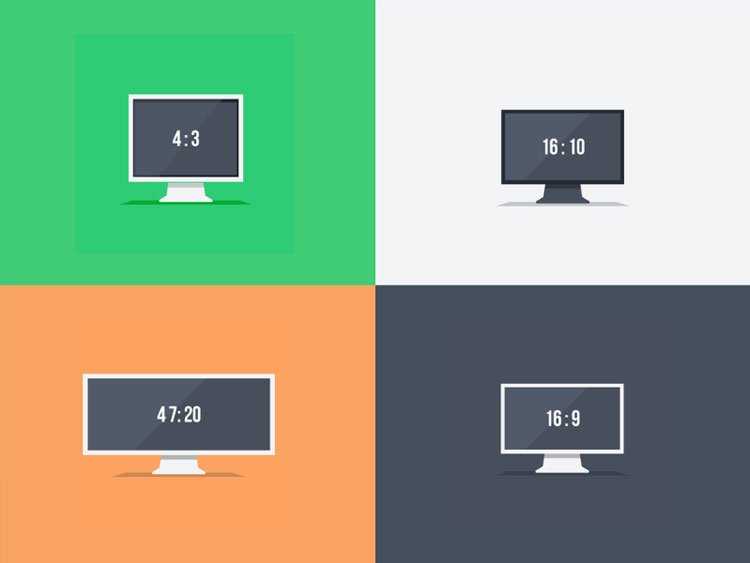
What is video resolution?
Video resolution refers to the total number of pixels contained in the screen of a video after it is created. We usually express it with a formula of width x height: video resolution = number of pixels (wide side) x number of pixels (high side).
The higher the video resolution and the greater the number of pixels, the richer the color and detail of the video picture.
Video Aspect Ratio and Video Resolution: What is the difference?
Video Aspect Ratio
- Definition: Video Aspect Ratio only represents the aspect ratio of an image and has nothing to do with the physical size of the image.
- Role: Through the video aspect ratio can get the shape and tone of the video, usually we will think that the larger the video aspect ratio, the more depth the image feels; the smaller the video aspect ratio, the more retro the image feels.
- Expression: The expression of video aspect ratio is usually a simplified numerical ratio, such as 16:9, 4:3 and so on.
Video Resolution
- Definition: Video resolution is the actual number of pixels in an image, you can know its actual size, and we can get the video aspect ratio by video resolution calculation.
- Role: Video resolution can be used to get the clarity index of the video, the higher the resolution, the clearer the video; the lower the resolution, the blurrier and more pixelated the video.
- Expression: The expression of video resolution is usually a formula that multiplies the number of all pixels in the video, for example: 1920×1080, 2560×1440, etc.
Some of the more common high-definition video resolutions we usually use the abbreviated term directly, such as: 720p, 1080p, 4k, 5k and 8k.
Conclusion
Video aspect ratio and video resolution are two different video display metrics. The video aspect ratio determines the shape of the video, while the video resolution is related to the clarity of the video content.
If we know the video resolution, we can calculate the video aspect ratio, while the known video aspect ratio can not directly get the size of the video resolution.
How video aspect ratio affects the viewing experience
When our eyes view a video frame, the aspect ratio it presents depends on its original frame aspect ratio, and also on whether the monitor is set to play it in equal proportion or stretch it regardless of the ratio.
When the video aspect ratio and the monitor aspect ratio match, the monitor can directly play out the video full screen in equal proportions, in which case the playback effect is the best, and the viewing experience is also the best.
When the video aspect ratio and monitor video aspect ratio does not match, the monitor if the proportion of video screen playback, the screen will appear next to the black edge; monitor if the screen will be stretched to spread the full screen playback, the proportion of characters and objects in the screen will be stretched deformation; both of these situations will have a different degree of impact on the viewing experience.

Common Video Aspect Ratios and Their Uses
4:3 (Standard) Aspect Ratio
The 4:3 video aspect ratio was the standard aspect ratio for early videos, and this video aspect ratio was quite popular at one time, but it has since been gradually replaced by 16:9 and 9:16 video aspect ratios with the popularity of high-definition (HD) video and the widespread use of smartphones.
16:9 (Widescreen) Aspect Ratio
The 16:9 aspect ratio is mostly used in movies and TV dramas, as well as online landscape videos, etc. This ratio is similar to the ratio of the sense of the movie, which is often used in the production of long videos, and 16:9 is also one of the main aspect ratios in the mainstream video viewing platforms nowadays.
9:16 (Portrait) Aspect Ratio
The 9:16 ratio is commonly used in smartphones nowadays because it is close to the screen ratio of a smartphone, and there are a lot of short video creators nowadays who make videos based on this video aspect ratio.
1:1 (Square) Aspect Ratio
Once square TV sets were popular for a while, and many movies and TV dramas were created with 1:1 images at that time. Nowadays, we use cell phones to watch previous movies and TV dramas will find that there are black edges at both ends of the cell phone, and the fundamental reason is that the video aspect ratio at that time is incompatible with the aspect ratio of the display devices nowadays.
21:9 (Cinema Widescreen) Aspect Ratio
Video with a 21:9 aspect ratio is what we would call Super Widescreen. This type of video aspect ratio is relatively rare, and it is usually the aspect ratio chosen by a few movies for aesthetic or artistic reasons.
A 21:9 video aspect ratio will give the viewer of the video a more immersive experience, but it is more limited in the number of display devices it is compatible with. There are usually no 21:9 displays on the market, and if there is a need, this aspect ratio can only be achieved by custom assembling an LED screen.
How to recognize the aspect ratio of a video
Directly view the synopsis: Sometimes we can directly know the video aspect ratio directly from the information introduction of the video.
According to the monitor aspect ratio: If the video playback can just spread the monitor screen, then the monitor aspect ratio is the video aspect ratio.
Calculated using the video resolution: If you know the resolution of the video is A x B, then the video aspect ratio is the smallest ratio after simplifying A:B.
What is the optimal video aspect ratio?
There is no single video aspect ratio that can be called the optimal video aspect ratio because the optimal video aspect ratio depends on a number of factors such as the frame aspect ratio of the video content itself, the monitor aspect ratio that the user is using to play it, and the user’s viewing habits, etc. The optimal video aspect ratios are all relative, not absolute.
Conclusion
Before reading this article, you would not have imagined that the most insignificant video aspect ratio has the most direct impact on our viewing experience, and the best case scenario is to take our viewing experience a big step up by choosing a playback monitor that matches the video aspect ratio.