



Wireless LED displays offer greater flexibility; wired LED displays provide more stable signal connections. When deciding to purchase an LED display, how should we choose between wired and wireless LED displays? Let’s take a closer look at this topic in detail through this article.
Advantage Comparison Between Wired and Wireless LED Displays
Reliability
As long as the cable connections are checked for stability before playback and the signal cables remain secure, the signal from a wired LED display will be transmitted steadily.
However, wireless signal transmission in wireless LED displays is susceptible to interference from other signals. If interference occurs, it may cause part of the transmitted signal to be lost, resulting in a chaotic display on the LED screen and leading viewers to mistakenly believe the LED screen’s performance is subpar.
This primarily depends on the installation environment and production technology of the wireless LED display. In environments with fewer interference factors, signal transmission can remain stable; or by selecting LED manufacturers with advanced production technology, such as JYLED, which equips higher-quality wireless transmitters and receivers, thereby maximizing the reliability of wireless signal transmission.
Data Transmission
Data transmission for wireless LED displays heavily relies on internet speed. If the bandwidth limit is low or the real-time internet speed is slow, the transmission process of the content source becomes unstable, causing the LED screen display to experience delays, stuttering, or reduced image quality. In the case of live performances, such display delays can adversely affect the performance quality.
For high-quality videos with large storage capacities, using a wired LED display allows for faster data transmission, with signal cables maintaining high-speed and stable transmission.
Installation
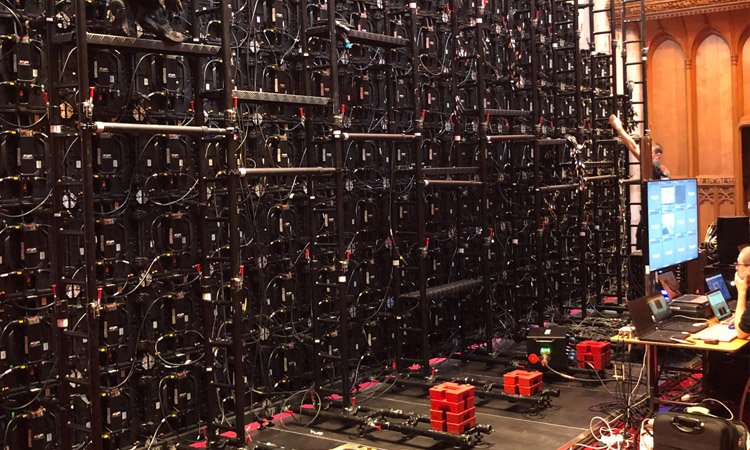
Compared to wireless LED displays, wired LED displays have a more complex installation process due to their intricate cable connections.
Especially for large LED screens, the cable connections for wired LED displays can be overwhelming, requiring professional installation to ensure each cable interface is accurate; otherwise, the LED screen may malfunction. Hiring professionals to install wired LED displays can also reduce installation time and save on labor costs.
Wireless LED displays, on the other hand, do not require cable connections and can be placed anywhere you wish to install them, without the need for drilling holes or laying cables, making the installation process simpler and more convenient.
Cost
Simplifying cable design requires significant R&D time, and wireless LED displays have higher manufacturing standards. From the perspective of initial purchase costs, wireless LED displays are more expensive than wired LED displays.
From the perspective of labor costs, wireless LED displays are simpler and more convenient to install, with shorter installation times and lower labor costs; wired LED displays are more complex to install, requiring more time and higher labor costs.
From the perspective of long-term maintenance, wired LED displays have more cables, which may result in higher maintenance costs; wireless LED displays are easier to maintain and require less maintenance time.
Flexibility
For events such as mobile exhibitions or temporary short-term activities, wireless LED displays are more suitable as they are not restricted by cables, allowing for more flexible installation and placement, faster installation speeds, and no delays to the event schedule.
If wired LED displays are used, installation must be planned in advance and carried out by professionals, which is a time-consuming process and not cost-effective for short-term events.
Aesthetics
Wired designs have more cables, which may make the rear of the LED cabinet appear cluttered and less aesthetically pleasing; wireless designs make the LED screen appear sleek and more visually appealing.

Comparison of wired vs. wireless LED display applications
Wired LED display
Stadiums
LED displays in stadiums are permanently installed, and installing a wired LED display ensures high-quality, stable, and lag-free broadcasts for sports events.
Company Offices
Company offices are internal spaces with lower aesthetic requirements, so installing a wired LED display can help save on purchase costs.
Spaces with Large Screens
Large LED screens typically require high-resolution content transmission to ensure clear and visually appealing images. Therefore, wired LED displays are often chosen for more stable and reliable content source signal transmission.
Wireless LED Display
Trade Shows
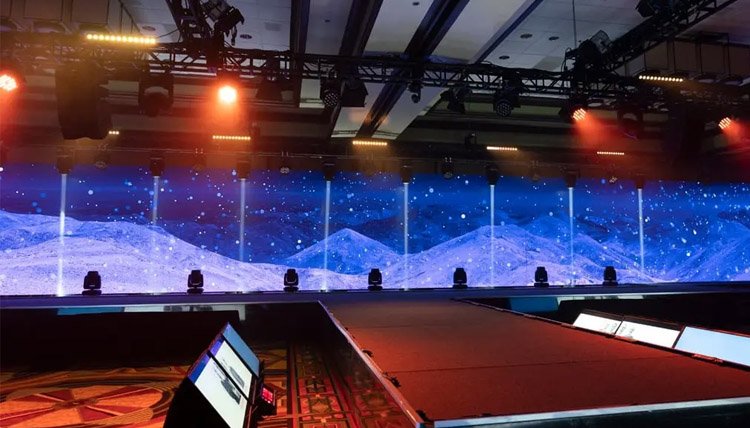
For temporary events like trade shows, installing wireless LED displays is faster and simpler. The clean, cable-free appearance of wireless LED displays provides a better visual impression for attendees.
Retail stores with changing locations
For small retail stores that frequently change their sales locations, wireless LED displays offer flexibility and are highly adaptable. Installation and removal are simple, minimizing additional time costs.
Outdoor advertisers
When conducting outdoor advertising campaigns, wireless LED displays eliminate the need to consider cable length restrictions, offer fewer installation location constraints, and allow for convenient management and control of the LED display.
Should I choose a wired or wireless LED display?
Environment
If your target installation environment is complex with significant signal interference, posing challenges for wireless LED display signal transmission, a wired LED display is more suitable.
Usage Requirements
Based on the duration of your single installation use, if you purchase an LED display solely for short-term events, a wireless LED display is more suitable; if you require long-term use after installation, we recommend a wired LED display.
From the perspective of your installation and usage objectives, if the content source has a high resolution and the LED screen is used in a highly professional and stringent environment, we recommend choosing a wired LED display, as it offers more stable and reliable transmission and can avoid latency. If the content source is not overly complex and the playback environment is not stringent, you may consider choosing a wireless LED display.
Budget
For the same resolution, refresh rate, and material specifications, purchasing a wired LED display is more cost-effective. If your budget allows, you can also consider purchasing a wireless LED display, which offers convenience in terms of installation, management, and maintenance.
Conclusion
Whether it’s a wireless LED display or a wired LED display, there is no absolute superiority or inferiority between them; each has its own advantages and disadvantages. When making a choice, you need to comprehensively consider their compatibility with your needs and budget feasibility.
If you are having difficulty deciding or have other questions, you can consult JYLED; we have professional technical staff available to provide answers at any time.

