



If you can accurately select the most suitable screen size when installing an LED stage backdrop screen, it will deliver unparalleled visual effects for your stage events and maximize the return on your investment.
This article will provide you with detailed insights into recommended LED stage background screen sizes and the project benefits of installing the optimal size. By reading this article, you’ll learn how to select the right LED stage background screen size.
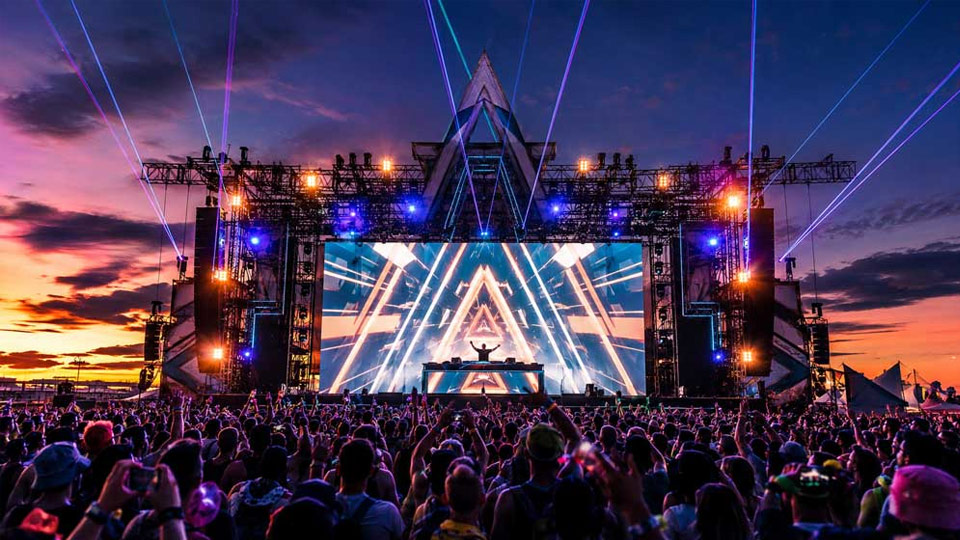
Why Is It Important to Choose the Correct LED Stage Background Screen Size?
Installing an LED stage backdrop screen that suits your stage size and playback requirements enhances the audience’s viewing experience and creates a more vibrant atmosphere at the venue. It also leaves a lasting impression on the audience and helps build a positive reputation for future performances.
Enhancing the Visual Experience of Live Performances
Since stage performances are typically large-scale events, while front-row audiences can see the stage directly, most spectators rely on the LED stage backdrop screen to view the performance.
An appropriately sized LED stage background screen delivers exceptional visual clarity to the audience. It avoids the issue of a screen being too small, which prevents viewers from seeing the performance clearly, or too large, which makes it difficult for those in the front rows to take in the entire stage.
A clear, appropriately sized LED stage background screen can also display real-time audience reaction shots, further increasing audience engagement with the performance.
Enhancing Unique Stage Effects
In addition to maintaining image clarity, an appropriately sized LED stage background screen can create distinct viewing experiences for the live audience through different aspect ratios.
For example, 1:1 and 4:3 LED stage background screens create more intuitive visuals and are suitable for small to medium size performances; whereas 16:9 and 21:9 aspect ratios are better suited for larger-scale events, offering audiences an immersive viewing experience.
Maximizing Return on Investment
Purchasing the right size of LED stage background screen ensures high quality visuals while minimizing unnecessary costs, thereby maximizing your return on investment.
LED Stage Background Screen Sizes for Different Scales
We have categorized LED stage background screen sizes into three categories: large, medium, and small. Each size is suited for different scenarios. For example:
Small LED Stage Background Screen
Small LED stage background screens are typically under 10 square meters in size. They can serve as the main display for small-scale stages or as auxiliary side screens for medium- or large-scale performances, enabling the creation of multi-layered visuals to complement the main screen’s content.
Small LED stage background screens use fewer LED modules, are easy to install, and have lower procurement costs. Whether for a rental LED display or a permanent installation LED display, the cost is very low, making them a highly cost-effective choice for most standard applications, such as school performances and corporate events.
Medium Size LED Stage Background Screen
Medium size LED stage background screens typically range from 20 to 50 square meters. They are suitable for medium-scale performance settings, such as theater tours and themed restaurant shows, providing clear and bright visuals for audiences in small to medium size venues.
Large LED Stage Background Screen
Large LED stage background screens are typically 50 square meters or larger, with specific dimensions determined by the number of attendees at the venue.
They are commonly used in large-scale concerts and performances by famous artists, providing high quality broadcast visuals for both the massive on-site audience and viewers at a distance, thereby enhancing the sense of immersion for the live audience.

Common Sizes for Different Types of LED Stage Background Screens
Even for LED screens used as stage backdrops, the appropriate size varies depending on their installation location and function. We primarily categorize stage backdrop LED screens into four types:
Central LED Stage Backdrop Screen

The central LED stage backdrop screen typically serves as the main display for the performance venue, broadcasting real-time stage footage to the audience and providing clear, bright visuals to those seated further away.
The main display is usually large in size; only large-scale stage LED displays can meet the demands of large-scale events. It is typically installed at the very center of the stage and serves as the primary display window for key visuals.
Auxiliary LED Stage Background Screen
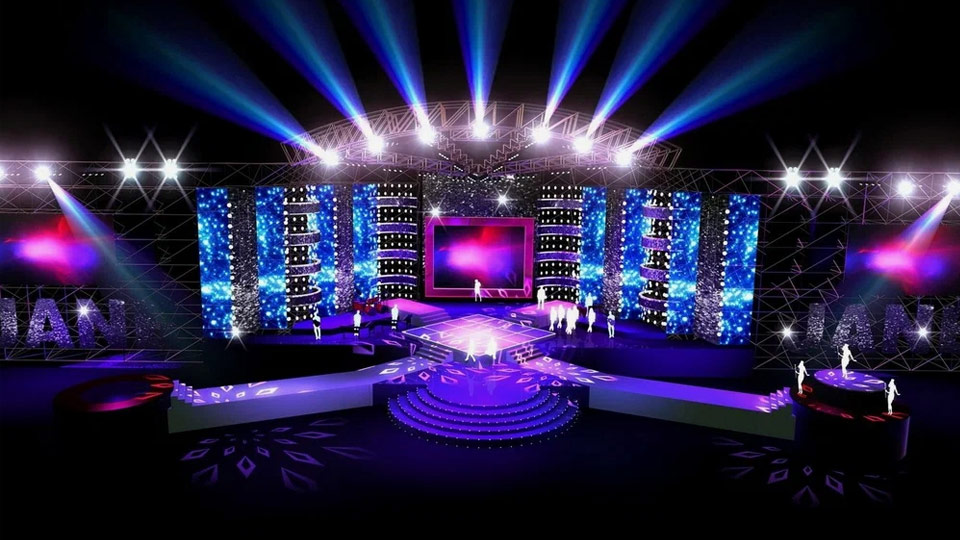
The auxiliary LED stage background screen is used to display close-ups of performers, lyrics, advertisements, and other content.
It often serves as a supplementary screen to the main display, providing additional information, or acts as the primary visual screen for audiences seated on either side of the stage during very large-scale performances.
The auxiliary LED stage background screen does not need to be very large; it simply needs to meet the content display requirements. Once installed, it enriches the visual depth of the stage background and further enhances the audience’s viewing experience.
Ceiling-Mounted LED Stage Background Screen
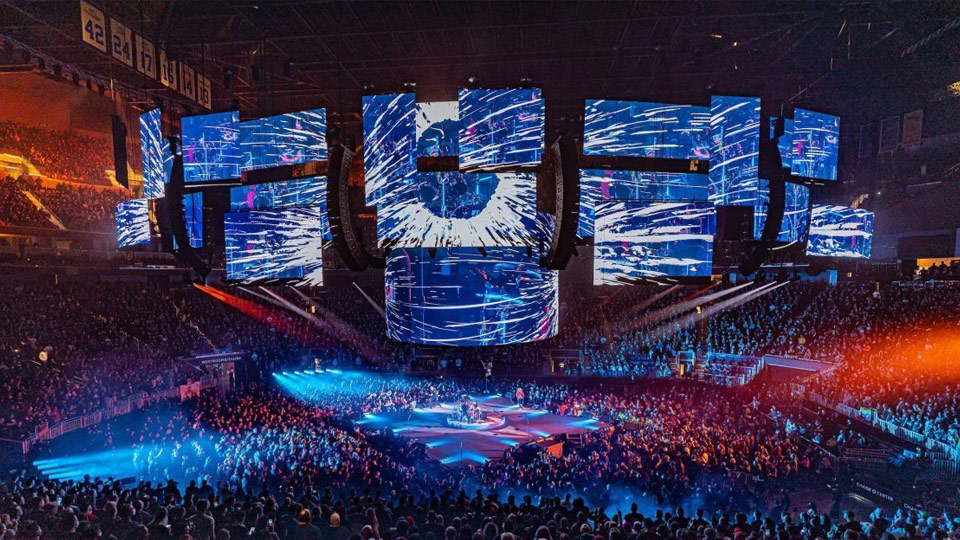
For performance projects with sufficient budgets, you can create an even more expansive LED screen system by adding a ceiling-mounted LED stage background screen. By utilizing suspended LED screens that do not occupy floor space, you can create a multidimensional visual space and further enhance the audience’s immersive viewing experience.
The dimensions of the ceiling-mounted LED stage background screen can be customized according to the specific project requirements. Due to its elevated vantage point, it offers a very wide content coverage area; whether large or small, such screens can effectively serve both display functions and enhance the overall performance impact.
Floor-Mounted LED Stage Background Screens

Some stages specifically designed for program recording may invest in installing floor-mounted LED stage background screens. By combining these LED floor screens with other background LED screens, a complete and comprehensive performance space is created.
Floor screens can dynamically change content to enhance the visual effects and spatial atmosphere of the performance, delivering an unparalleled visual feast to the live audience.
How to Choose the Optimal LED Stage Background Screen Size?
If you are planning to install an LED stage background screen but are unsure how to select the right size, we recommend focusing on the following factors:
Installation Venue: Indoor vs. Outdoor
Generally, indoor spaces are limited. In addition to considering the event’s display requirements, the size of your LED stage background screen must strictly adhere to the capacity limits of the indoor environment.
In contrast, outdoor environments offer greater flexibility regarding the size of LED stage background screens, as they are not easily constrained by space. You can simply choose a size based on your actual needs.
Installation Type: Rental vs. Permanent
If you are installing the screen temporarily, you can opt to rent an LED stage backdrop screen. This allows you to reap the benefits of the display without a significant upfront investment.
Additionally, since you don’t need to purchase the screen, you can install a larger LED stage backdrop screen to create a more stunning visual experience.
If you need a permanently installed LED stage backdrop screen, you should plan the screen size based on the expected scale of the performance and the number of audience members.
Screen Resolution
You can calculate the optimal pixel pitch for the LED stage backdrop screen based on the expected viewing distance of the audience during the performance:
Optimal Pixel Pitch (in mm) = 1/2 × Viewing Distance ~ Viewing Distance (in meters).
Then, calculate the LED stage backdrop screen size based on the optimal pixel pitch and the desired screen resolution:
LED Stage Backdrop Screen Size (in mm) = Ideal Screen Resolution × Optimal Pixel Pitch (in mm).
Content Source Type
The display quality of an LED stage backdrop screen is not only strongly related to the screen size but also significantly influenced by the screen aspect ratio. For example:
The 4:3 aspect ratio is better suited for screens installed on either side of the stage to play music videos of older songs, while 16:9 screens are ideal as main screens for streaming videos required for stage performances.
However, if your stage is very large and the performance involves a narrative-driven show, you should opt for LED panels with a 21:9 aspect ratio to create a highly immersive viewing experience for the live audience.
Project Budget
If your proposed screen size exceeds your budget, you can reduce costs by appropriately scaling down the size of the LED stage background screens. A slight reduction in screen size will not significantly impact the on-site display quality while helping to lower your expenses.
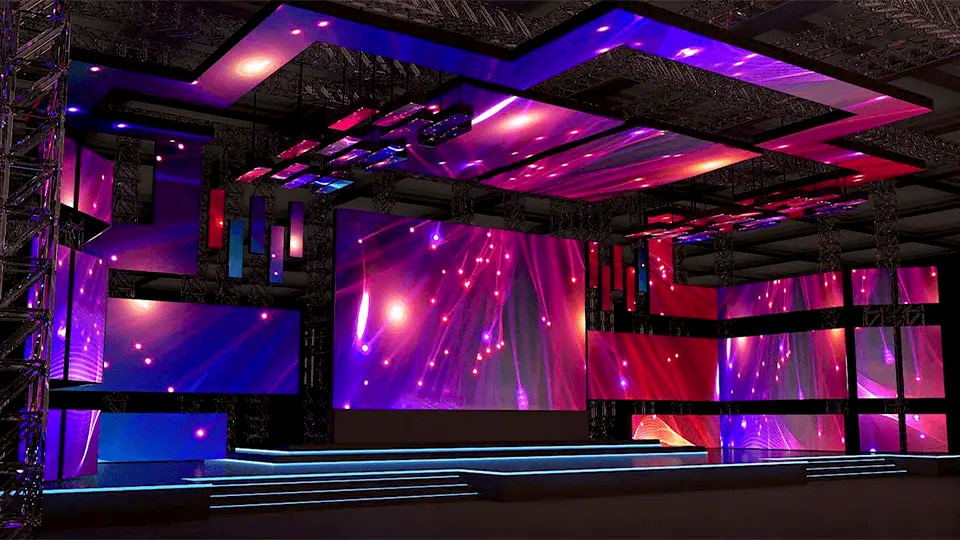
Popular Stage Background LED Cabinet Sizes and Models
Currently, the most popular single LED cabinet sizes and models for stage background screens on the market include:
500 Mm × 500 Mm
The 500 mm × 500 mm LED cabinet is suitable for splicing 250 mm × 250 mm LED modules. This cabinet can be used to configure stage background screens of various sizes, such as auxiliary screens on either side of the stage.
600 mm × 337.5 mm
The 600 mm × 337.5 mm LED cabinet is suitable for assembling 300 mm × 168.75 mm and 150 mm × 337.5 mm LED modules. With a cabinet aspect ratio of 16:9, it is ideal for installing 16:9 LED stage background screens.
640 Mm × 480 Mm
The 640 mm × 480 mm LED cabinet is suitable for assembling 320 mm × 320 mm and 320 mm × 160 mm LED modules. This cabinet size is highly adaptable, allowing you to configure a wide range of display projects with varying pixel pitches and scales.
500 Mm × 1000 Mm
The 500 mm × 1000 mm LED cabinet is designed for assembling 250 mm × 250 mm LED modules. Being twice the size of the 500 mm × 500 mm cabinet, it is better suited for medium- and large-scale projects requiring stage backdrop screens.
1000 Mm × 1000 Mm
The 1000 mm × 1000 mm cabinet is designed for assembling 250 mm × 250 mm LED modules. Its larger individual cabinet size makes it suitable for large and extra-large stages, reducing the number of LED cabinets required for screen installation and saving you installation costs.
Popular Stage Backdrop LED Cabinet Size Chart
A 30-second overview of common stage backdrop screen LED cabinet sizes and application recommendations:
| LED Cabinet Dimensions | LED Module Dimensions | Compatible Screen Models | Recommended Applications |
| 500 mm × 500 mm | 250 mm × 250 mm | P1.5625, P1.953, P2.5, P2.604, P2.976, P3.91, P4.81 | Small LED Stage Backdrops |
| 600 mm × 337.5 mm | 300 mm × 168.75 mm, 150 mm × 337.5 mm | P0.9, P1.2, P1.5 | LED Stage Backdrops with a 16:9 Aspect Ratio |
| 640 mm × 480 mm | 320 mm × 320 mm, 320 mm × 160 mm | P1.25, P1.53, P1.876, P2, P2.5, P3.33, P3.076, P4, P5, P6.67, P8, P10 | Suitable for LED stage backdrops of almost any size |
| 500 mm × 1000 mm | 250 mm × 250 mm | P1.5625, P1.953, P2.5, P2.604, P2.976, P3.91, P4.81 | Medium and large LED stage backdrops |
| 1000 mm × 1000 mm | 250 mm × 250 mm | P1.5625, P1.953, P2.5, P2.604, P2.976, P3.91, P4.81 | Large and extra-large LED stage backdrops |
FAQ
How to Measure the Size of an LED Stage Background Screen?
There are three common methods for measuring the size of an LED stage background screen:
- Calculation based on screen width and height: LED stage background screen size = length of the wider side × length of the taller side.
- Calculation based on the number of cabinets: LED stage background screen size = width of an LED cabinet × height of an LED cabinet × number of cabinets.
- Resolution and pixel pitch method: LED stage background screen size = LED stage background screen resolution × pixel pitch.
Can the Aspect Ratio of an LED Stage Background Screen Be Adjusted?
Yes, LED displays feature a modular design. You can change the screen’s aspect ratio at any time by adjusting the number of cabinets on the wider and taller sides, creating a completely new visual effect.
Is a Larger LED Stage Background Screen Always Better?
A larger LED stage background screen is not necessarily better; an excessively large screen will only result in unnecessary cost waste. You need to use a scientific approach to determine the most suitable LED stage background screen size.
What Size LED Stage Background Screen Is Suitable for My Project?
Different venue sizes, audience numbers, and playback requirements all dictate different needs for the most suitable LED stage background screen size. You need to develop the optimal screen size solution based on the actual project.
Does a Larger LED Stage Background Screen Result in Higher Energy Consumption?
Theoretically, a larger LED stage background screen contains more LED lamps, which means higher energy consumption.
However, LED displays are highly energy-efficient; they consume 30% to 45% less energy during operation compared to other types of displays on the market. You need not worry about the energy costs associated with running the screen.
Summary
The optimal LED stage backdrop screen size will vary depending on the scale of the event and the specific performance content.
If, after reading this article, you are still unable to calculate the screen size on your own, please contact JYLED through our consultation window. JYLED’s sales specialists can provide free assistance in customizing an installation plan for your LED stage backdrop screen based on your specific needs and budget.

