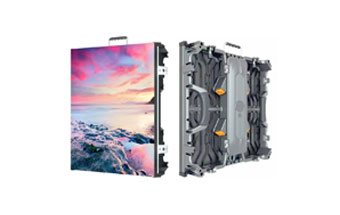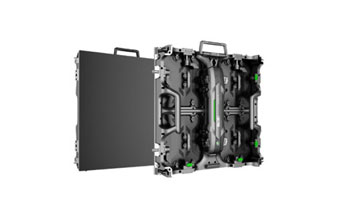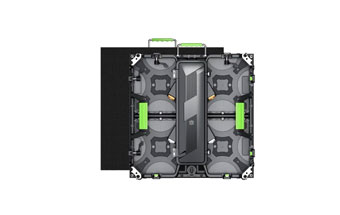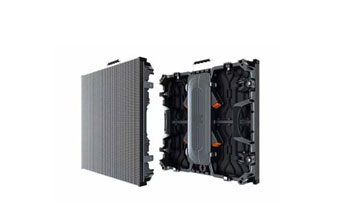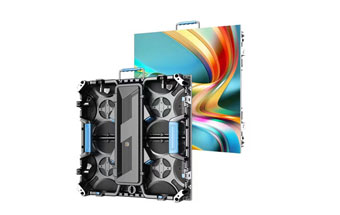



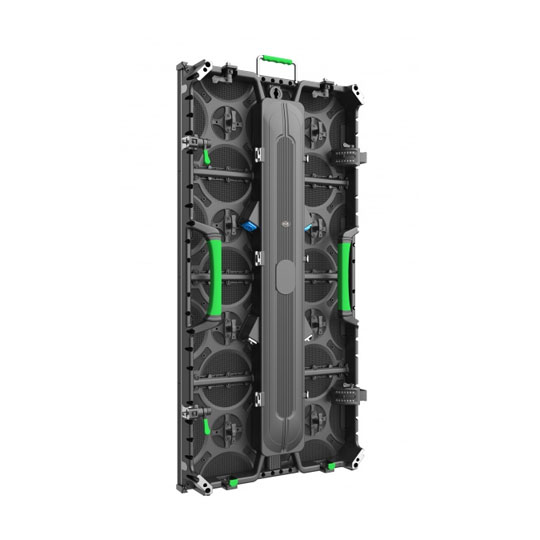

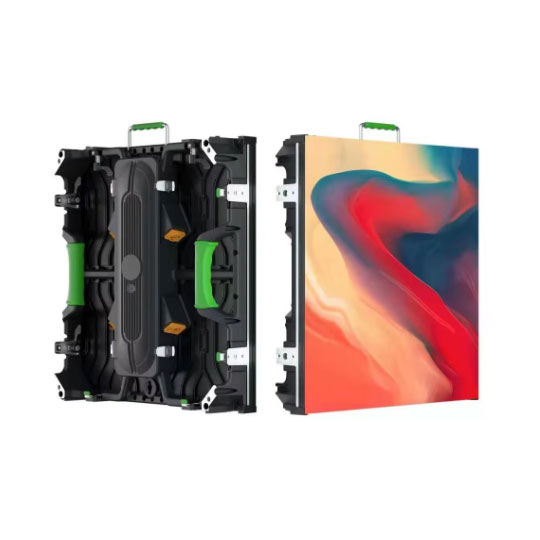

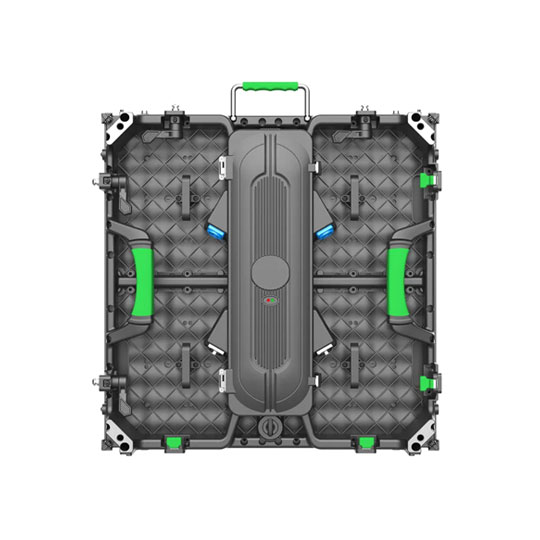
P2.976 LED Screen
- Clear, high-quality image quality
- 3840Hz high refresh rate
- Completely seamless splicing effect
- >150-degree viewing angle
- More application scenarios
A Comprehensive Introduction to p2.976 LED Screens
In the LED display screen industry, the p2.976 LED screen is a product that offers high cost-effectiveness and superior display performance.
Is the p2.976 LED screen worth purchasing? What are its advantages? You can learn more about it in detail through this article.

Features of the p2.976 LED screen
Clear Picture Quality
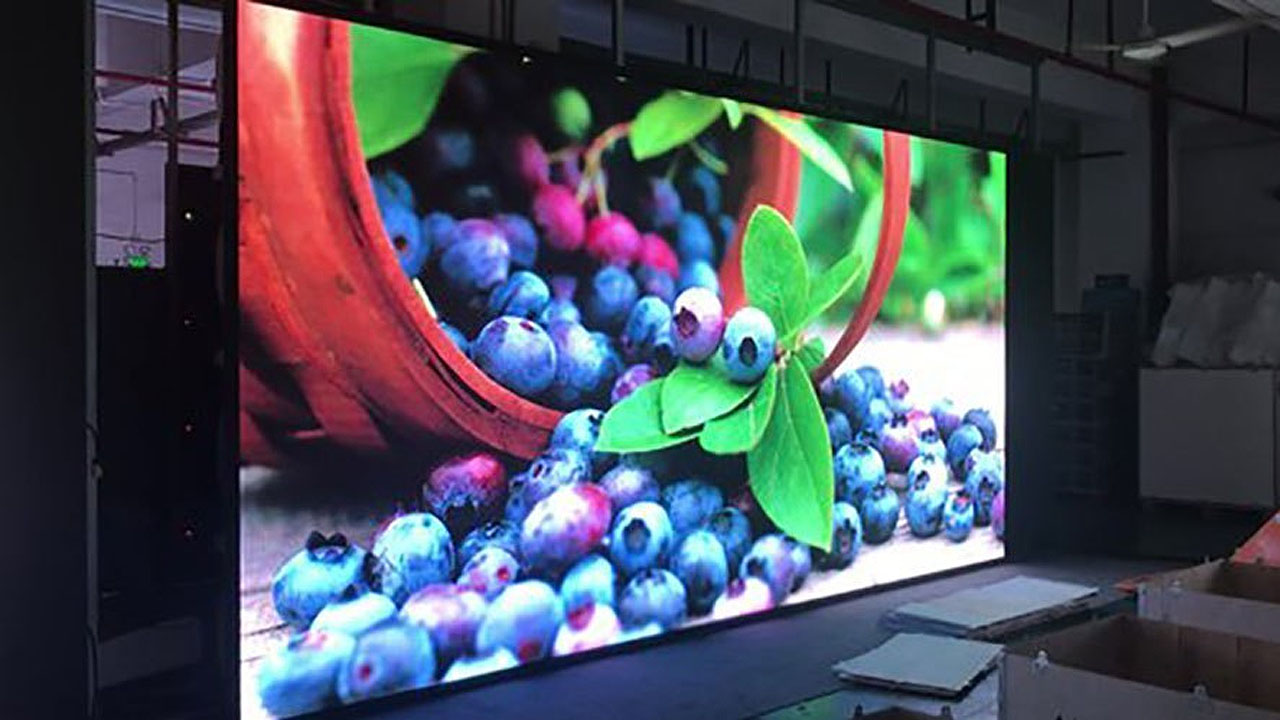
The p2.976 LED screen has a small pixel pitch and densely packed pixels, resulting in a highly detailed and crisp display.
Even with highly detailed scenes, the p2.976 LED screen can still reproduce vivid and lifelike images. Additionally, the LED chips in the p2.976 LED screen are small, so even when viewed up close, the images do not appear pixelated.
Vibrant Colors
In addition to its high clarity, the P2.976 LED screen is equipped with high-performance driver ICs. The driver ICs of the P2.976 LED screen can adjust the brightness levels of the three primary color LED lights, allowing for a wide range of color combinations when different brightness levels of red, green, and blue lights are combined.
As a result, the P2.976 LED screen can accurately reproduce the true colors of the image, giving viewers a vivid and lifelike color experience.
High Brightness
The brightness of indoor LED displays typically ranges from 400 to 800 nits. The indoor P2.976 LED screen achieves a brightness of 800 to 1,000 nits, while the outdoor P2.976 LED screen reaches 3,500 to 4,500 nits.
Whether used indoors or outdoors, the P2.976 LED screen’s high brightness meets all your application requirements.
High Refresh Rate
High-performance driver ICs can provide the P2.976 LED screen with a higher refresh rate, making the display appear smoother and more natural. The smooth visuals reduce eye strain even during prolonged viewing.
Under normal circumstances, the refresh rate of the P2.976 LED screen can reach 3,840 Hz. If you are purchasing it for high-end display applications, have sufficient budget, and require a higher refresh rate, you can communicate with the manufacturer to obtain a P2.976 LED screen with a 7,840 Hz refresh rate.
Seamless splicing
The standard assembly process involves assembling P2.976 LED modules into LED cabinets, which are then assembled into a P2.976 LED screen.
Whether it’s the assembly of LED modules within cabinets or the assembly of cabinets into a screen, the P2.976 LED screen achieves seamless assembly throughout, ensuring viewers are not distracted by seams when watching the screen.
Wide viewing angle
The P2.976 LED screen offers a wide viewing angle of 150–160 degrees both vertically and horizontally. Even when viewed at extreme angles, the P2.976 LED screen does not distort or deform the image, providing viewers with a broad viewing angle.
Wide range of applications
Thanks to its moderate pixel pitch, the P2.976 LED screen is highly suitable for both outdoor LED displays and indoor LED displays.
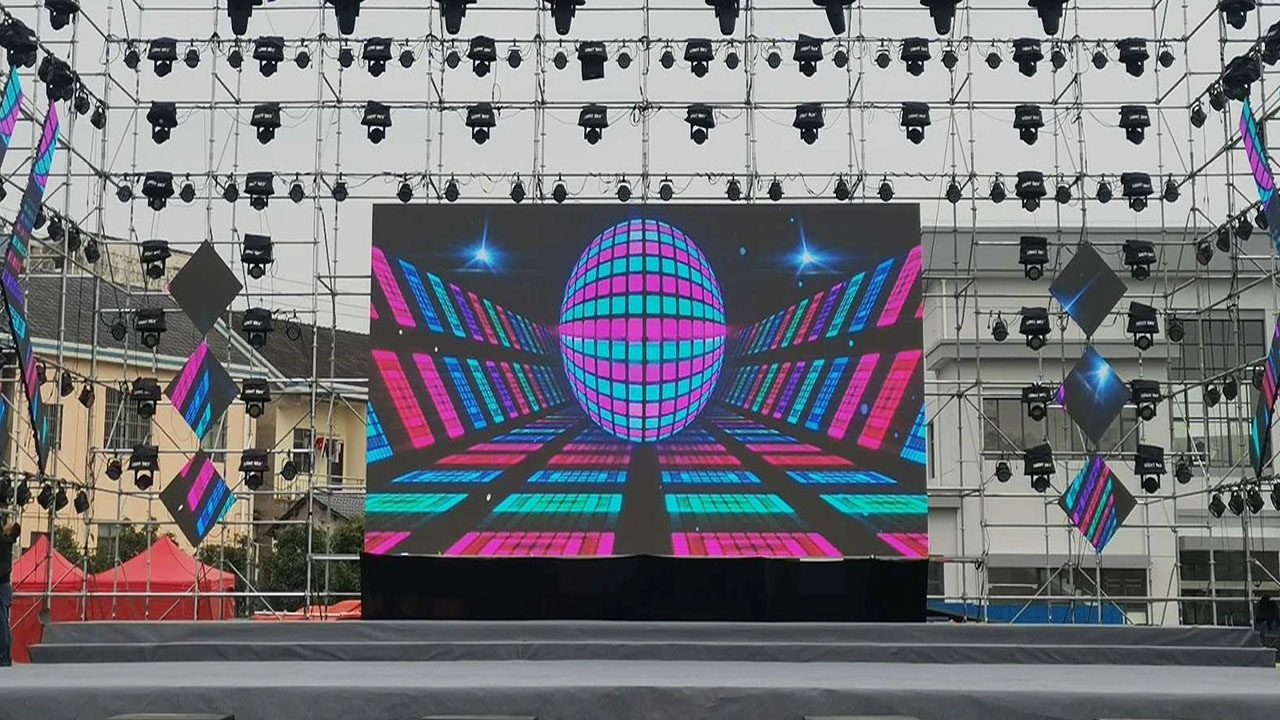
As a result, the P2.976 LED screen has a wide range of applications, including indoor meetings, movie screenings, outdoor advertising, and stage performances.
P2.976 LED Screen Module Parameters
Dimensions
The most common module size for a P2.976 LED screen is 250mm × 250mm, and the cabinet dimensions for a P2.976 LED screen are typically 500mm × 1000mm × 80mm.
If you have other requirements, you can communicate with the LED manufacturer to customize the module size and cabinet dimensions of the P2.976 LED screen to meet your needs.
Resolution
Taking the module size of 250mm × 250mm as an example, the module resolution of a P2.976 LED screen is 84 × 84 pixels. To assemble a cabinet of 500mm × 1000mm, 2 × 4 modules are required. Therefore, under normal circumstances, the resolution of a P2.976 LED screen cabinet is 168 × 336 pixels.
Pixel Pitch
In the LED display industry, a pixel pitch of 2 mm is often used as a dividing line. LED displays with a pixel pitch of less than 2mm are referred to as small-pitch LED displays.
While small-pitch LED displays offer high-definition visuals, they come with higher production costs. In comparison, the 2.976mm pixel pitch of a P2.976 LED screen represents a more balanced choice, allowing you to enjoy visuals comparable to small-pitch LED displays without incurring excessively high purchase costs.
Brightness
The brightness of indoor P2.976 LED screens can exceed 1,000 nits, while outdoor P2.976 LED screens can reach over 4,500 nits. You can customize the brightness of the P2.976 LED screen according to your specific needs.
Additionally, even if you customize the brightness of the LED screen, the brightness value of the P2.976 LED screen is not fixed; it has an adjustable range. This allows you to adjust the brightness of the LED display screen in real-time when the ambient lighting conditions change, ensuring it adapts to the environment.
Color Temperature
The color temperature of the P2.976 LED screen ranges from 4000 to 8000 Kelvin. Within this range, the color temperature can be manually adjusted using control software.
By adjusting different levels of color temperature, your display screen can be customized to your preferences, achieving a cooler or warmer tone in the visuals.
Service Life
Under normal conditions, the service life of a P2.976 LED screen can exceed 100,000 hours. However, this requires professional installers to install the P2.976 LED screen correctly and securely, ensuring that the screen panel is not compressed, and the cabinet is not subjected to physical impact damage during the process.
A stable and safe installation environment is crucial for the long-term use of the P2.976 LED screen.
P2.976 LED Screen Types
SMD P2.976 LED Screen
SMD technology is a packaging technique that uses surface-mount technology to bond LED chips to a substrate. This packaging technique allows for mass production of LED chips using machine assembly, resulting in high yield rates and excellent display performance.
The production cost of SMD P2.976 LED screens is lower than other types, yet they offer outstanding display performance, making them highly popular in the market.
GOB P2.976 LED Screen
GOB technology involves sealing the entire LED module’s lamp beads with conductive adhesive after bonding the LED chips to the substrate. The transparent layer on the surface of the GOB P2.976 LED screen effectively protects the LED chips and enhances the optical performance of the LED display through manufacturing processes, thereby improving the viewing experience.
However, the GOB P2.976 LED screen involves a more complex manufacturing process, resulting in higher costs compared to the SMD P2.976 LED screen.
p2.976 LED Screen Module Aging and Testing
After the p2.976 LED screen modules are manufactured, the LED manufacturer conducts a series of inspections and screenings before they are ready for shipment.
Non-conforming LED modules are returned to the factory for rework, while qualified modules undergo a 72-hour aging process.
Inspecting the appearance
First, inspect the appearance of the LED modules for any dents, scratches, or other defects. LED modules with appearance defects are screened out, returned to the factory for repair, and qualified modules proceed to the next inspection step.
Inspecting the installation
Inspect the installation of the P2.976 LED modules, checking whether the LED chips and driver ICs are installed correctly. Incorrect installation may affect the subsequent display performance.
Short Circuit Inspection
The LED modules are then powered on in batches to detect any circuit short circuits and ensure they can power on and illuminate normally.
Flatness Inspection
The LED modules are assembled together to check if the gaps between them are complete and reliable. If any unevenness is detected, adjustments are attempted. LED modules that cannot achieve seamless assembly are returned to the factory for rework.
LED module aging
Place the qualified P2.976 LED modules obtained after a series of inspections on an iron rack, power them on for 48 hours of white balance aging, and then perform 24 hours of video aging. After aging and reinforcement, the P2.976 LED modules will have more stable and reliable performance when shipped from the factory.
Conclusion
The P2.976 LED screen is an LED display with a small pixel pitch and a clear, rich overall image. It is widely used in various applications such as trade exhibitions, stage performances, and home theaters due to its high-quality visuals and cost-effectiveness.
- P2.976 LED Screen Module Data Table
| Pixel Pitch | 2.976 |
| Module Size(mm) | 250*250 |
| Module Pixel | 84*84 |
| Brightness | Indoor: 800-1000 nits Outdoor: 4000-5500 nits |
| Pixel Configuration | SMD2121 |
| Colors | 281trillion |
| Refresh Rate (HZ) | ≥3840 |
| Pixel Matrix Per Sq.m | 43264 |
| View Angle (H/V) | 140/140 |
| Power Comsuption(max/avg) | 400/150 |
| IP Rate | Indoor: IP45 Outdoor: IP65 |
| Input Voltage (AC) | 110/240 |
| Operating Temp. | -20-60 Celsius degree |
| Operating Humidity | 10-95% RH |
| Control Distance | Ethernet cable 100m, optical fiber 5km |
2.976mm is a relatively moderate pixel pitch, making it suitable for both indoor and outdoor use.
When used indoors, the p2.976 LED screen offers high-quality visuals that rival LCD and OLED indoor displays; when used outdoors, its pixel density ranks among the top in outdoor LED displays, delivering stunning clarity.
This depends on the cause of the fault and the type of packaging. For an SMD P2.976 LED screen, minor faults in the LED module, such as LED chip failures or driver IC issues, can be repaired on-site using tools.
For a GOB P2.976 LED screen, LED chip failures cannot be repaired on-site; instead, a spare module must be installed, and the faulty module returned to the factory for repair.
When purchasing a P2.976 LED screen, in addition to the display itself, LED manufacturers typically provide accessories such as power adapters, cables, signal lines, and mounting screws.
There are two main connection methods: hard connection and soft connection. Hard connection refers to LED modules being directly connected to the system receiver card via a PCB board, while soft connection involves connecting the module interface to the system receiver card via signal cables.
Soft connection is more cost-effective, but hard connection is more stable and reliable.