



When you’re looking to choose an LED screen for commercial display in your store that’s currently under renovation, the more innovative visual effects of a transparent screen may catch your eye.
What’s the difference between it and a traditional LED screen? How should you make your choice? This article provides brief selection recommendations.
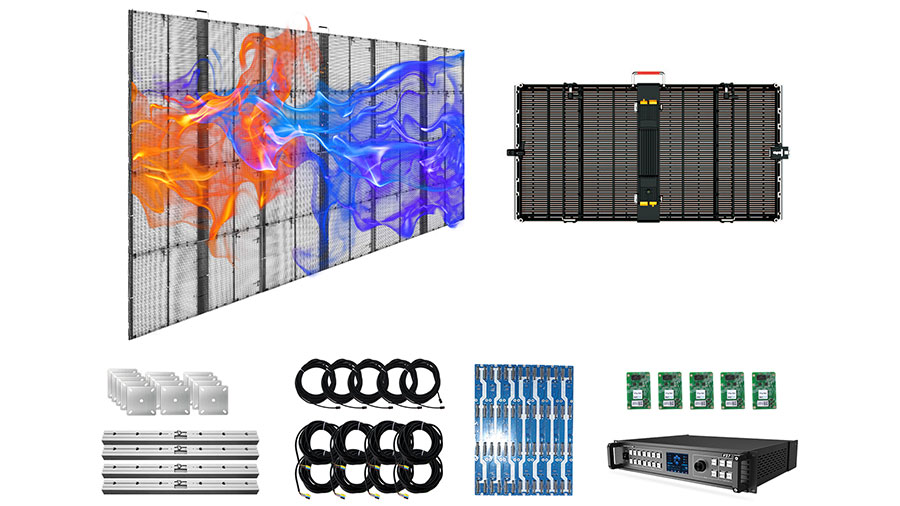
What Is a Transparent LED Display?
A transparent LED display features LED light strips mounted directly onto the display cabinet and arranged in rows, with a certain gap left vertically between each strip.
This design maintains an open structure and visual transparency, allowing the display to show images or videos without obstructing light or the view from behind.
Transparent LED displays typically require the construction of a truss structure first, followed by the installation of the display cabinets onto the truss.
This sets them apart from LED displays like transparent LED film screens and LED holographic Invisible transparent screens, which are directly applied to glass surfaces.
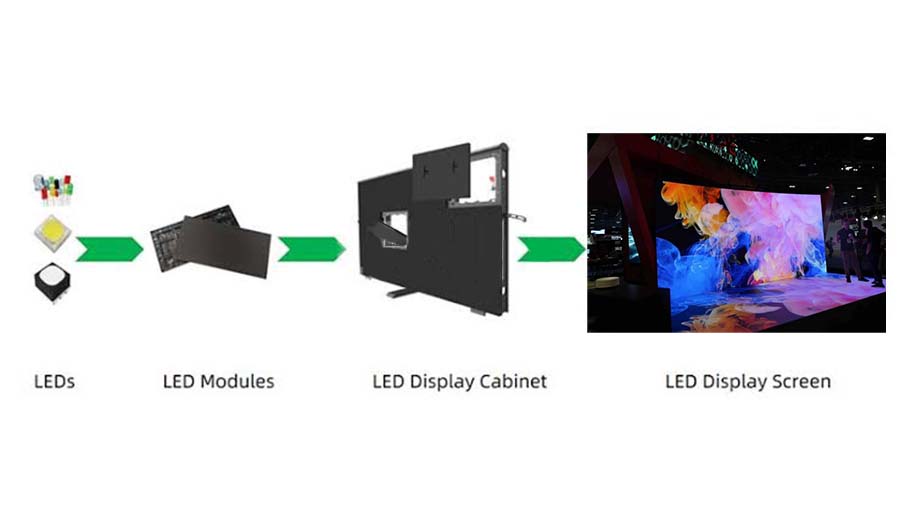
What Are Traditional LED Displays?
Traditional LED displays use LEDs directly as pixels to emit light and display images. Most LED displays are assembled from cabinets, which are composed of LED modules—each containing hundreds or even thousands of LEDs.
The number of modules in an LED display cabinet is determined by the actual project dimensions.
Traditional suspended LED displays also frequently use sturdy metal trusses—made of aluminum or stainless steel—as their support structures.
Transparent LED Displays vs. Traditional LED Displays: A Comparative Overview
Due to differences in manufacturing materials and structure, transparent LED displays and traditional LED displays differ in many aspects. The following section will introduce and compare several common distinctions.
Transparency
Transparency is the most obvious difference between the two types of displays.
The transparency of a transparent LED display typically ranges from 60% to 95%. The displayed image does not obstruct the view behind the screen; visually, the image appears to float in the air, creating a sense of ethereality and a high-tech aesthetic.
Transparency can be customized before shipment to meet specific application requirements.
Under certain conditions, the transparency of a transparent LED screen is also positively correlated with the distance between LED strips.
That is, within the same frame size, the smaller the distance between adjacent LED strips, the greater the number of LED strips, the lower the screen’s transparency, and the higher the image clarity.
When a transparent LED screen is turned off, although the screen’s truss structure remains visible, objects behind it can also be seen.
In contrast, when a traditional LED screen is turned off, the background is obscured, and viewers cannot see objects behind the screen.
Brightness
The nits brightness range for transparent LED screens is typically 800–1,200 nits indoors and 4,000–8,000 nits outdoors, meeting the requirements for both indoor and outdoor use.
If automatic brightness control is required, a light sensor can be installed to adjust the brightness based on changes in ambient light. When it is darker at night, the transparent screen will automatically reduce its brightness.
The typical brightness range for traditional LED displays is generally 800–1,200 nits indoors and 4,000–5,500 nits outdoors, ensuring that content remains clearly visible whether under intense direct outdoor sunlight or when viewed from a distance.
Thickness
Transparent LED screens feature smaller components, so their cabinets are correspondingly thinner and more compact, typically ranging from 1 to 8 cm in thickness.
The thickness of traditional LED display cabinets varies depending on the materials used; in most cases, steel cabinets are the thickest,
while die-cast aluminum cabinets are lighter and thinner, typically ranging from 8 to 15 cm in thickness.
Heat Dissipation
There is little difference between transparent LED displays and traditional indoor LED displays in terms of heat dissipation methods and efficiency.
The heat generated by transparent LED screens primarily comes from the LED chips and power supplies.
Because transparent screens have an open, hollow structure, air can flow freely, carrying away the heat generated by the LED chips during operation from the bottom and then flowing out from the top, creating a chimney effect for heat dissipation.
Heat from the power supplies is conducted through the aluminum material of the cabinet, enabling natural convection cooling.
Whether used indoors or outdoors, transparent LED screens do not require additional cooling equipment.
In traditional indoor LED displays, heat from the chips and power supplies is also dissipated naturally through the cabinet.
However, outdoor LED displays typically use cabinets made of iron. Because iron has high thermal conductivity, excessive heat requires the installation of cooling equipment, such as fans, to assist with heat dissipation.
Purchase Cost
The purchase cost of both types of LED displays depends on the specific requirements of the application. The cost is typically determined by a combination of factors, including size, cabling, pixel pitch, IP protection rating, and brightness.
The table below will help you quickly understand the differences between the two types of LED displays in just 30 seconds.
| Name | Transparent LED Screen | Traditional LED Screen |
| Transparency | 60%-95% | none |
| Brightness | Indoors: 800–1,200 nits Outdoors: 4,000–8,000 nits | Indoors: 800–1,200 nits Outdoors: 4,000–55,00 nits |
| Cabinet thickness | 1-8 cm | 8-15 cm |
| Heat dissipation capacity | Neither indoor nor outdoor screens require cooling equipment; they rely on natural convection for heat dissipation. | Indoor screens rely on natural heat dissipation, whilst outdoor screens require cooling equipment to assist with heat dissipation. |
| Purchase cost | The purchase price will be determined based on your specific requirements | |
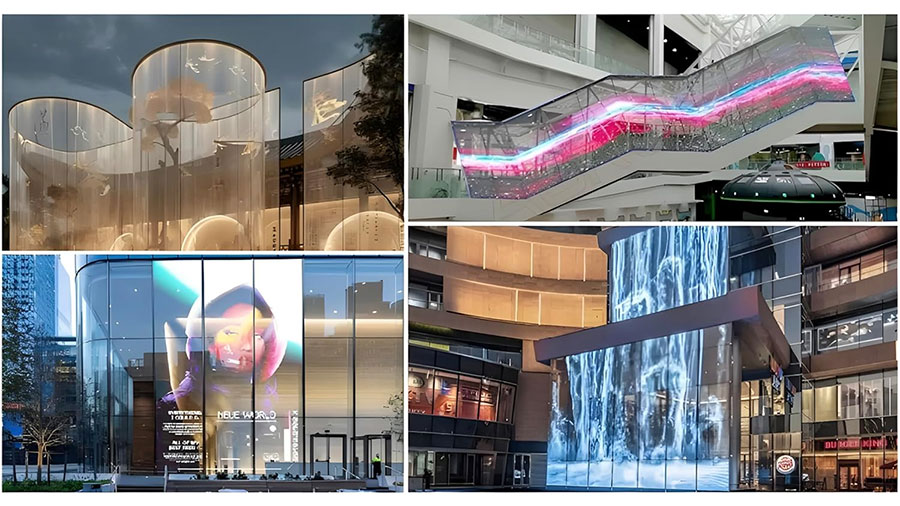
Common Applications for Transparent LED Displays
- Retail Stores: Display dynamic advertisements without obstructing the view inside the store, allowing customers to directly experience the products and store layout.
- Sightseeing Elevators: Enable passengers to enjoy the corresponding scenery while listening to audio commentary via the screen.
- Public Displays: In shopping malls, airports, train stations, and other public transportation hubs, transparent screens display commercial advertisements without blocking the surrounding view.
- Building Facades: They add a sense of sophistication and technological appeal to the entire building, attracting visitors while better showcasing the building’s design.
- Exhibition Centers: Transparent LED screens allow visitors to appreciate products more intuitively, while also enhancing the visual impact of the products through the screen’s imagery.
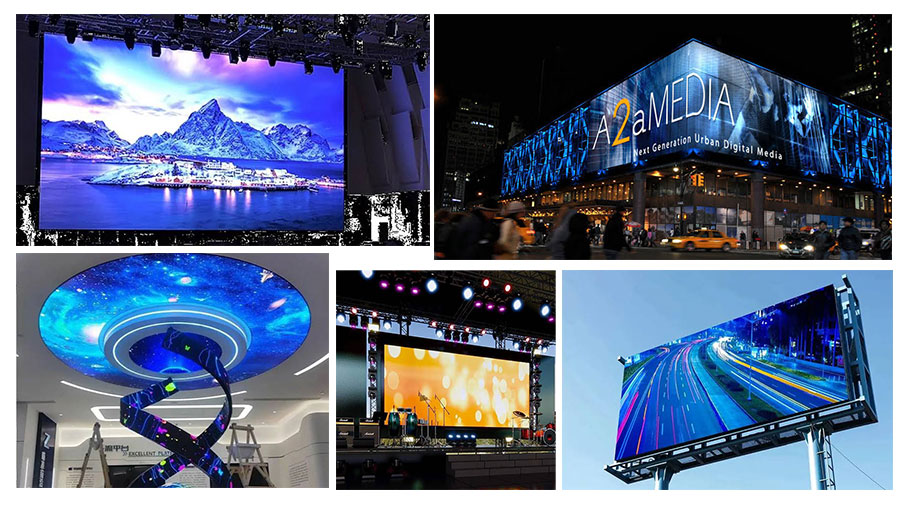
Traditional LED Display Use Cases
- Large-Scale Outdoor Advertising: For outdoor locations requiring high brightness and high visibility, traditional LED screens provide clearly visible content.
- Stage or Event Rentals: The flexible modular design of the display cabinets allows for easy transportation and relocation, providing a vibrant backdrop for events.
- Sports Venues: Traditional LED displays deliver clear and efficient live broadcasts of events, and their higher IP protection rating enables them to withstand harsher outdoor environments.
- Command Centers: Traditional LED displays provide clearer, smoother visuals, allowing users to observe every detail on the screen.
- Indoor Directional Signage: In large shopping malls, train stations, airports, and similar locations, they provide clear and accurate directional signage to guide visitors and convey information.
How to Choose Between Transparent LED Displays and Traditional LED Displays?
If you have the following needs, choose a transparent LED display:
- You want to maintain a clear line of sight while giving the space a modern and sophisticated look.
- You want a display solution that is lighter, more transparent, and customizable.
- The display is primarily used indoors or outdoors.
- You want more creative commercial advertisements that attract customers.
- You want to enhance the visual appeal of your store, building, or interior design and better showcase your design content.
If you have the following needs, choose a traditional LED display:
- Long-term outdoor use requires resilience against harsh outdoor environments.
- High brightness is required to ensure outdoor visibility.
- A larger screen is needed to increase the viewing distance and ensure visibility from afar.
- Seeking better value for money and reliability.
- Requiring higher contrast and clarity to ensure fine detail and accurate color reproduction in the displayed images.
- No need for transparency.
Summary
Both types of LED displays have their own unique advantages. Transparent LED displays are thinner and lighter, offering a more high-tech and modern visual experience.
Traditional LED displays offer better value for money and are adaptable to a wider range of environments. Simply make the choice that best suits your specific needs.
However, if you still have questions or are unsure about which type of LED display to choose, please feel free to contact us at JYLED. We will customize an LED display solution tailored to your project’s specific needs.
FAQs
Can transparent LED displays be used outdoors?
Yes. Transparent LED displays are available in both indoor and outdoor versions. Depending on the specific outdoor conditions, you can select the appropriate screen and customize it with the suitable IP protection rating and other requirements.
What is the typical price per square foot for a transparent LED display?
The price per square foot ranges from $260 to $890. The exact price varies depending on pixel pitch, IP protection rating, and brightness. Additional costs for hardware installation, content integration, and other post-installation expenses may also affect the final price.
How long does it typically take to install a transparent LED display?
Installation time depends on the size of the screen. For screens ranging from 22 to 43 square feet installed in a storefront window without requiring structural modifications, installation can be completed within two days.
For extra-large screens installed on a building’s exterior facade, an initial review is required, and installation takes approximately two weeks.
What is the typical lifespan of a traditional LED display?
The theoretical lifespan of a traditional LED display is typically 100,000 hours. If operated 24 hours a day, 365 days a year, it can last about 10 years.
However, the actual lifespan is closely tied to the display’s operating environment and the quality of maintenance, so there is a certain discrepancy between the actual and theoretical lifespans.
Which type of display is more complex to install?
In most cases, installing a traditional LED display is more complex, as it requires erecting a steel structure or columns to support the display and assembling the screen panels.
In contrast, a transparent display typically only requires securing the truss in place and does not necessitate extensive modifications.

