LCD TVs and LED TVs are made using two different display technologies. If you want to know which one is better—and whether there are any other alternatives—I’ve written this article based on my own experience, and I believe it will be very helpful to you.
Quick summary in 10 seconds: What is the biggest difference between LCD TVs and LED TVs?
LED TVs are actually a type of LCD TV. To better distinguish and compare them, I’ll primarily contrast early LCD TVs that used CCFL (cold cathode fluorescent lamps) as backlights with LED TVs that use LEDs as backlights. In short, from a broad perspective, LED TVs are a type of LCD TV, but when broken down further, the biggest difference between LCD TVs and LED TVs is the type of backlight they use.
What is an LCD TV?
An LCD TV is a television manufactured using liquid crystal display (LCD) technology. Essentially, it builds upon the foundation of a traditional LCD monitor by adding a TV system, transforming it into a standalone electronic device. Unlike the traditional LCD monitors we are familiar with—which typically cannot be used on their own (some don’t even include audio capabilities) and must be paired with other electronic devices such as computers or smartphones—an LCD TV features a standalone operating system and is internally equipped to receive TV signals, supporting various TV formats.
Note: The scope of liquid crystal display technology is very broad; for example, Crystal UHD, Quantum Dot LED, and Mini LED all fall under the category of liquid crystal display technology.
Key Features of LCD TVs
- Lower Cost: Since liquid crystal display technology is already highly mature, televisions manufactured using this technology are relatively inexpensive.
- Technological Maturity: LCD technology has been used in televisions for nearly 30 years and is technically very mature.
- Screens Are Thicker: Because the backlight modules in early LCD TVs were thicker, this resulted in thicker LCD TV screens.
What Is an LED TV?
An LED TV is essentially still an LCD TV, but with an upgraded internal structure. It uses LEDs to replace traditional CCFLs, achieving greater energy efficiency. LED TVs currently primarily utilize the following three types of backlighting:
- Edge-lit LED: LEDs are arranged around the edges of the screen, and light is directed into the screen via a light guide plate to illuminate the display.
- Full-array LED: LEDs are placed behind the backlight panel, supporting independent dimming control for single or multiple zones.
- Local Dimming: Local dimming is an LCD technology primarily used in Mini LED, Micro LED, and quantum dot LED displays. It allows for individual control of each LED, achieving a more refined display effect.
Key Features of LED TVs
- Rich Features: LED TVs integrate a variety of functions, such as wireless data transfer, wireless remote control, and support for Wi-Fi 6.
- More Advanced Technology: In the LED TV sector, technologies like Mini LED, Micro LED, and quantum dot LED are constantly emerging.
- Slim and Lightweight: Most LED TVs are only about 2 cm thick, while some high-end models are even thinner than 1 cm.
LCD TV vs. LED TV: A Comprehensive Comparison of Core Differences
Backlight Technology
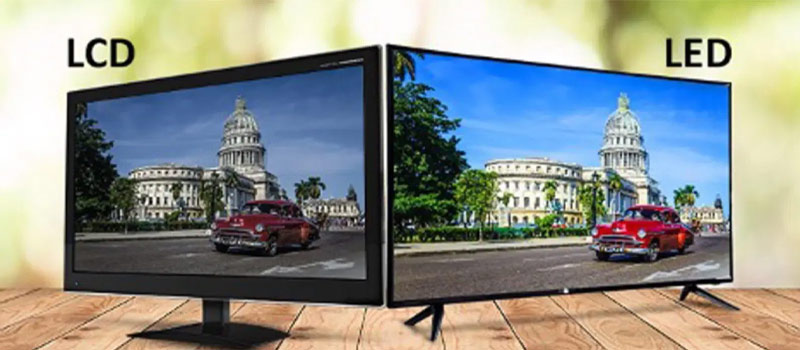
LCD TVs primarily use traditional CCFL backlights, which are low-cost but consume more power. LED TVs replace the original CCFL backlights with LEDs, achieving not only higher brightness but also lower power consumption. Building on LED technology, TV manufacturers have further diversified into various segments such as Mini LED, Micro LED, and Quantum Dot LED.
Picture Quality
Visually, LED TVs deliver significantly superior picture quality. This is primarily due to the incorporation of cutting-edge technologies in LED TVs, such as Samsung’s Crystal UHD and Quantum Dot LED TVs, which utilize AI algorithms to upscale content below 1080p to 2K or 4K resolution, resulting in a much sharper display.
Energy Consumption Comparison
The most notable feature of LED technology is its energy efficiency, whether in LED bulbs, LED displays, or LED TVs. To test the energy consumption of both types, I sourced a second-hand LCD TV using CCFL as a backlight and an LED TV manufactured three years ago. Here is a comparison of their actual power consumption after 10 days of continuous use, with each TV running for 5 hours daily:
Comparison of 5 hours of daily use of LCD TV and LED TV | ||
| Day | CCFL (kWh) | LED (kWh) |
| 1 | 0.78 | 0.47 |
| 2 | 0.82 | 0.58 |
| 3 | 0.72 | 0.39 |
| 4 | 0.75 | 0.41 |
| 5 | 0.8 | 0.43 |
| 6 | 0.75 | 0.45 |
| 7 | 0.75 | 0.46 |
| 8 | 0.73 | 0.49 |
| 9 | 0.75 | 0.52 |
| 10 | 0.84 | 0.54 |
| Total Consumption | 7.69 | 4.74 |
| Average Consumption | 0.77 | 0.47 |
Screen Thickness Design
Early LCD TVs were about 8 centimeters thick. However, with technological advancements, both modern LCD and LED TVs can now achieve extremely slim profiles, with many models measuring less than 2 centimeters in thickness.
Response Time
Early LCD TVs using CCFL backlights typically had slower response times, often resulting in image ghosting. LED TVs, on the other hand, have undergone comprehensive improvements, with response times generally under 1 millisecond.
Viewing Angle
LCDs utilize a variety of panel display technologies, and different technologies offer varying viewing angles. Among these, TVs using IPS panels have the best viewing angles, reaching up to 160 degrees, followed by VA panels, which can reach 140 degrees. TN panels have the poorest viewing angles, at just 110 degrees; the screen becomes difficult to see clearly even with a slight shift in viewing angle, and they have now been phased out. LED TVs, thanks to their full-array backlighting, offer viewing angles approaching 180 degrees, so this is not an issue.
Lifespan
Most standard LCD TVs come with a 3-year warranty. Extending this slightly, we can estimate their lifespan to be 3–5 years. After reviewing the websites of numerous LED TV manufacturers, I found that they offer a 6-year warranty, so we can infer that the lifespan of LED TVs is 6–8 years.
Heat Generation
Regarding heat generation, while there are many factors involved and various variables to consider, the actual difference between the two is not particularly significant; temperatures generally remain between 36 and 45 degrees.
Price
Depending on the LCD technology used and the brand, there is a significant price difference between LCD and LED TVs. Below are some common LCD TV prices:
| Brand | Screen Size | Standard LED | QLED / QNED | Mini LED / Neo QLED |
| TCL | 55″ | F35 4K LED About $199 | Q6 QLED About $298 | QM5K Mini LED About $349 |
| LG | UT7570 LED About $229–299 | QNED82 About $449 | None | |
| Samsung | U7900 LED About $239–249 | Q7F QLED About $379 | QN80F Neo QLED About $799 |
2026 LCD TV Buying Guide: Is It Still Worth Buying an LCD TV?
Although LED TVs have been widely adopted for quite some time, LCD TVs still have their place, especially in less affluent countries and regions, as well as for those who do not have high demands for picture quality. For these groups, LCD TVs remain the best choice.
Are there other options besides LCD and LED TVs?
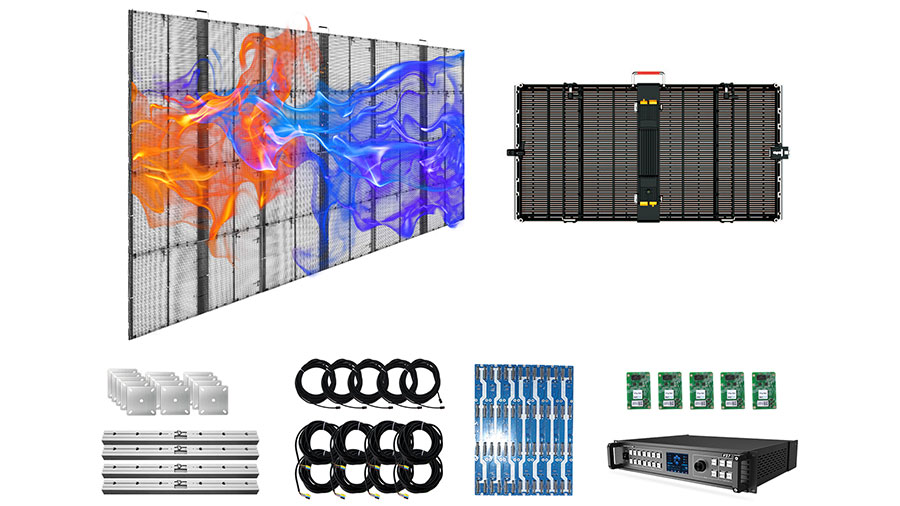
Yes, in addition to LCD and LED TVs, a display solution using spliced LED modules is currently very popular. It uses LED modules with a pixel pitch of less than 2mm, so even when viewed from a distance of 2 meters, no pixelation is visible. Furthermore, its long lifespan, low power consumption, and maintenance-free nature are gradually replacing some traditional home TVs.

If you need a portable display, consider an all-in-one LED display. This type of LED display is not only easy to move but also supports quick disassembly and assembly. If you need to use it in other scenarios, you can simply reassemble it when needed.
FAQ
Is an LED TV more durable than an LCD TV?
Yes, based on the warranties provided by TV manufacturers, LED TVs are generally more durable.
Are LED TVs better suited for gamers?
Yes, many LED TVs are specifically optimized for various games, and some even feature Motion Xcelerator 144Hz, which eliminates lag and blurring during gameplay.
Are LED TVs better for your eyes?
Eye comfort actually depends not on the display technology, but on viewing distance and duration. As long as you sit at an appropriate distance and limit your viewing time, both types are very eye-friendly.
Have LCD TVs been phased out?
No, they haven’t been phased out; they remain the best choice for entry-level TVs.
Why are almost all TVs in shopping malls and hotels LED TVs?
This is because shopping malls and hotels need high-quality display effects to attract the public’s attention. They typically strike a balance between quality and price. This approach saves costs while still delivering excellent results.
Are OLED and LCD TVs better than LED TVs?
If certain conditions are met, OLED is indeed superior to both LCD and LED TVs. OLED TVs offer unmatched performance in terms of black levels and contrast, which is particularly beneficial for high-saturation design styles and film production.
Final Conclusion: How to Choose Between LCD and LED TVs?
Budget First → LCD
For countries and regions with limited financial resources, LCD TVs remain the best choice. They are 5–8 times cheaper than LED TVs. Additionally, in areas with poor internet connectivity—where high-quality LED TVs heavily rely on the internet to stream 4K content—even a high-end LED TV would fail to deliver a satisfactory viewing experience.
Experience First → LED
In terms of functionality and user experience, LED TVs are undoubtedly the best choice. LED TVs come in a variety of models. While some high-end models are expensive, if you’re looking for a more cost-effective option, consider Samsung’s Crystal UHD TVs or Hisense’s ULED TVs. These entry-level models start at just over $300 and still deliver an excellent picture quality experience.