



What are some Common LED Video Processor Brands?
- NovaStar: NovaStar video processors offer exceptional performance and stability, holding over 60% market share in the mid-to-high-end display sector. In other words, most of the large-scale LED displays you see in public are highly likely to be controlled by NovaStar LED processors.
- Colorlight: Colorlight video processors cater to three different display scenarios: low-end, mid-range, and high-end. They strike an excellent balance between performance and value for money.
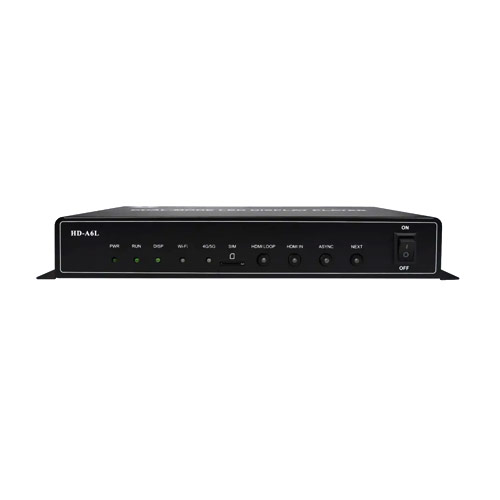
- Huidu Technology: Huidu video processors are specialized devices for irregularly shaped video walls. For complex, irregularly shaped LED displays, the ease of use of GrayScale video processors makes them one of the best choices for LED control systems.
- Other Brands: In addition to these three major LED control system brands, there are also some niche control system brands, such as Linsn, Kystar, and Xiaoniao Technology.
The following is a comparison of common series and functions of three common LED display screen video processors:
Processor type and brand | Key Features | Interfaces | Presets | Applications |
NovaStar VX Series | It integrates sending card and video processing, supports screen scaling, multi-layer creation and management, etc. | USB/LAN | Maximum 256 | Large stages, TV studios, advertising displays, rental screens, etc. |
Colorlight VX Series | It integrates sending card and video processing, supports fine-grained image control, and achieves professional-grade color management. | USB/RS232/LAN | Maximum 1000 | Large stages, television studios, large-screen splicing, commercial advertising displays, etc. |
Huidu HD-VP Series | It integrates a sending card and video processing, supports ultra-high resolution, and supports up to 26 million pixels. | USB-B, Wi-Fi, LAN, RS232, IR(optional) | Maximum 16 | Outdoor billboards and light pole screens |
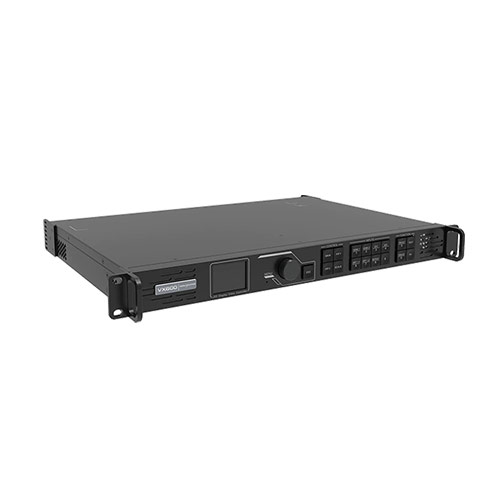
NovaStar VX Series LED Video Processor
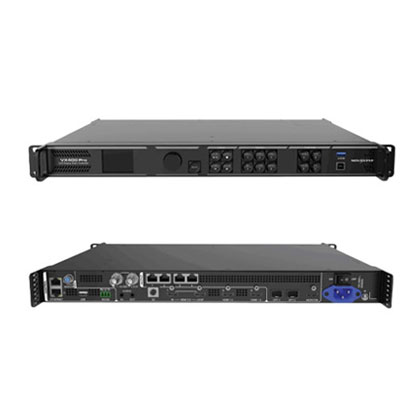
- Loading Capacity: 2.6 million pixels
- Max Width (pixels): 10240
- Max Height (pixels): 8192
- Layers: 6 *2K×1K
- Presets: 256
- Control Connectors: 2× Ethernet Port, 1× USB
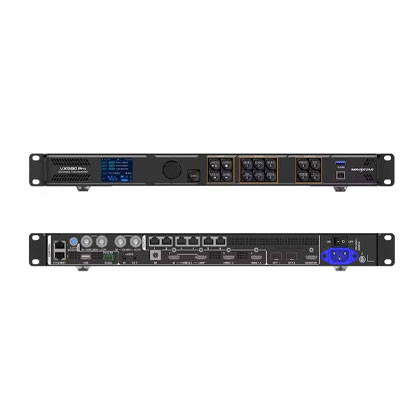
- Loading Capacity: 3.9 million pixels
- Max Width (pixels): 10240
- Max Height (pixels): 8192
- Layers: 6 *2K×1K
- Presets: 256
- Control Connectors: 2× Ethernet Port, 1× USB
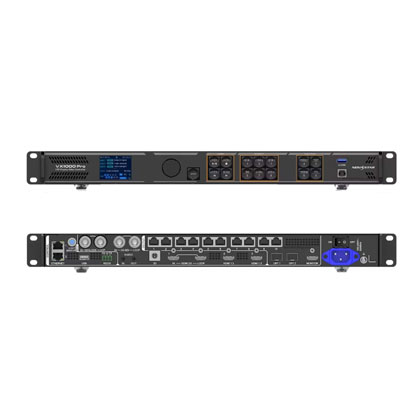
- Loading Capacity: 6.5 million pixels
- Max Width (pixels): 10240
- Max Height (pixels): 8192
- Layers: 6 *2K×1K
- Presets: 256
- Control Connectors: 2× Ethernet Port, 1× USB
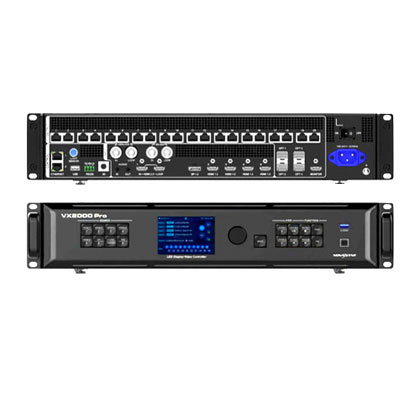
- Loading Capacity: 6.5 million pixels
- Max Width (pixels): 16384
- Max Height (pixels): 8192
- Layers: 12 *2K×1K
- Presets: 256
- Control Connectors: 2× Ethernet Port, 1× USB
Colorlight VX Series LED Video Processor
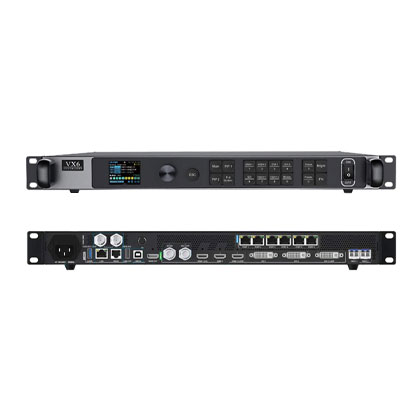 Colorlight VX6
- Loading Capacity: 3.9 million pixels
- Input Resolution: 4096×2160@60Hz
- Layers: 3
- Presets: 128
- Control: USB/RS232/LAN
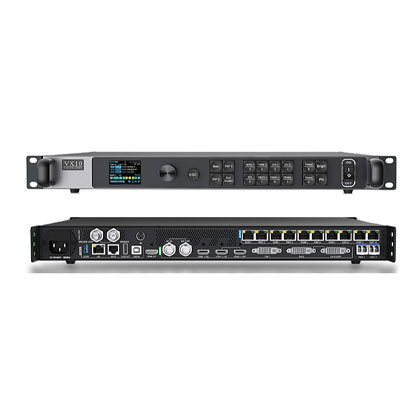 Colorlight VX10
- Loading Capacity: 6.5 million pixels
- Input Resolution: 4096×2160@60Hz
- Layers: 3
- Presets: 128
- Control: USB/RS232/LAN
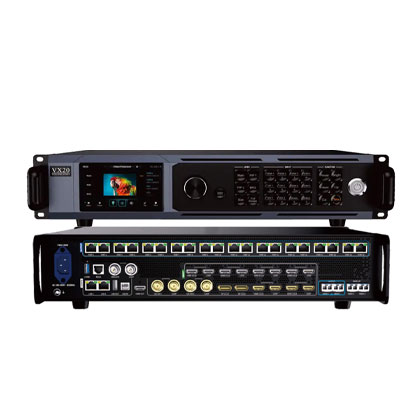 Colorlight VX20
- Loading Capacity: 13.1 million pixels
- Input Resolution: 4096×2160@60Hz
- Layers: 6
- Presets: 1000
- Control: USB/RS232/LAN
Huidu HD-VP Series LED Video Processor
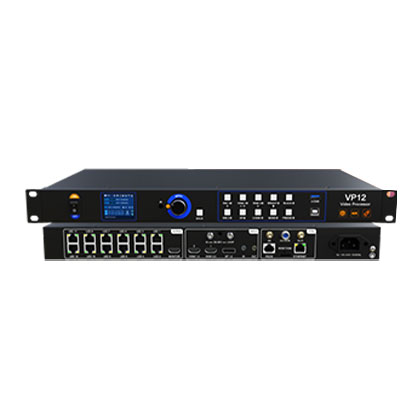 Huidu HD-VP12
- Loading Capacity:7.8 million pixels
- Max. width: 16,000 pixels
- Presets: 256
- Control: USB-B, Wi-Fi, LAN, RS232, RS485, IR(optional)
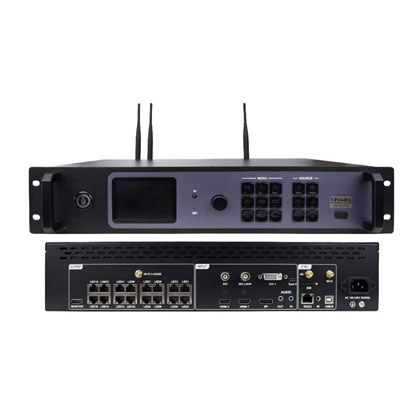 Huidu HD-VP1640A
- Loading Capacity: 10.4 million pixels
- Max. width: 16,000 pixels
- Presets: 8
- Control: USB-B, Wi-Fi, LAN, RS232, RS485, IR(optional)
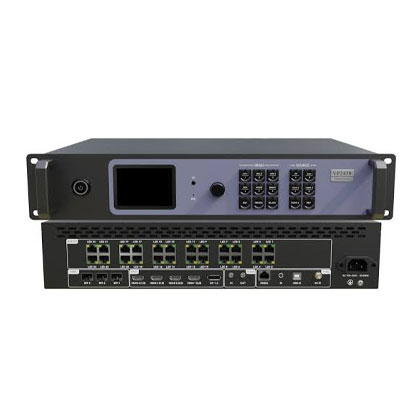 Huidu HD-VP2430
- Loading Capacity: 15.72 million pixels
- Max. width: 16,384pixels
- Presets: 16
- Control: USB-B, Wi-Fi, LAN, RS232, RS485, IR(optional)
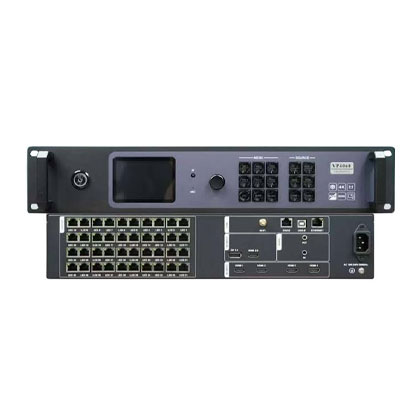 Huidu HD-VP4060
- Loading Capacity: 26.0 million pixels
- Max. width: 32,768pixels
- Presets: 16
- Control: USB-B, Wi-Fi, LAN, RS232, IR(optional)
Functions of LED Video Processors

The load capacity of LED video processors varies depending on their price range. Standard LED video processors can handle millions of pixels, while high-end models can support tens of millions of pixels.

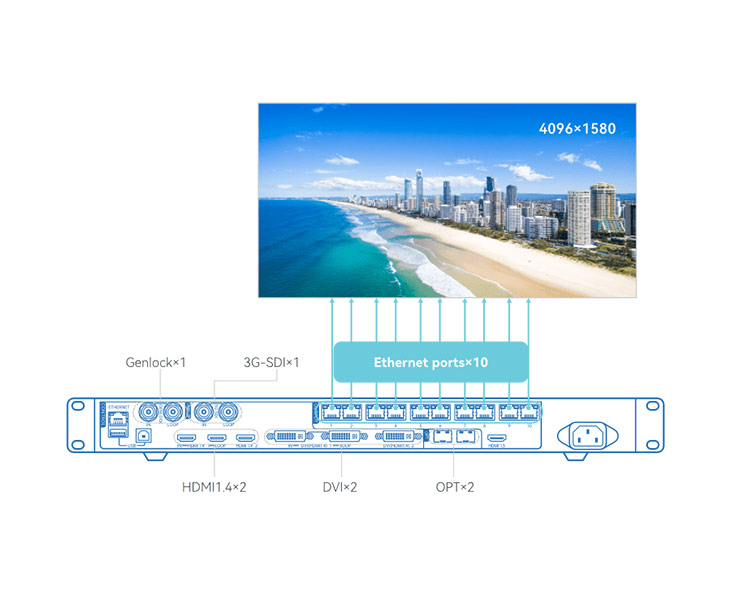
The LED video processor features multiple input and output interfaces, such as HDMI, DVI, G-SDI, USB, DisplayPort, and OPT ports, enabling seamless connection and operation with a wide range of devices.

LED video processors manufactured using high-precision color and grayscale calibration technology enhance color reproduction and grayscale levels on LED displays, resulting in more vivid and natural visuals.

The LED video processor, featuring advanced intelligent processing algorithms, delivers exceptional image processing capabilities. It optimizes images and videos to provide outstanding display results for your projects.

The LED video processor features split-screen functionality, enabling simultaneous adjustment of multiple display parameters. This allows for more efficient debugging of images and video content on LED displays.

JYLED’s LED video processor can simultaneously receive multiple video signals for centralized processing. The processed content is synchronously output to the LED display, enabling synchronized video presentation.
The LED Video Processor Supports Pixel-by-Pixel Calibration
LED video processors can calibrate the brightness and color of each LED lamp on the display using corresponding control software or calibration platforms.
This ensures the LED display delivers consistent and uniform color and brightness, delivering an extraordinary visual experience.

LED Video Processor Frame Rate Adaptation
Crafted with high-end algorithms and advanced technology, the LED video processor synchronizes the frame rate of connected LED displays with the original frame rate of the video source.
This enhances display smoothness, eliminates screen tearing, stuttering, and lag, delivering near-realistic visual content.
What are the Benefits of Buying an LED Video Processor from JYLED?
Brand Guarantee
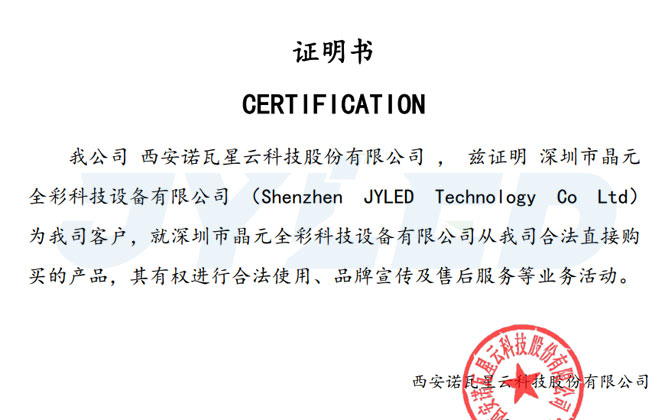
All LED video processors sold by JYLED are supplied by LED control system manufacturers. Therefore, when you purchase an LED video processor from JYLED, you are fully entitled to all warranty services offered on the official website.
Quick Response
When you purchase an LED video processor from the JYLED official website, no matter what issues you encounter, you can contact our technical engineers at any time. They will respond quickly to your questions and provide solutions.
Lifetime Technical Support
When you purchase an LED video processor from JYLED, you’ll receive lifetime technical support. No matter how long you’ve been using the LED processor, you can contact us anytime if you encounter any problems.
LED Video Processor Case show
- Case show

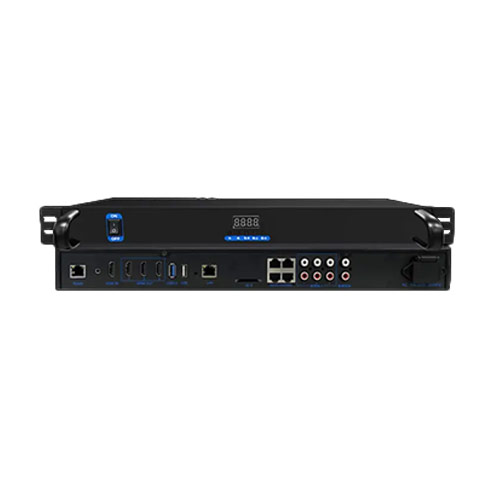
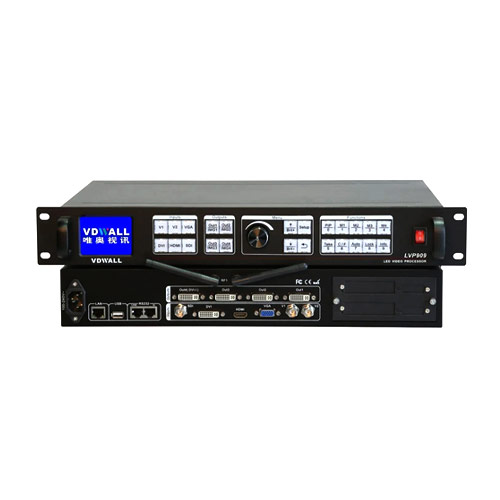

No, because LED video processors have highly complex functionality. In addition to data transmission, LED video processors can split screens, rotate images, and adjust image colors features that LED send cards do not support.
Some high-end LED video processors even include both receiver and transmitter functions, meaning they can control LED displays without the need for a separate LED transmitter card.
A 2-in-1 LED controller can meet the needs of most scenarios, especially those with a small number of display points (fewer than 10 million pixels) and relatively simple functional requirements.
However, for ultra-high resolutions and complex visual effects displays, a dedicated, standalone processor is essential.
- If you’re seeking high performance and stability, Nova LED video processors are a top choice.
- If you want to strike a balance between performance and value, Calite LED video processors are a good option.
- For irregularly shaped LED displays, you can choose GrayScale LED video processors, which specialize in handling non-standard shapes.
Yes, we do ship even a single LED video processor. However, we strongly recommend shipping it as part of your project package, as this can save you a significant amount on shipping costs.
The LED Video processors must be used with matching brand receiver cards, so they are not compatible with just any LED display.
Standard LED video processors support up to 4K resolution, while high-end models can handle resolutions as high as 16K.
An LED video processor can adjust image parameters such as brightness, contrast, and color. It also supports a range of advanced processing functions including image capture, zooming, scaling, overlaying, compositing, and transition effects.
How To Choose The Right LED Video Processor for Your Project?
When you need to purchase an LED video processor for your project but are unsure how to choose, consider the following factors to select the appropriate LED video processor.
Load capacity
You need to select the type of LED video processor based on the size and pixel density of the LED display. If the LED display is extremely large and exceeds the load capacity of a single LED video processor, multiple processors of the same type should be chosen. This ensures the combined load capacity exceeds the display’s pixel count, guaranteeing stable operation.
Function Selection
Different types of LED video processors offer varying functionalities. Select an LED video processor with features that align with your specific requirements, such as edge sharpening, image overlay, and chroma key compositing. If you find it difficult to decide, contact JYLED via the button below. We will analyze your needs and provide tailored solutions.
Format Support
Different types of LED video processors vary in the types and number of interfaces they offer. When you need to process both audio equipment and LED displays simultaneously, prioritize LED video processors equipped with audio interfaces and Ethernet ports. If you’re using fiber optic connections, select an LED video processor with an OPT interface.
Brand And Budget
LED video processors from different brands vary in both functionality and price. If you’re seeking a cost-effective and suitable LED video processor, contact JYLED. We will provide the most reasonable LED video processor quotation tailored to your requirements and budget.
How To Use An LED Video Processor?
After purchasing a JYLED LED video processor, how do you use it? Let’s take a look!
Connecting Devices
Connect your LED display to the signal source device using the corresponding cables and interfaces. Note that the output port of the LED video processor connects to the LED display, while its input port connects to the computer.
Input Setup
On the front menu screen of the LED video processor, select the correct input interface and configure the signal format—including resolution and refresh rate—to match the source. Simultaneously, ensure all connections and settings are correct to guarantee proper signal transmission and reception by the display device.
Adjusting Display Parameters
Once all the above steps have been completed correctly, you can adjust various display parameters within the LED video processor based on the technical specifications of the LED display and your specific display requirements. These parameters include color saturation, refresh rate, exposure level, and others, enabling the LED display to achieve optimal visual performance.
Start Debugging
After completing the above steps, you can power on the LED display and LED video processor to display the image on the screen. If the display effect is not satisfactory, further adjustments and optimizations should be made through the LED video processor to meet your display requirements.