


You’ve likely seen LED display products mention refresh rates like 1920Hz or 3840Hz. These LED display refresh rates are actually derived from the frequency used in PWM dimming. Let’s delve deeper into PWM dimming.
What Exactly Is PWM Dimming?
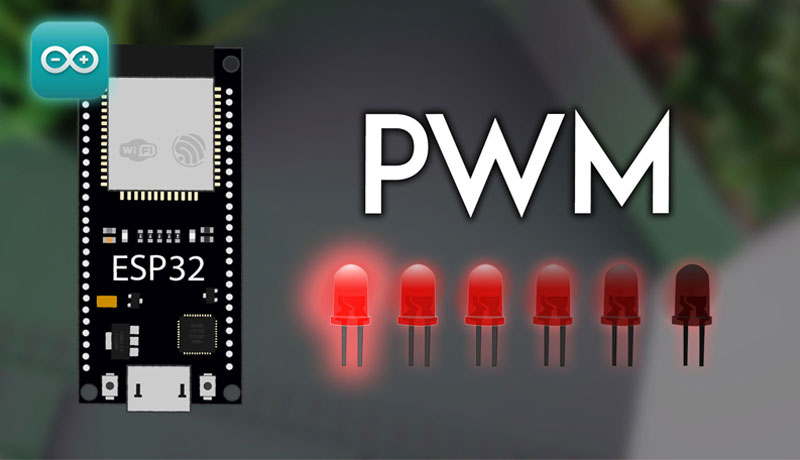
PWM dimming, also known as Pulse Width Modulation, is a method that controls brightness by reducing the average output power of lighting equipment.
Specifically, PWM dimming rapidly switches the LED lights on and off at an extremely high frequency between the load and the power source, thereby altering the LED’s conduction time and off time.
The on-time refers to the period when the LED emits light, while the off-time denotes when the LED screen brightness is zero, and the light is completely off. This method regulates the brightness of the lighting device.
How PWM Works as a Dimming Signal
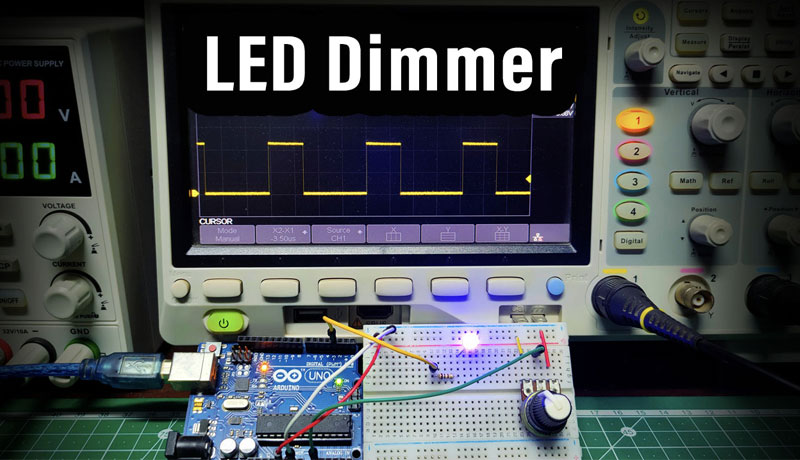
As a dimming signal, PWM consists of multiple square wave pulses, each containing alternating peaks and troughs.
When the PWM signal is at a high level (i.e., the signal is on), its signal strength is high, reaching the peak position. Conversely, when the PWM signal is at a low level (i.e., the signal is off), its signal strength is low, reaching the trough position.
Duty Cycle

In the field of dimming, the duty cycle refers to the ratio of the PWM signal’s on-time to its total on-time and off-time. If the PWM signal has a 100% duty cycle, it remains continuously on, meaning the LED lamp emits light at maximum brightness.
When the duty cycle is 15%, only 15% of the PWM signal is active, while the remaining 85% is inactive, resulting in lower LED brightness.
In summary, PWM dimming precisely controls LED brightness by flexibly adjusting the signal’s duty cycle to alter the average output power, achieving the desired luminance level.
Frequency
Frequency is a crucial concept in PWM dimming, referring to the total time the PWM signal spends in the on state relative to the off state. This duration is typically measured in cycles.
Taking common LED displays as an example, higher PWM signal frequencies enable more precise brightness control, resulting in smoother, more natural visuals. This significantly reduces flickering, stuttering, and other artifacts on LED displays.
During dimming, frequencies above 25 kHz are recommended. Such ultra-high frequencies enable extremely fast device control, eliminating flickering visible to the human eye.
PWM dimming is particularly suitable for applications involving video recording or other motion-intensive scenarios.
PWM as the Operating Principle for LED Driver Output

The working principle of PWM dimming for LED display driver output involves converting the PWM signal into a DC voltage applied to the LED driver. The driver then supplies an appropriate current to the LED lamp.
The PWM output circuit rapidly interrupts the LED’s DC current at high frequencies, causing the LED to alternate between conducting and non-conducting states. This rapid cycling ensures stable and precise light output from the LED.
Advantages of PWM Dimming in Lighting Fixtures and LED Displays
Advantages of PWM Dimming in Lighting Fixtures
Stable Output
PWM dimming delivers high output precision. When applied to lighting fixtures, it accurately adjusts to your desired brightness level while maintaining stable, soft light quality without glare, providing an optimal visual experience.
Additionally, when dimmed correctly, color consistency remains excellent with minimal color deviation.
Energy Efficiency
As discussed above, PWM dimming controls brightness by regulating the duration of current flow through alternating on and off states. This approach significantly reduces energy consumption and enhances overall energy efficiency for lighting systems.
Rapid Response
PWM dimming systems exhibit exceptionally fast response times, instantly interpreting brightness commands and transmitting them to lighting fixtures.
When you need to adjust lighting brightness in real time based on ambient light changes, PWM dimming is the preferred choice.
Lower Cost
PWM dimming systems feature relatively simple control circuits that don’t require complex components (such as heavy heat sinks or linear voltage regulators), resulting in lower manufacturing costs.
This makes them suitable for standard household lighting fixtures or mobile phone screens. If your budget is tight, PWM dimming is a cost-effective solution.
Advantages of PWM Dimming in LED Displays
Consistent Color Quality
When dimming LED displays using PWM, color quality remains stable across different brightness levels without shifting, delivering vibrant visuals.
Precise Brightness Control
PWM precisely controls display brightness by regulating LED chip illumination. As long as chip brightness remains within its maximum range, the display maintains uniform brightness, delivering superior visual effects.
Extended Lifespan
PWM dimming reduces thermal stress on internal chips and lowers overall operating temperatures. This prevents prolonged exposure to high heat, effectively extending the display’s lifespan and saving maintenance and replacement costs.
Flexible Color Temperature Adjustment
Flexibly adjust the color temperature of the LED display primarily by controlling corresponding LED beads through PWM and PWMB signals.
When the display needs to present a warm-toned theme environment, you need to illuminate more red LED beads for a longer duration, while other green and blue LED beads are illuminated for shorter periods.
Consequently, the overall color temperature of the displayed image will appear warm.
The same method applies to achieving other color temperatures. PWM dimming offers flexible color temperature adjustment, making it adaptable to diverse thematic environments.
Potential Issues with PWM Dimming and Alternative Solutions
When implementing PWM dimming for LED displays or lighting fixtures, you may encounter the following problems. I will detail the causes and provide corresponding solutions.
PWM Flicker
If you dim lighting equipment or LED displays using frequencies below 1000 Hz during the dimming process, it will produce a flicker effect. Some individuals who are sensitive to flicker may experience adverse reactions such as dizziness or eye strain.
To address this, you can adjust the light source to an appropriate voltage level or use displays that combine PWM and DC dimming to eliminate flicker.
Electromagnetic Interference
Since PWM adjusts brightness by rapidly switching LED lights on and off, electromagnetic interference easily occurs during signal transitions. Higher PWM frequencies amplify this interference.
To mitigate electromagnetic interference, consider shielding the signal-generating circuits or devices with materials like metal shielding.
Compatibility Issues
Some LED drivers are incompatible with PWM dimming. Before purchasing, verify that the driver is explicitly labeled as PWM compatible. Prioritize LED drivers specifically designed for PWM dimming.
Dimming Unresponsive
If dimming your LED bulb yields no brightness change, it likely indicates the bulb is non-dimmable, or the driver is incompatible with the bulb. Always verify dimmability and PWM compatibility before purchasing bulbs or drivers.
Practical Applications of PWM Dimming
LED Displays
PWM dimming is essential for controlling brightness, refresh rates, and other parameters in LED displays.
For instance, adjusting brightness via PWM maintains image clarity and color fidelity across different brightness levels while offering cost-effective implementation, making it the preferred choice for most LED display manufacturers.
LED Lighting
PWM dimming is now widely adopted in streetlights and various household lighting fixtures.
It enables smooth and precise brightness adjustments based on weather conditions and time of day without compromising energy efficiency, perfectly meeting practical needs.
Motor Control
Most DC motors used in industrial applications employ PWM dimming to regulate speed, maintaining operation within a stable range. This ensures reliable and efficient performance without manual intervention, significantly saving time and costs.
Smartphones
Mid to high-end smartphones employing OLED and AMOLED display technologies utilize PWM dimming.
This technique controls screen brightness through extremely high-frequency flickering, imperceptible to most eyes. However, some sensitive users may experience eye discomfort due to this flicker.
Consequently, some phones on the market have addressed this issue, such as the Realme 10 Pro+ and Honor 90. These devices utilize PWM refresh rates as high as 2160Hz and 3840Hz, significantly enhancing visual comfort for users.
Summary
The above provides comprehensive information on the advantages, working principles, and applications of PWM dimming. We hope this helps deepen your understanding of PWM dimming.
Frequently Asked Questions
Why choose PWM dimming over other dimming methods?
Most modern lighting fixtures demand increasingly sophisticated dimming capabilities.
While other dimming methods allow flexible brightness adjustment, they often cause color deviation. PWM dimming avoids this issue while delivering smooth, flawless dimming performance.
Can PWM dimming improve the image resolution of LED displays?
No. The image resolution of LED displays is determined by the pixel pitch of the LED modules used.
A smaller pixel pitch results in higher resolution, which is unrelated to PWM dimming. Therefore, PWM dimming cannot enhance the image resolution of LED displays.
Do I still need to maintain the LED display after implementing PWM dimming?
Yes. PWM dimming only adjusts brightness and color temperature. Over time, internal components will degrade and require timely replacement. Additionally, dust accumulation on the surface can impair heat dissipation, necessitating regular cleaning.
What’s the difference between PWM dimming and current dimming in LED lights?
PWM dimming precisely controls brightness by rapidly switching the LED on and off, ensuring the original color temperature remains unchanged.
Current dimming adjusts brightness by reducing the actual current flowing through the LED. This method can cause slight brightness variations and may affect the LED’s color temperature.
Can PWM dimming be disabled on smartphones?
Currently, only the Motorola Edge Plus 2023 allows complete PWM dimming deactivation. Most smartphones lack this feature, though you can reduce its impact by lowering screen brightness to 50%.

