


An exceptional LED IP protection rating is the cornerstone for stable, all-weather operation of LED displays. But do you truly understand what lies behind the LED IP rating? What level of protection can genuinely meet the demands of your demanding application scenarios? In this article, we will delve into the definition and significance of LED IP protection ratings. Let’s explore together.
What is LED IP Rating?
LED IP rating is an international standard established by the International Electrotechnical Commission (IEC). It serves as a crucial metric for measuring the dust and water resistance capabilities of electronic devices. For LED displays, it plays a vital role in ensuring reliability and safety across diverse environments.
What Do the Numbers in an LED IP Rating Mean?
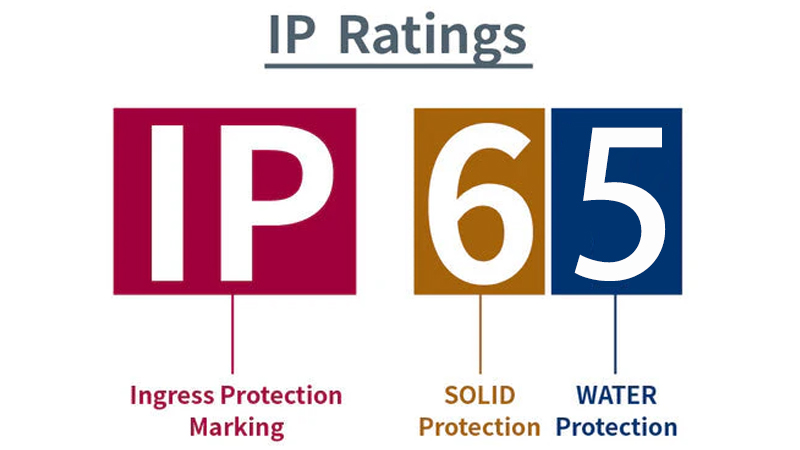
The LED IP rating typically consists of “IP” followed by two digits. The first digit indicates the level of protection against solid objects (0-6), while the second digit represents the level of water resistance (0-8).
| IP (INGRESS PROTECTION) RATING | |||
| SOLIDS | WATER | ||
| 0 | Unprotected | 0 | Unprotected |
| 1 | Protection against large objects greater than 50mm, such as the back of the hand | 1 | Protected against dripping water(vertical dripping) |
| 2 | Protection against objects greater than 12.5mm, such as fingers | 2 | Protection against vertically falling droplets when tilted up to 15° |
| 3 | Protection against objects greater than 2.5mm, such as tools or thick wires | 3 | Protection against water splashes from any direction within 60° of the vertical |
| 4 | Protection against objects greater than 1mm, such as thin wires | 4 | Protection against splashing water (splashing water from any direction) |
| 5 | Dustproof, but allows a small amount of dust to enter without affecting functionality | 5 | Protection against water jets (low-pressure water jets) |
| 6 | Completely dustproof, preventing any dust from entering | 6 | Protection against strong water jets (strong water jets) |
| 7 | Protection against immersion (immersion in water 1 meter deep for 30 minutes) | ||
| 8 | Protection against continuous immersion | ||
Using the table above, you can quickly determine the required protection rating for an LED display.
Why is the LED IP rating important?
The LED IP rating directly determines the durability, safety, and cost-effectiveness of an LED display. It is one of the core criteria for evaluation, especially for outdoor LED displays.
Here’s why it matters across key areas:
Enhanced Durability
LED displays with higher LED IP ratings exhibit greater resistance to harsh environmental factors. Many users deploy inadequately protected displays in outdoor or industrial settings, risking material degradation or deformation that shortens lifespan.
Opting for stronger IP protection significantly boosts material durability and extends the display’s operational life.
Improved Water Resistance
A key aspect of LED IP ratings is water resistance. LED displays with low water resistance ratings may experience internal component rusting or failure during rainy weather or in humid environments, disrupting normal operation.
For applications potentially exposed to water, we recommend selecting IP65-rated LED displays to ensure reliable performance under all weather conditions.
Safety Assurance
LED displays with inadequate protection cannot prevent water or foreign objects (such as dust) from entering circuits, potentially causing hazards like fires or electric shocks that threaten personnel and property safety. Selecting LED displays with robust LED IP ratings significantly reduces the risk of electrical leakage, safeguarding personal safety.
Cost-Effectiveness
While the initial investment for high-protection-rated LED displays may be higher, their superior stability saves on long-term maintenance, cleaning, and replacement costs, offering better overall value.
Application Versatility
Selecting a more adaptable LED IP rating enhances the functionality of LED displays, enabling them to operate in diverse environments ranging from standard indoor settings to extremely harsh conditions. A lower LED IP rating limits the display’s applicability and may fail to ensure stable operation in specialized environments like direct sunlight.
Recommended LED IP Ratings for Different LED Display Types
Different LED display types have varying IP protection requirements, and standards differ among manufacturers. For example, JYLED displays achieve a minimum IP65 rating. When selecting, determine the appropriate LED IP rating based on the specific installation environment and viewing distance to ensure optimal display performance and equipment durability.
Indoor LED Displays

Recommended LED IP ratings range from IP30 to IP54, with common options including IP30, IP43, and IP54.
In indoor environments, protection typically requires dust resistance, protection against solid foreign objects, or occasional splashes. Therefore, LED modules or LED cabinets with basic protection suffice, supplemented by regular dust removal to maintain long-term display clarity.
Semi-Outdoor LED Displays

Recommended LED IP ratings: IP54, IP65.
Positioned between indoor and outdoor environments, these displays frequently endure light rain and wind, which can damage modules. IP54 and IP65-rated displays effectively shield LED chips from rain and dust, enhancing equipment reliability.
Outdoor LED Displays

Recommended LED IP rating: IP65.
Some outdoor LED displays require year-round open-air installation, such as in stadiums, building exteriors, and shopping malls. They must withstand harsh weather conditions, necessitating cabinets with high LED IP ratings (IP65 or higher) to ensure stable operation even during heavy rain.
Frequently Asked Questions
Does a higher LED IP rating mean more expensive LEDs?
Higher LED IP ratings typically result in higher LED module costs due to the use of sturdier materials and more rigorous sealing techniques for dust and water resistance, which increase production expenses.
Which is more suitable for outdoor LED advertising screens: IP65 or IP67?
For most outdoor advertising LED displays, IP65 provides adequate protection for standard outdoor environments. IP67 offers superior immersion resistance but differs fundamentally from IP65’s waterproofing standards and cannot be directly compared.
Can LED displays with lower protection ratings be used indoors?
Yes. LED displays with lower protection ratings (IP20, IP30, IP44) are specifically designed for indoor use and are commonly found in offices, shopping malls, homes, and similar settings. They focus on preventing solid object ingress, offering better protection against fingers, dust, and similar contaminants.
How can waterproof performance be maintained after long-term use?
Regular inspections of the display’s sealing strips and connection integrity, combined with routine maintenance and moisture prevention, help preserve its waterproof capabilities.
Can products with lower protection ratings be modified to enhance waterproofing?
Due to fundamental differences in internal structure design, LED module encapsulation processes, and circuitry compared to higher-rated products, upgrading lower-rated displays is neither recommended nor feasible.
JYLED—Helping You Plan the Optimal IP-Rated LED Display Solution
Whether your project is in a high-dust urban environment or a coastal city with heavy rainfall, JYLED is committed to providing professional LED IP rating planning solutions. Our expert team will precisely customize the best-suited IP-rated LED display solution for you based on the installation environment’s temperature, humidity, precipitation probability, and physical contact risks.
If you have any customization needs, please feel free to contact us.