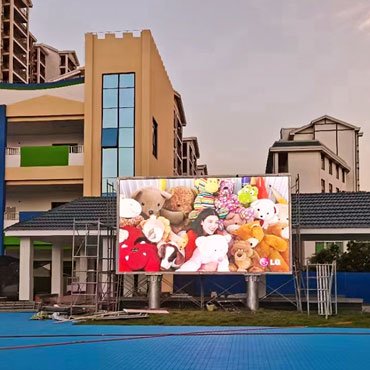
For LED displays, the refresh rate is a crucial specification. The refresh rate determines the smoothness of the images displayed on the screen, which in turn affects the viewer’s experience.
Many high performance LED displays on the market now feature a 7680 Hz refresh rate as a key selling point. Have you ever wondered why high performance LED displays require a 7680 Hz refresh rate? Next, we’ll take you through a detailed exploration of how a 7680 Hz refresh rate works with LED displays.
What Is a 7680 Hz Refresh Rate?
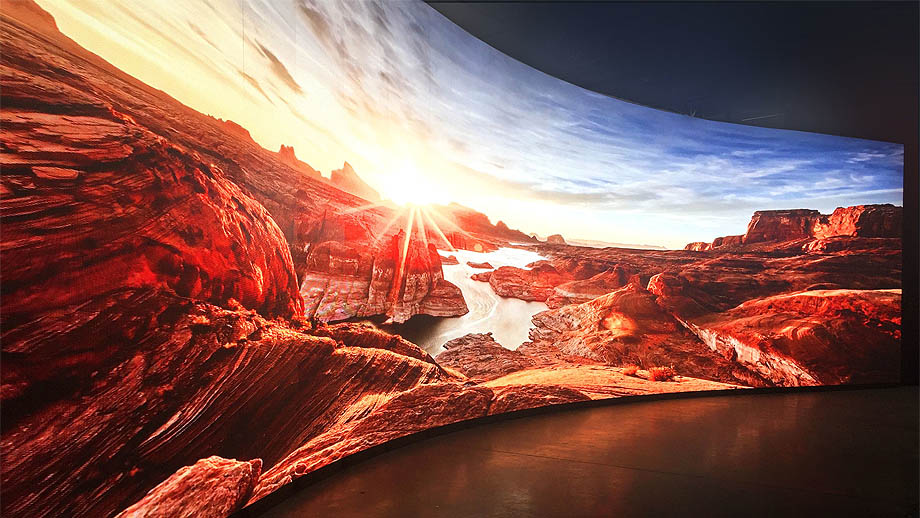
A 7680 Hz refresh rate refers to the pulse width modulation (PWM) frequency of a single LED lamp in an LED display, where each LED lamp flashes 7,680 times per second.
The faster the LEDs on the screen flash, the shorter the display interval between consecutive frames. This reduces the perceptible flicker to the human eye and, when captured by a camera, results in a smoother, clearer, and more natural image.
A 7,680 Hz refresh rate is currently a high-end specification for LED screens on the market, and it is an ideal refresh rate for professional display applications.
What Are the Advantages of LED Screens with a 7,680 Hz Refresh Rate?
As a high-end refresh rate specification for LED screens, a 7,680 Hz refresh rate offers the following advantages:
Reduced Perceived Screen Flicker
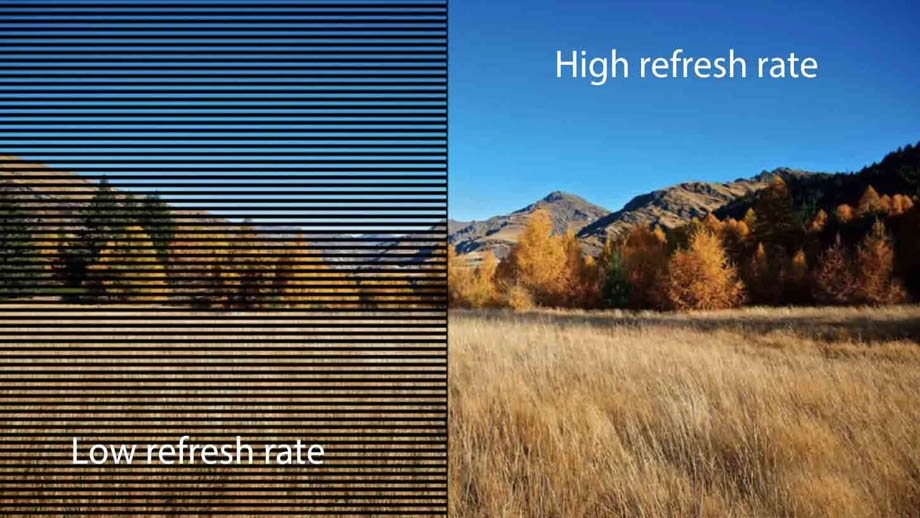
The screen’s refresh rate essentially corresponds to the speed at which the image alternates between light and dark. If the refresh rate is too low, meaning the LED lamps on the screen flash fewer times per second, the interval between two flashes becomes longer. Consequently, LED screens with low refresh rates may cause viewers to perceive flickering with the naked eye, which degrades the viewing experience.
A 7680 Hz refresh rate, however, eliminates this issue. With a refresh rate of up to 7680 times per second, the interval between the on and off states of the LED lamps is extremely short, making it virtually imperceptible to the human eye.
Reducing Scan Lines and Bright-Dark Stripes in High-Speed Photography
For standard LED displays, a refresh rate of 3,840 Hz is generally sufficient to meet usage requirements, as the human eye can barely perceive any flickering on a 3,840 Hz LED screen. Furthermore, once an LED display reaches a refresh rate of 3,840 Hz, it can already meet basic photography and recording needs, resulting in relatively clear and smooth footage when capturing the screen.
However, for higher-end, more professional applications involving high performance LED displays, high performance cameras are typically used. Professional cameras have faster shooting speeds and higher recording frame rates.
If the LED display’s refresh rate is too slow, the camera may capture the dark interval between two screen flickers, causing a break in continuity between the preceding and following frames recorded by the camera. Additionally, professional cameras can capture undesirable visual artifacts such as scan lines and light-dark stripes.
Therefore, for shooting with high speed cameras, your LED display must achieve a refresh rate of 7,680 Hz to ensure the clarity and smoothness of the recorded footage.
Improving Screen Capture Performance in Professional Filming
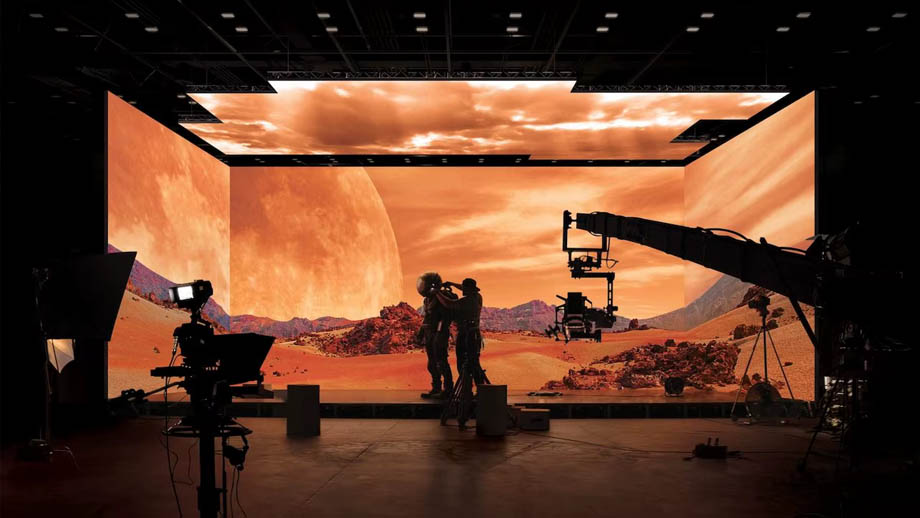
For LED screens used in virtual production, if the screen’s refresh rate is too slow, the generated virtual background may fail to match the camera’s recording frame rate, resulting in flickering, stuttering, and other issues in the recorded footage.
These issues cause the virtual background to become disconnected from the actual filming requirements, leading to mismatches between the background and the live performance or reducing the realism of the virtual background, which ultimately affects the final production quality.
However, the ultra-high refresh rate of 7680 Hz effectively eliminates the stuttering that can occur with high speed footage when using professional filming equipment. It provides professional camera lenses with clear, sharp, smooth, and natural virtual images, ensuring the quality of your footage meets your requirements.
3840 Hz LED Screen vs. 7680 Hz LED Screen: A Comparison of Differences
In addition to 7680 Hz, 3840 Hz is also a very popular refresh rate specification for LED screens. So, which of these two refresh rates is better suited for your LED display? Let’s take a look at the key differences between the two:
Image Smoothness and Camera Performance
- 3840 Hz LED Screen: The screen offers high image smoothness; there is no flicker visible to the naked eye, and footage captured by standard cameras appears very smooth and natural. However, when displaying scenes with very high motion speeds, slight image stuttering may occur, and there is a possibility that professional broadcast cameras may capture images with scan lines.
- 7680 Hz LED Screens: The screen offers exceptionally high smoothness; not only is flicker imperceptible to viewers, but professional recording equipment can also capture clear and smooth footage.
Hardware Configuration and Procurement Costs
- 3840 Hz LED Screens: Commonly used driver IC models for these screens include the ICN2055, CH2053, and MBI5253, which provide the mainstream refresh rate of 3840 Hz for applications such as standard commercial events and advertising displays. Relatively speaking, their procurement costs are lower than those of 7680 Hz screens.
- 7680 Hz LED Screens: These screens typically use driver ICs such as the ICND2165, ICND3065, and MBI5264. These highly advanced driver ICs provide stable, high-refresh-rate display performance. Consequently, the procurement cost for these screens is higher.
Power Consumption
The power consumption of LED screens is primarily related to screen brightness. At the same brightness level, the 3,840 Hz LED screen’s driver ICs and scanning circuits switch half as often as those of a 7,680 Hz LED screen, and each switching operation of the components results in a slight loss of electrical energy.
Therefore, at the same screen brightness, 3,840 Hz LED screens generally consume less power.
Practical Applications
- 3840 Hz LED Screens: Typically used as LED screens for stage performances, shopping mall LED displays, conference LED displays, and other general LED display scenarios.
- 7680 Hz LED Screens: Primarily used in professional LED display scenarios such as live sports broadcasts, virtual production LED screens, and broadcast studio LED displays.
3840 Hz LED Screens vs. 7680 Hz LED Screens: Quick Comparison Table
| Comparison Criteria | 3840 Hz LED Screen | 7680 Hz LED Screen |
| Image Smoothness | Smooth | Very smooth |
| Camera Performance | Clear footage when recorded with standard cameras | Clear footage when recorded with professional broadcast-grade cameras |
| Hardware Configuration | ICN2055, CH2053, MBI5253 | ICND2165, ICND3065, MBI5264 |
| Purchase Cost | Standard | Higher |
| Power Consumption | Standard | Slightly Higher |
| Actual Applications | LED screens for stage performances, shopping mall LED displays, and conference LED displays | LED screens for live sports broadcasts, virtual production LED displays, and broadcast studio LED displays |
How to Choose the Right LED Screen Refresh Rate?
If you are planning to purchase an LED screen but are unsure which refresh rate specification is best suited for your project, we recommend considering the following factors to make your decision:
Type of Content Displayed on the Screen
- Static images such as posters and charts: Static content does not require a high refresh rate to ensure image continuity. The display quality depends primarily on the screen resolution and the source resolution of the content. We recommend selecting a basic LED screen with a 3840 Hz refresh rate.
- Advertising videos and indoor full color content displays: For standard dynamic content displays, a 3840 Hz LED screen will meet your needs. Not only will the images appear smooth to viewers, but standard camera shots will also be free of artifacts such as banding or scan lines.
- Sports broadcasts and action movies: Since these types of content feature high-speed motion, we recommend selecting a sports LED screen with a 7680 Hz refresh rate to ensure clear visuals without motion stuttering, flickering, or other artifacts.
Recording Requirements
If your LED display is not intended for recording and is used solely to present content to an audience, or if your LED screen has only basic filming requirements, such as shooting with a smartphone or a standard camera, a screen with a 3,840 Hz refresh rate has an interval of less than 260 microseconds between consecutive frames. Ordinary cameras are virtually unable to capture the dark interval caused by screen flicker.
If the LED display is used in a professional photography studio, you’ll need a high speed camera to capture the screen’s images. In this case, we recommend an LED display with a 7680 Hz refresh rate. With a flicker interval of just 130 microseconds between frames, the screen maintains clear and stable images even when shot with a high-speed shutter.
Budget
When pixel pitch, screen size, cabinet material, and other specifications are identical, the higher the LED screen’s refresh rate, the more expensive it will be. Therefore, you should select an appropriate refresh rate based on your budget.
Application Scenarios for a 7,680 Hz Refresh Rate
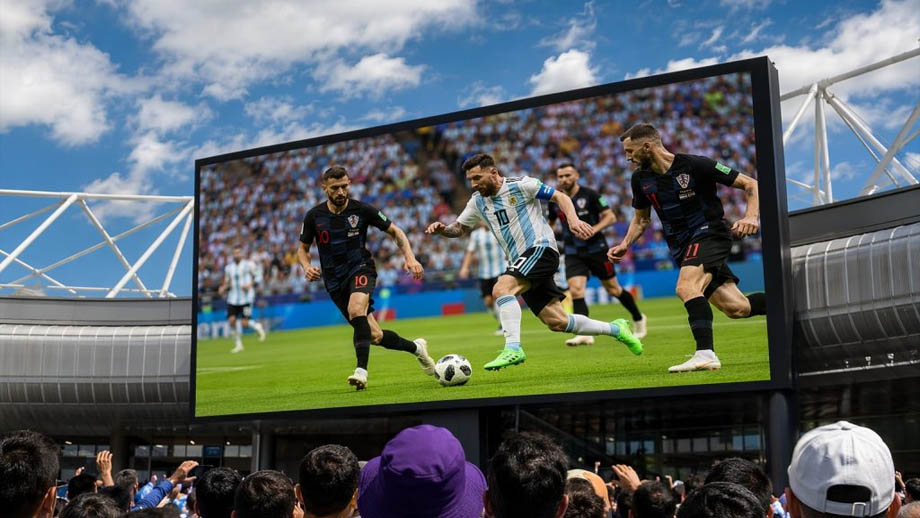
- Stadiums: Sports LED displays with a 7680 Hz refresh rate can clearly and smoothly display high speed movements of athletes, balls, and other sports equipment, ensuring that spectators in the stadium don’t miss a single frame of the action.
- Control Rooms: LED display walls in control rooms with a 7680 Hz refresh rate ensure smooth display of surveillance footage, presenting critical footage clearly and accurately to command personnel so they can make the right decisions immediately.
- Broadcast Studios: Content displayed on LED screens in broadcast studios must be recorded by cameras and then broadcast to viewers. Therefore, the screens require a high refresh rate of 7,680 Hz to ensure smooth and natural footage, preventing unprofessional or negative impacts on the television station’s reputation.
- XR Virtual Production: XR LED screens with a 7,680 Hz refresh rate deliver smoother and more realistic virtual imagery, ensuring authentic and stable recording results even when high-performance cameras capture virtual content.
- Product Launches: During product launches, LED displays showing product videos or posters are often captured by cameras from multiple media outlets. The ultra-high refresh rate of 7,680 Hz ensures that footage captured by these cameras remains clear and free of banding, thereby maintaining the brand’s professional image.
FAQ
Do LED Screens Installed in Shopping Malls Need to Have a 7680 Hz Refresh Rate?
No. Shopping malls typically only need to play simple advertising videos or display product posters, and there is generally no need for camera filming. An LED screen with a 3840 Hz refresh rate is sufficient to achieve excellent visual effects; purchasing a 7680 Hz screen would result in unnecessary project costs.
What Is the Difference Between an LED Display’s Refresh Rate and Frame Rate?
The refresh rate of an LED display typically refers to the rate at which the LED lamps flicker, and is primarily used to describe hardware specifications.
Frame rate, on the other hand, refers to the update rate at which each video frame is rendered and transmitted to the display for viewing; it can be used to describe the specifications of the video source and also serves as a specification for the display itself.
Does Flickering or Stuttering on an LED Screen Always Result from a Low Refresh Rate?
Not necessarily. Flickering or stuttering on an LED screen can be caused not only by a low screen refresh rate but also by slow transmission speeds of the content source signal or a large volume of content, which can cause the LED screen’s control equipment to experience lag while transcoding the content source.
What Is the Key Factor Determining the Refresh Rate of an LED Screen?
The key factor determining the refresh rate of an LED screen is the specifications of the screen’s driver IC. The more powerful the driver IC, the more stable the current it can manage and regulate, and the faster the screen can refresh.
Can I Increase the LED Screen’s Refresh Rate Later Using Software?
No. The LED screen’s refresh rate is a hardware specification; you cannot increase it through software adjustments. However, you can improve the visual quality of the screen by adjusting the display parameters or selecting content sources with higher frame rates.
Summary
For high performance LED displays, selecting a 7680 Hz refresh rate ensures a smoother visual experience when playing fast-moving footage and produces clearer, more natural images when captured by professional cameras.
Therefore, for LED displays used in high-end applications such as virtual production, studio recording, and sports broadcasting, choosing a model with a 7680 Hz refresh rate will deliver optimal display performance.