



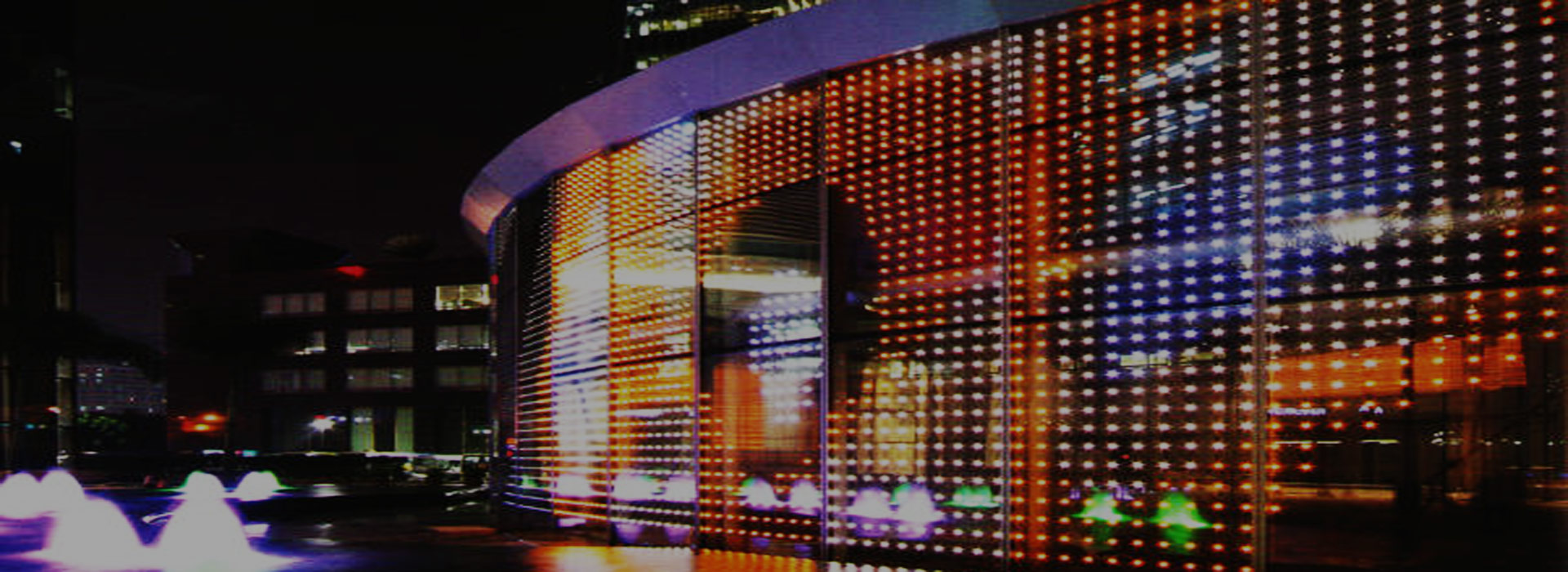


Why Choose JYLED’s LED Grid Screen?
- High Brightness: 10,000 – 15,000 nits
- High Transparency: 45% – 75% transparency
- Standard Cabinet Dimensions: 500 × 1000 mm, 1000 × 1000 mm
- Protection Rating: IP67
- Quality Certifications: CE, RoHS, and FCC certified
- Lifespan: Over 100,000 hours
Slim Screen Structure Maximizes Space Utilization
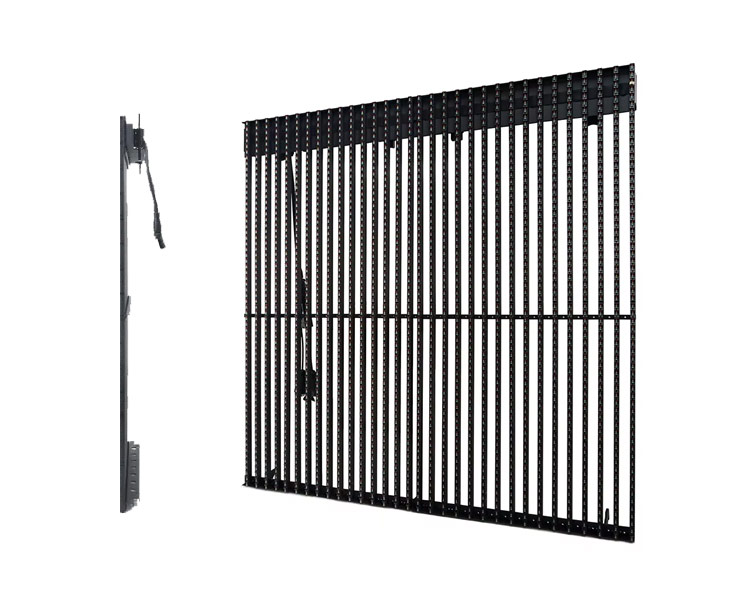
JYLED’s LED grid screen features an open-frame design, with individual LED cabinets weighing as little as 6.5 kg. Compared to the 30 kg weight of conventional LED cabinets, this screen’s cabinets are 79% lighter.
Making them easier for workers to handle and install. This results in faster installation and helps you save significantly on installation costs.
The lighter weight of the LED grid screen cabinets means the installation structure is more stable under load, ensuring your screen operates more reliably and safely over the long term.
The LED grid screen’s slim design is only 67 mm thick at its thickest point, with other areas of the LED cabinet being even slimmer.
Consequently, the LED grid screen occupies less space after installation and minimally impacts the existing environment. It delivers clear, bright visuals for advertising, brand marketing, and product promotions, creating significant commercial value while maximizing your space utilization.
Popular Models of LED Grid Screens
 P15.6 ~ P15.6 LED Grid Screen
- Pixel Density: 4096 pixels/m²
- Screen Transparency: Over 45%
- Viewing Angle: 160°
- Brightness: 10,000 ~ 14,000 nits
- Cabinet Weight: Approximately 10 kg
 P31.2 ~ P15.6 LED Grid Screen
- Pixel Density: 2,048 pixels/m²
- Screen Transparency: Over 75%
- Viewing Angle: 160°
- Brightness: 10,000 ~ 15,000 nits
- Cabinet weight: Approximately 7.5 kg
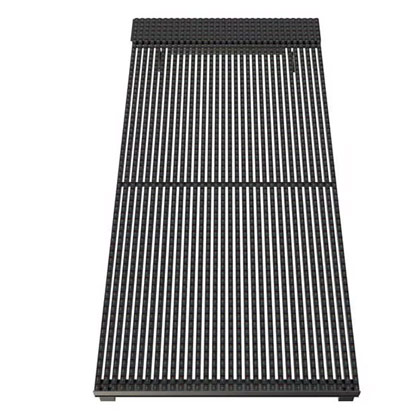 P31.2 ~ P31.2 LED Grid Screen
- Pixel density: 1,024 pixels/m²
- Screen transparency: 75% or higher
- Viewing angle: 160°
- Brightness: 10,000 ~ 15,000 nits
- Cabinet weight: Approximately 6.5 kg
Modular Design for Easy Expansion
JYLED’s LED grid screen features a modular design, where each LED cabinet is assembled from several uniform modules, and each screen is assembled from several uniform LED cabinets. This modular design offers the following advantages:
- Installers do not need to pay attention to cabinet numbers; they can simply assemble the modules from the bottom up, resulting in faster installation and lower installation costs.
- Even after the project is completed, you can continue to expand the LED grid screen as needed, allowing the screen to be upgraded and scaled to meet evolving usage requirements.
- You can even disassemble the screen cabinets and rearrange them in different configurations to achieve novel aspect ratios, satisfying the aspect ratio requirements of various content types.
Whether you’re looking to purchase a suitable LED grid screen or customize additional LED cabinets to expand your display, simply click the “Inquire” button below to contact JYLED. Our sales specialists will help you develop a practical solution.
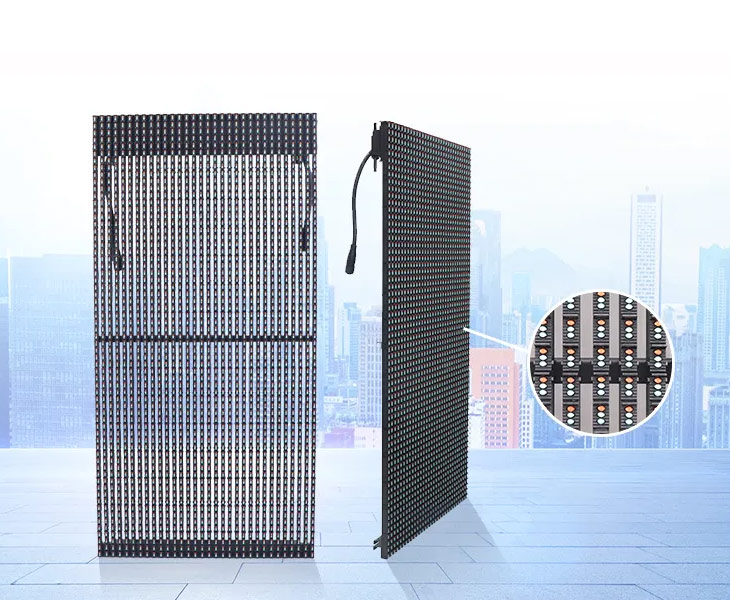
The Grid Design Offers Inherent Installation Advantages
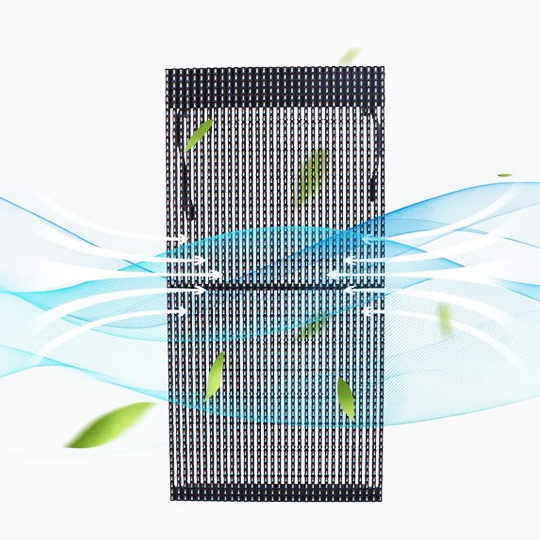
LED grid screens offer inherent advantages in both installation reliability and operational stability. The grid design allows ambient light and wind to pass freely through the screen, delivering an excellent visual experience and installation stability for your display project:
- The open grid structure allows light to pass through naturally, ensuring it does not obstruct the view of people inside the building while also reducing glare caused by external light reflecting off the screen.
- The grid design allows wind to pass through the screen, giving it exceptional wind resistance. In areas with strong winds or for high altitude installations, this robust wind resistance helps maintain the stability of the screen’s installation.
- The grid design of LED grid screens provides multiple natural ventilation openings for heat dissipation, so you don’t have to worry about internal components overheating and failing after prolonged operation.
The grid design of the LED grid screen delivers superior visual quality, a more stable installation structure, and more reliable operating temperatures, ensuring the screen can operate reliably for over 10 years and generate significant returns for you.
LED Grid Screen Case show
- Case show

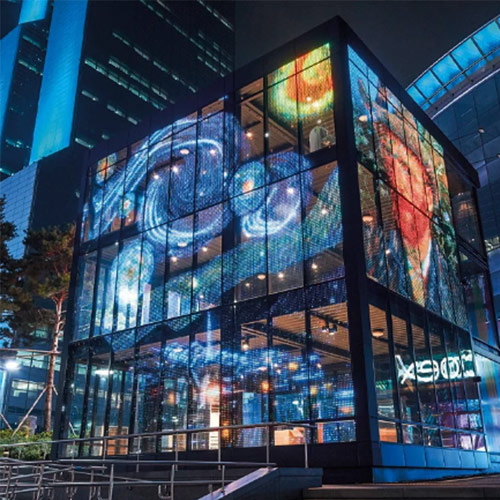


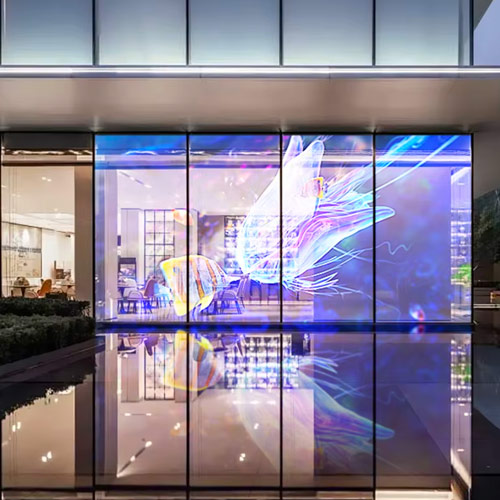
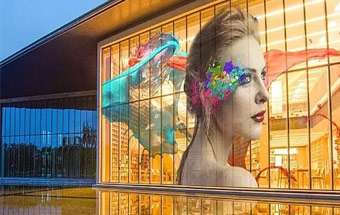
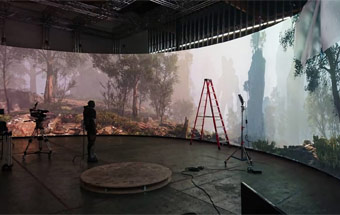
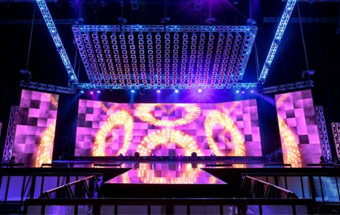
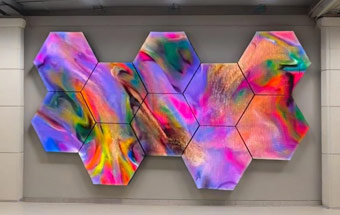
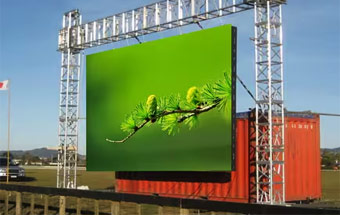
LED Grid Screen: The Ideal Advertising Solution for Building Facades and Storefronts!
LED grid screens use highly transparent panels to create a floating visual effect, instantly making your messages and advertisements the focal point of any setting.
Why are the visuals on this screen so captivating? How can you find the right LED grid screen for your needs? Let’s dive deeper into these questions in this article.
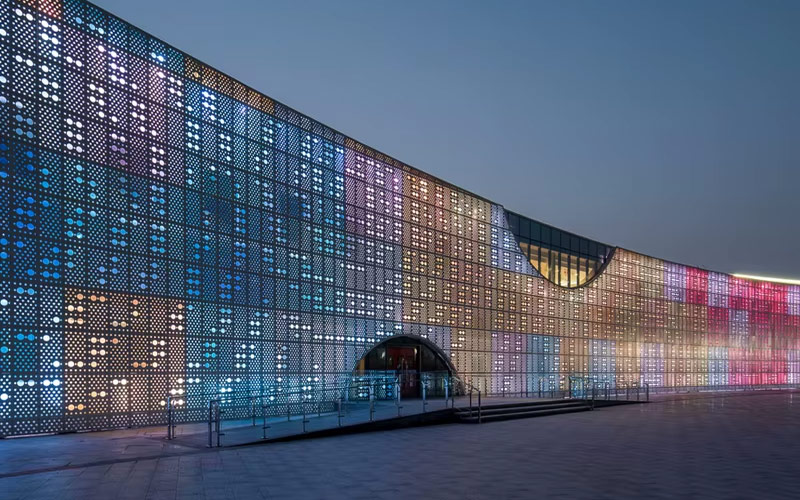
What Is an LED Grid Screen?
An LED grid screen refers to an LED display with a perforated, grid-like panel design. This perforated structure provides high transparency and excellent heat dissipation.
It uses DIP packaging technology, with each pixel containing three independent red, green, and blue LEDs.
These LEDs emit bright, vivid light and offer exceptional durability. It is precisely these features, high brightness and robust durability, that enable the screen to operate continuously and reliably in outdoor environments.
This display is often installed in front of architectural structures such as curtain walls and glass facades to showcase highly creative, dynamic content without significantly impacting the building’s original function or structure.
LED Grid Screens Seamlessly Integrate with Architecture, Delivering Stunning Visual Impact
Lightweight, slim, and transparent, LED grid screens can be seamlessly integrated into architectural structures. They do not occupy usable space and provide exceptional display capabilities.
High Transparency Screen
The display’s transparency ranges from 45% to 75%. Even when powered on and displaying content, it maintains clear visibility through the screen, making it ideal for installation on building facades and shopping mall storefronts.
Installing an LED grid screen adds display functionality to glass structures without compromising the glass’s original ability to provide viewers with a clear view of the interior and exterior, thereby further enhancing your building’s utilization.
IP67 Protection Rating
The screen features an IP65 to IP67 protection rating. Its robust, waterproof, dustproof, and anti-static properties ensure stable and reliable display performance even in harsh outdoor environments, minimizing the risk of damage and associated maintenance costs.
Customizable Solutions
JYLED supports customization of various specifications for your LED grid screen, including size, brightness, and pixel pitch, regardless of whether your installation environment is compact or spacious, or whether ambient lighting conditions are complex or simple.
Through customization, you can obtain the ideal display installation solution from JYLED, ensuring the screen seamlessly integrates into your architectural space and delivers significant display benefits.
Integrated Design for Ease of Use
Unlike traditional display structures, the LED grid screen integrates all components, including control cards, receiver cards, and power supplies, into the LED cabinet.
Once installers have mounted the screen, simply connect the cables and power it on to begin use. This makes the operation more convenient and results in a cleaner, more aesthetically pleasing overall appearance.
High Brightness Screens Make Your Content Stand Out
DIP-packaged LED grid screens can achieve an astonishing brightness of 10,000 to 15,000 nits, which is approximately 66% brighter than standard outdoor displays.
This ultra-high brightness ensures your visuals stand out in complex outdoor environments, delivering exceptional marketing impact.
Full Color Display Support
RGB LEDs can produce 16.7 million colors through varying combinations of brightness levels.
Additionally, the LED grid screen supports 16-bit grayscale processing, ensuring smoother and more refined transitions, resulting in superior color reproduction and a better viewing experience for your audience.
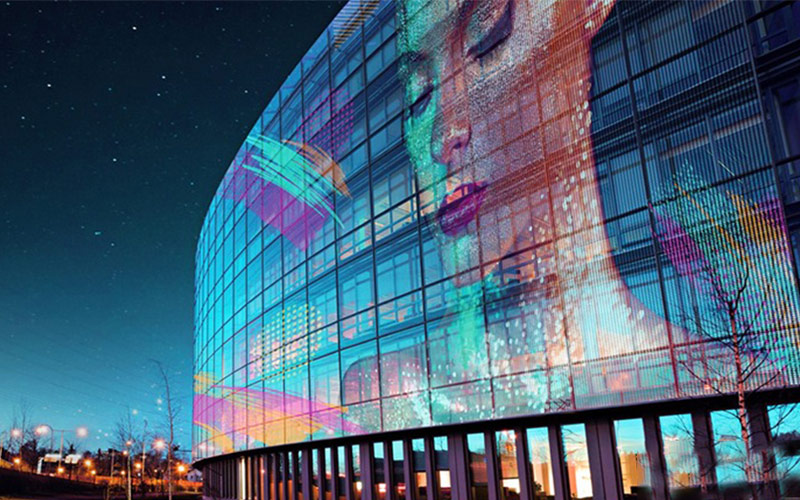
LED Grid Screen vs. LED Mesh Screen: What’s the Difference?
Both LED grid screens and LED mesh screens are highly transparent LED displays, making them ideal for installation on architectural structures such as building facades and glass storefronts.
What are the differences between these two types of displays? Which one is better suited for your display project? Let’s take a look at the table below to understand the distinctions between them:
| Brightness | LED Cabinet Type | Screen Thickness | Screen Advantages | Maintenance Method | |
| LED Grid Screen | 10000 ~ 15000 nits | Rigid cabinet | Approximately 67 mm | Screen transparency: 45% – 75%; modular cabinet design facilitates installation and maintenance, and is scalable | Individual modules can be replaced directly, or individual faulty LEDs can be replaced |
| LED Mesh Screen | 7500 ~ 12000 nits | Cabinet-free design; screen appears as a mesh | 6 ~ 8 mm | Screen transparency can reach 55% – 90%; each LED is independent; supports custom sizing; can be installed on curved surfaces | Maintenance of individual LED lamps |
As shown in the table, although both are relatively lightweight displays, their basic structures differ significantly. The LED mesh screen is suitable for display environments requiring higher transparency and can be mounted on curved surfaces.
The LED grid screen offers greater module independence, making maintenance more convenient, and supports future expansion. If the installation environment does not require extremely high screen transparency, we recommend choosing the LED grid screen.

What Are the Common Installation Solutions for LED Grid Screens?
The installation process for LED grid screens is not complicated and is essentially the same as that for conventional LED displays. In most cases, they are installed using a steel structure mounting method, while in a few cases, a suspended installation method may be used.
Fixed Installation
- Step 1: A fixed installation typically requires welding a stable steel structure onto the building framework first.
- Step 2: Secure the LED grid cabinets to the steel structure using locking clips.
- Step 3: Connect the power cables and signal cables for all cabinets.
- Step 4: Power on the LED grid screen, test the display, and make any necessary adjustments.
Suspended Installation
Due to load-bearing considerations and outdoor wind forces, suspended installation is only suitable for low-rise buildings and small-area displays.
- Step 1: Secure the load-bearing suspension structure to the building structure and install the rigging.
- Step 2: Secure the LED grid cabinets to the rigging.
- Step 3: Connect all LED cabinets using cables.
- Step 4: Power on and test the LED grid screen, adjusting the display performance to suit the on-site environment.
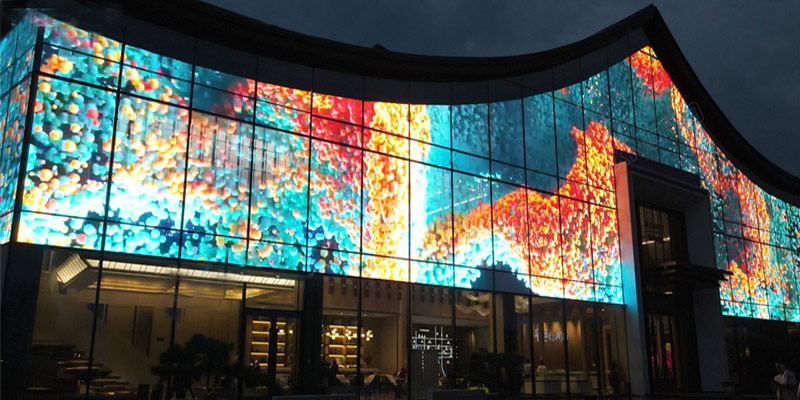
How to Choose the Right LED Grid Screen?
When purchasing an LED grid screen, a smaller pixel pitch isn’t necessarily better, nor is higher screen brightness always preferable.
In fact, for different installation projects, you need to consider the compatibility between the screen, the installation environment, and the intended use to select the appropriate specifications:
Pixel Pitch
Pixel pitch determines the display’s image resolution and also dictates the optimal viewing distance. Therefore, purchasing a screen with a smaller pixel pitch does not necessarily guarantee better content display quality.
If you are installing the screen on a low rise building facade or in a shopping mall window, where the viewing distance is relatively close, displays with pixel pitches such as P15.6 to P15.6 or P15.6 to P31.2 are more suitable.
If you need to install an LED grid screen on a high rise building facade, where viewers are at a greater distance, then a display with a pixel pitch of P31.2 is more suitable for your project.
Brightness Level
Higher brightness is not necessarily better for a display. Excessively high screen brightness can lead to wasted energy and a glaring image. We recommend selecting a custom brightness specification based on the ambient light conditions.
Ensure that the display’s maximum brightness meets viewing requirements under the brightest ambient conditions; avoiding the blind pursuit of high specifications can also help you save on purchase costs.
Transparency Ratio
Different screen models have varying transparency levels. You should select a display with the appropriate transparency based on your installation environment and display requirements.
For example, if the screen is to be installed in a storefront window to showcase merchandise, an environment that demands higher screen transparency, you should opt for an LED grid screen with 70% to 75% transparency.
For screens installed on building facades, the transparency level can be chosen based on the needs of people moving within the building.
Screen Durability
Installation environments vary by region and elevation, and the required level of protection for the screen will differ accordingly.
You can send specific details about your installation environment to JYLED, and our sales representatives will provide detailed recommendations regarding waterproofing, dustproofing, wind resistance, and other specifications.
Budget
You need to ensure that the cost of purchasing the screen stays within your budget.
If the cost exceeds your budget, you may consider compromising on certain specifications, such as screen size, brightness, refresh rate, or pixel pitch, to reduce the purchase cost while maintaining satisfactory display performance.
What Are the Common Applications for LED Grid Screens?
LED grid screens can be used in a variety of outdoor environments to generate display benefits for advertising, entertainment, and event promotion:
- Building Facades: Installing screens on building facades allows you to promote your corporate image, services, and products without obstructing the view of employees inside the building.
- Concerts: Used as background screens to display performance-related content, they create a floating, translucent, and dreamlike visual experience for the live audience, enhancing their viewing experience.
- Retail Stores: Screens installed outside store windows attract the attention of passersby without obstructing the view of merchandise inside, encouraging consumers to enter the store and boosting sales.
- Trade Shows: Utilize unique high transparency screens to make your booth the most eye-catching focal point at the exhibition, quickly attracting potential customers and increasing order conversions.
The price of an LED grid screen is closely tied to its specifications, and price variations can be significant depending on the model.
We recommend contacting us via the inquiry window on the JYLED official website to receive an accurate quote tailored to your specific project.
Absolutely. Popular LED grid screen models feature larger pixel pitches ranging from 15.6 to 31.2 mm, making them ideal for assembling large-scale displays while keeping procurement costs within a manageable budget.
Yes, controlling and managing the playback on an LED grid screen is very simple. Using the control software that comes with the control card allows for comprehensive management of the display. The software interface is intuitive, so even new users can get up to speed in just 3 minutes.
It’s very simple. You just need to set up a basic steel structure in the installation area and assemble the LED cabinets.
Since the LED grid screen features an integrated design, once installation is complete, you can start using the screen immediately by connecting the cables and powering it on; no external devices are required.
Maintaining the LED grid screen is very simple. It features a modular design, so you can simply replace the faulty module with a spare module provided by JYLED to complete the maintenance.
Generally, the production lead time for the LED grid screen is 10 to 20 days. If we have stock in our warehouse, you won’t even need to wait for the production cycle.