


Project overview
This project involved an LED advertising screen installed along a public walkway at a school in Australia to promote enrollment. The customer initially wanted a 1.8 × 2.8 m LED screen mounted on the exterior wall of the building. Based on standard LED module dimensions and compatible LED cabinet sizes, JYLED’s engineers recommended the closest practical screen size: 1.6 × 2.56 m.
This size could deliver the advertising impact the customer originally expected while also reducing the purchase cost.
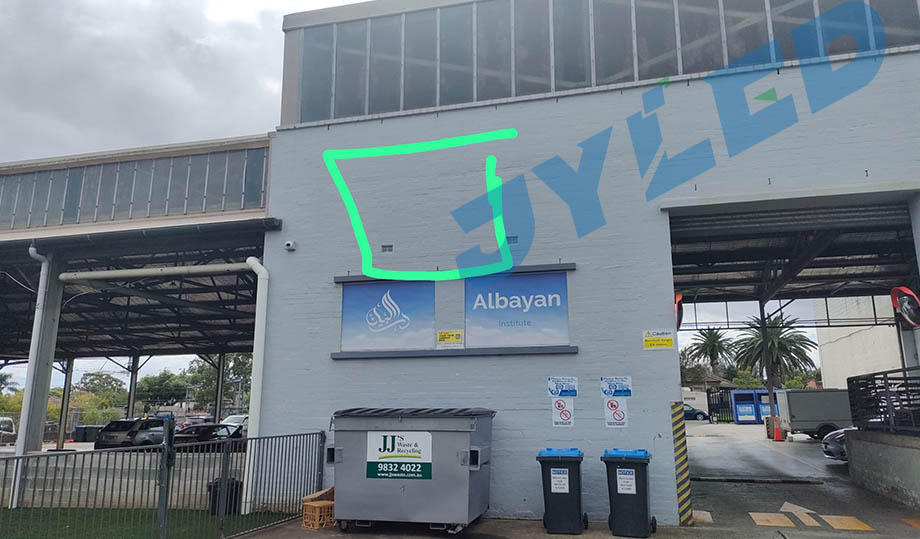
The customer wanted the advertising display to look clean and attractive without detracting from the building’s existing appearance. Our engineers recommended a front-maintenance LED screen, which eliminated the need for the rear service passage required by a rear-maintenance screen.
The screen was to be installed approximately 2.6 m above the ground. Based on the engineers’ initial calculations, pedestrians would generally view it from a distance of about 4–6 m.
We recommended a 4 mm pixel-pitch outdoor display. Its best viewing distance is 4–8 m, which covers the expected range of passing pedestrians and helps ensure that viewers see clear content without obvious pixelation.
After receiving and installing the screen, the customer sent JYLED photos of the completed installation:
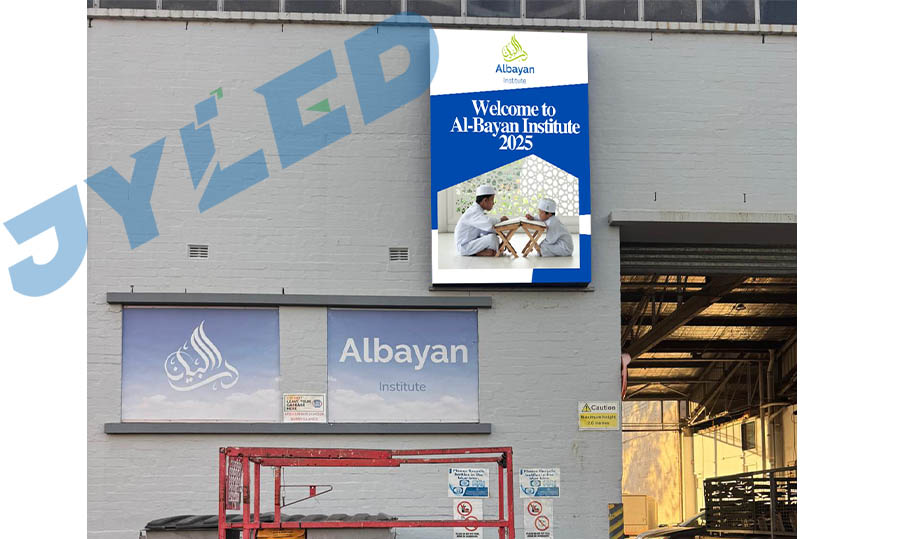
As shown in the photos, JYLED’s P4 outdoor LED display offers higher image contrast and clearer, brighter content than the previous static poster, helping Al-Bayan College attract more attention from prospective students and their families.
Project details
- Installation location: Sydney, Australia
- Installation date: April 2026
- Installation method: Wall-mounted
- Screen pixel pitch: 4 mm
- Screen brightness: Up to 6000 nits
- Screen area: 4.096 m²
- Screen thickness: 20 cm
- Ingress protection rating: IP65
- Maintenance method: Front maintenance
P4 outdoor front-maintenance LED display specifications
Category | Model | Brand | Quantity |
LED | SMD1921 | Nationstar | 256,000 pcs |
LED module size | 320 × 160 mm | JYLED | 80 pcs |
LED cabinet size | 960 × 1280 mm | JYLED | 2 pcs |
| 640 × 1280 mm | JYLED | 2 pcs | |
Cabinet material | Steel | JYLED | / |
Control device | NovaStar | 1 pc | |
| Power supply | 200 W | Mean Well | 14 pcs |
Factory quality inspection
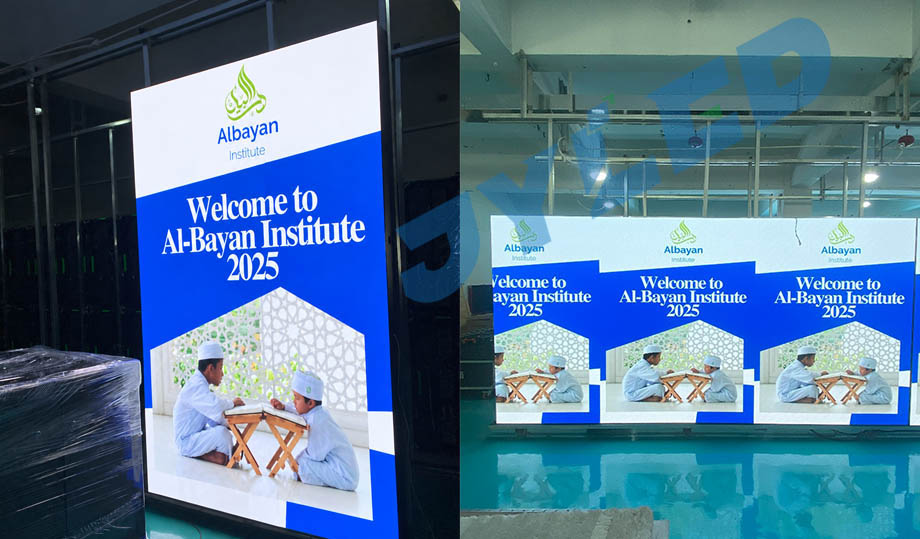
After the LED modules and cabinets were produced, our engineers preassembled the LED modules into a complete screen in the workshop and conducted aging tests:
- First, every LED module underwent a 48-hour solid-color display test using red, green, blue, white, and other colors. The P4 LED panels displayed each color in sequence so the team could check for defective or dead LEDs, uneven brightness, color differences, and other issues. Any nonconforming modules were removed.
- Next, the screen displayed the customer’s intended images for 24 hours to verify stable power delivery, uniform brightness, and consistent color during operation. Images showing the aging-test results were then sent to the customer for review.
Preparation before shipping
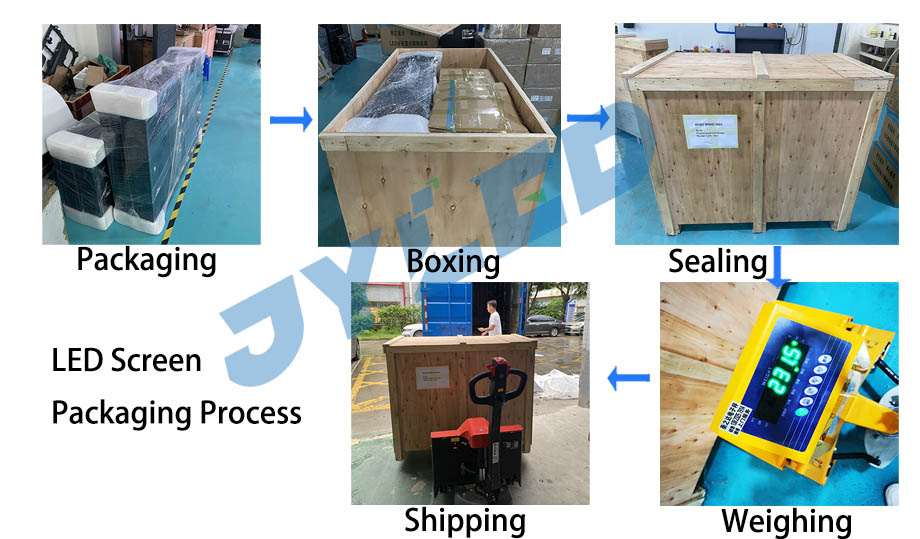
After the relevant components passed quality inspection, JYLED’s workers completed the packaging, crating, sealing, weighing, and other shipping preparations. Foam protected the corners and edges of the LED panels. Once the wooden crates were packed, the team contacted a long-term international logistics partner to collect the shipment.
Technical guidance during customer installation
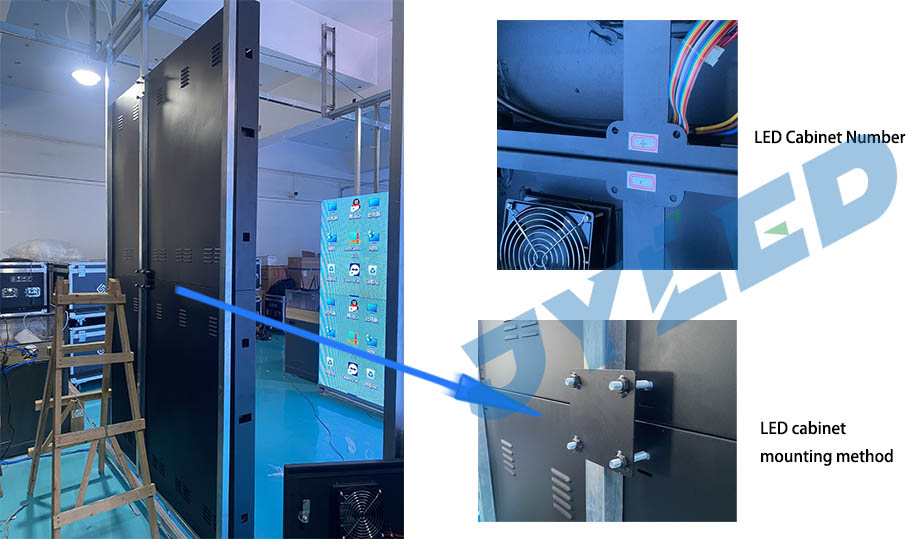
When the customer received the shipment, every LED cabinet had a clear identification number so the installation team could assemble the cabinets in sequence. The supplied LED screen drawings showed the electrical and signal connection sequences required for installation.
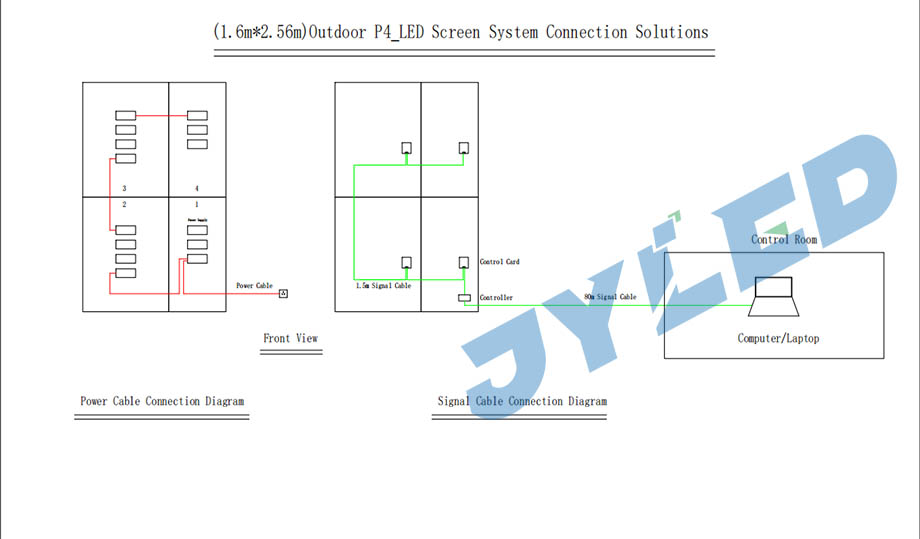
In addition, JYLED’s engineers remotely assisted the customer during installation, providing real-time guidance on installing the LED panels, connecting the cables, powering on the system, and testing the screen.
Conclusion
For outdoor LED display projects viewed from medium to long distances, selecting a P2.5 LED screen may result in unnecessarily high costs, while P6 or P8 models may show visible pixelation to viewers standing closer to the screen.
JYLED’s engineers therefore configured a front-maintenance P4 LED screen according to the customer’s site conditions, enabling the customer to create the desired advertising display for the college.
FAQ
How Long Was the Production Cycle for This P4 LED Display?
Under normal circumstances, LED module and LED cabinet production takes 10–20 days. Production of the P4 LED modules used for this screen was completed within 10 days, while the LED cabinets took approximately 18 days to produce.
Does JYLED Provide After-Sales Service, And How Long Does It Last?
Yes. JYLED provides comprehensive after-sales service, including a product warranty of 1–2 years and lifetime technical support. If you experience any problems after receiving the product, you can contact our engineers for assistance.
Must the Screen Be Installed by Professional Workers?
Professional installation is recommended because LED cabinets are heavy, and improper handling can damage electrical equipment. Installation by unqualified personnel may cause an LED panel to fall, damage the equipment, or create personal safety risks.
How Long Can the Screen Be Used?
An IP65-rated P4 LED display can effectively prevent rain and dust from entering the screen and damaging its components. If the display is not physically damaged by human activity, it can remain in service for more than 10 years.
Are the LED Cabinet Dimensions Used in This Project Standard Sizes?
No. To meet the customer’s actual requirements, the 960 × 1280 mm and 640 × 1280 mm LED cabinets used in this project were both nonstandard sizes. However, custom steel cabinets are relatively affordable and have a relatively short production cycle, so they do not necessarily result in high costs or extended delivery times.