Differences in the manufacturing processes of LED display cabinets can, to a certain extent, significantly impact the final display quality, structural stability, and procurement costs of the screens.
This article provides a detailed overview of the raw materials, manufacturing processes, and quality inspection standards involved in LED cabinet manufacturing, helping you quickly understand the production workflow and the advantages of these processes.
What Is the LED Cabinet Manufacturing Process?
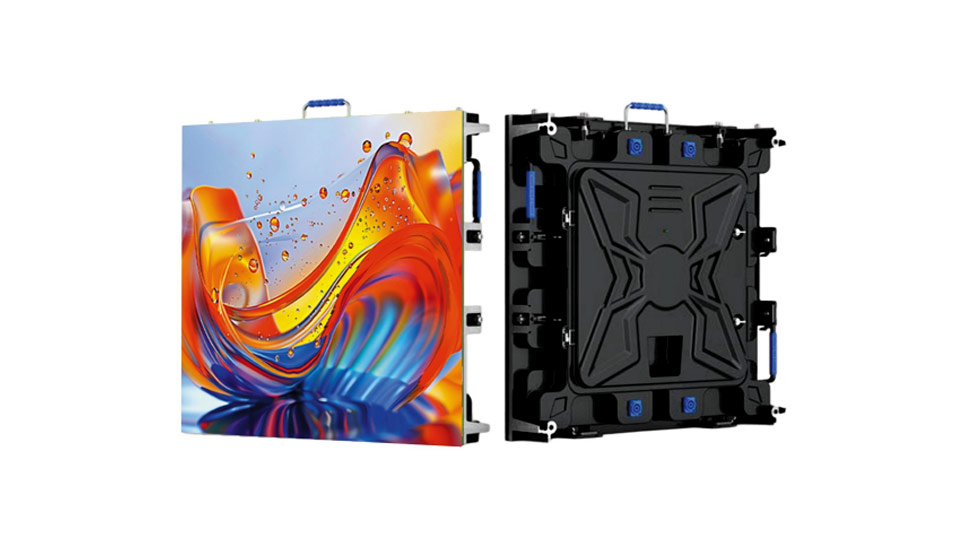
The LED cabinet manufacturing process refers to the production techniques used to create LED display cabinets. Key processes include cutting, bending, spray painting, die-casting, and welding.
A factory’s use of superior production processes and comprehensive quality control procedures ensures the creation of high quality LED screen cabinets with natural, seamless panel integration and a long service life.
This results in LED displays with a more stable installation structure and a flawless, seamless visual experience.
What Raw Materials Are Required for Manufacturing LED Cabinets?
In current market applications, LED cabinets are categorized into different types based on the raw materials used in their manufacturing.
The choice of raw materials for LED cabinets affects various attributes such as the cabinet’s resistance to physical impact, corrosion resistance, weight, service life, and production costs. You can select LED cabinets made of suitable materials based on your project requirements and budget.
Iron Alloy
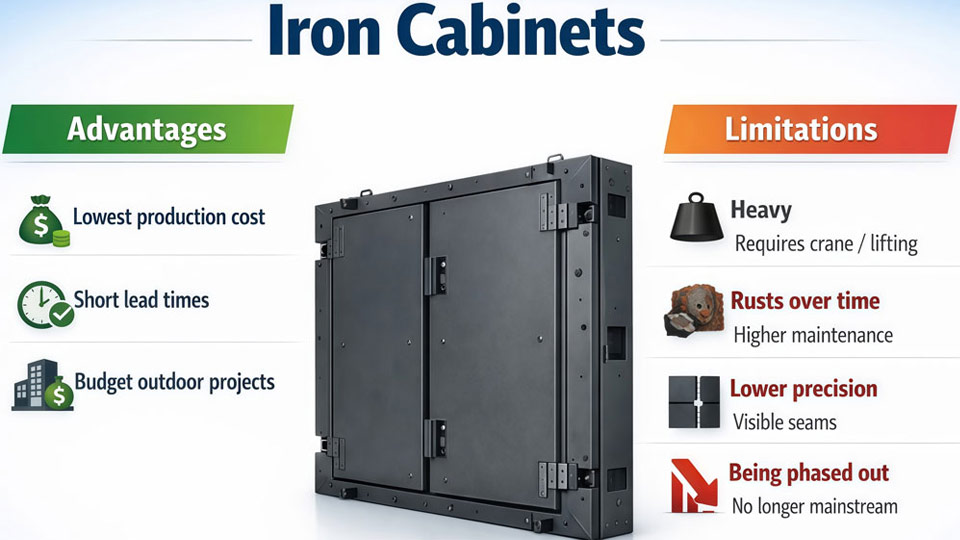
Ferroalloys are relatively inexpensive to procure, and because iron has high tensile strength, manufacturers can easily stretch and bend them into various cabinet shapes. The production cycle for ferroalloy cabinets is very short, further reducing the manufacturing cost of LED cabinets.
Due to its low cost and simple production process, ferroalloy is widely used in both standard and creative projects. However, ferroalloy cabinets are relatively heavy, so you must carefully calculate the structural load-bearing capacity to ensure it meets requirements before installing the LED screen.
Nanopolymer
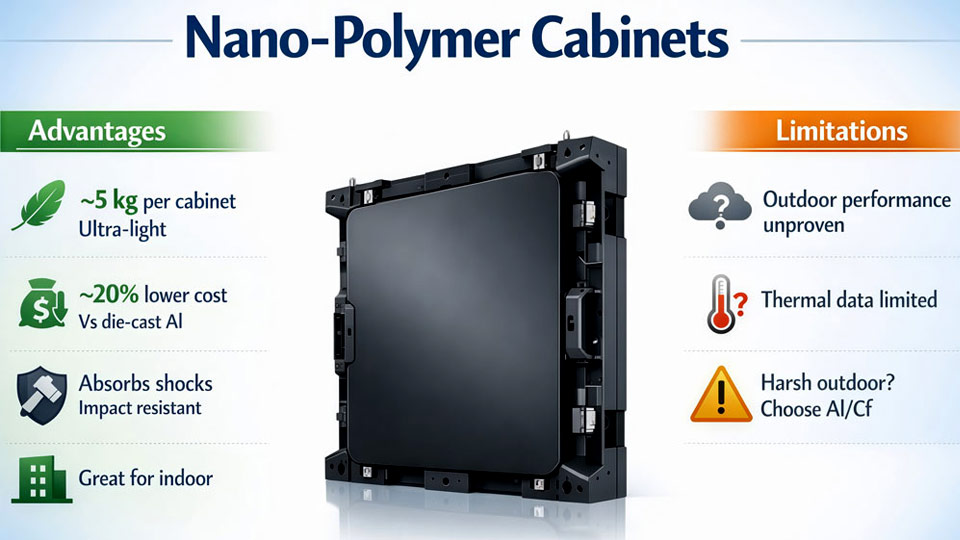
By using nanopolymers as the raw material for LED cabinet manufacturing, the cabinets are lighter in weight and have lower production costs.
Due to the unique properties of the material, nanopolymer LED cabinets offer a certain degree of impact and seismic resistance. They are also easier for workers to handle and less prone to damage, and the structure remains highly stable after installation.
However, the long-term stability of nano-polymer LED cabinets in environments with corrosive gases or harsh conditions is difficult to guarantee. Therefore, they are more suitable for indoor LED displays, making them a highly cost-effective choice.
Aluminum Profiles
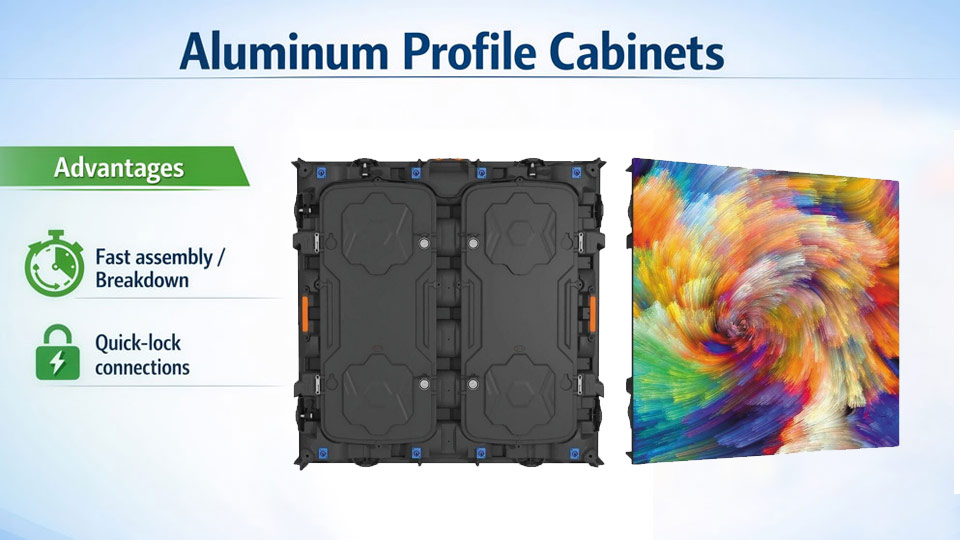
Using aluminum profiles as the raw material for manufacturing LED cabinets results in cabinets with stronger corrosion resistance than those made from ferroalloys, and they are relatively lighter in weight.
However, the production process for aluminum profiles is more complex than that for die-cast aluminum, which increases production costs to some extent. Additionally, the precision of aluminum profile LED cabinets is lower than that of die-cast aluminum cabinets.
Therefore, in most cases, we recommend purchasing more affordable iron LED cabinets or higher quality die-cast aluminum LED cabinets. Aluminum profile LED cabinets are used relatively less frequently in practical applications.
Magnesium-Aluminum Alloy
Image: Exterior view of a magnesium-aluminum alloy LED cabinet
Compared to die-cast aluminum LED cabinets, LED cabinets made from magnesium-aluminum alloy have a lower density (1.8 g/cm³), making them lighter in weight. Additionally, these cabinets offer superior heat dissipation, enabling rapid heat removal during LED screen operation, making them highly suitable for outdoor environments.
However, magnesium-aluminum alloy LED cabinets have significantly lower heat resistance than die-cast aluminum cabinets. Additionally, magnesium is a highly reactive metal, and production costs are higher, resulting in limited use in actual projects.
Die-Cast Aluminum
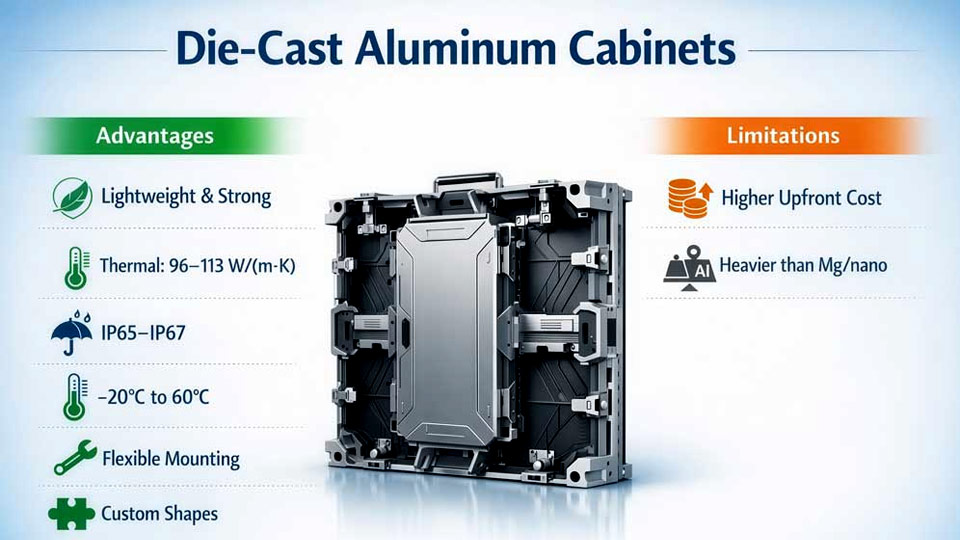
Although die-cast aluminum LED cabinets, like aluminum profile LED cabinets, use aluminum as the raw material for manufacturing, the die-casting process results in cabinets that are stronger and lighter. This provides enhanced resistance to physical impact and greater stability after the LED screen is installed.
Die-cast aluminum LED cabinets are currently the most popular cabinets on the market and are widely used for both permanent and rental LED screens. However, die-cast aluminum LED cabinets are more expensive than ferroalloy LED cabinets, so you should confirm your budget in advance.
Carbon Fiber
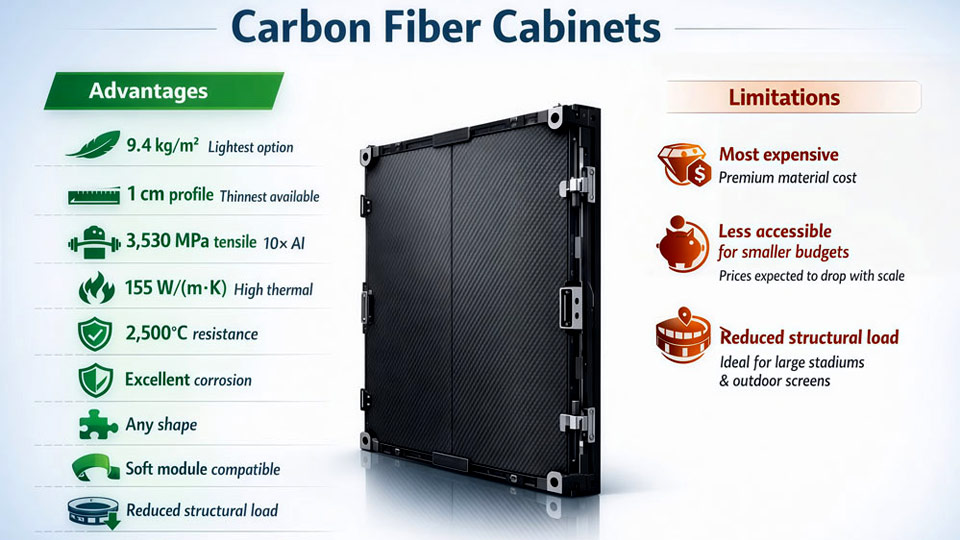
Carbon fiber is currently the highest quality material available for LED cabinets on the market. Its advantages include rapid heat conduction, high heat resistance, and strong corrosion resistance.
Additionally, carbon fiber LED cabinets are generally lighter in weight compared to metal cabinets, and the material’s high tensile strength allows it to be easily shaped into curved cabinets, much like ferroalloy.
However, these excellent performance characteristics come with a high price tag. Carbon fiber LED cabinets are currently the most expensive on the market, so they are primarily used in high-end applications with larger budgets.
Comparison Table of LED Cabinets by Material
Read the following to quickly understand the advantages, limitations, and costs of LED cabinets made from different materials, as well as the projects for which each is suitable, within 30 seconds. This will help you choose the right LED cabinet material when deploying your LED project.
| LED Cabinet Type | Manufacturing Complexity | Cabinet Advantages | Limitations | Cost | Suitable LED Screens |
| Iron LED Cabinets | Low | High heat resistance, easy to bend and shape | Heavy cabinet weight, high requirements for installation support structures | Low | Indoor LED displays, outdoor LED displays, flexible LED displays |
| Nano-Polymer LED Cabinets | Low | Lightweight with strong impact and vibration resistance | Difficult to maintain long-term stability in outdoor environments | Low | Indoor LED displays |
| Aluminum Extrusion LED Cabinets | Moderate | Strong corrosion resistance, lightweight | Higher manufacturing difficulty, lower precision than die-cast aluminum cabinets | Moderate | Fixed LED displays, industrial LED displays |
| Magnesium-Aluminum Alloy LED Cabinets | High | Lighter than aluminum alloy cabinets with excellent heat dissipation | Poor heat resistance; magnesium is highly reactive, making production complex | High | Indoor Rental LED Displays |
| Die-Cast Aluminum LED Cabinets | Standard | Relatively lightweight with strong resistance to physical impact and excellent heat dissipation; high precision ensures screen flatness | Higher cost compared to other metal LED cabinets | Moderate | Indoor LED displays, outdoor LED displays, fixed LED displays, rental LED displays |
| Carbon fiber LED cabinets | High | Extremely lightweight, excellent heat resistance and corrosion resistance, rapid heat dissipation | Very expensive, suitable only for high budget projects | Very high | Rental LED displays, stage LED displays, XR LED displays |
As can be seen, if you prioritize structural stability and strong corrosion resistance in your LED screen, desire a seamless, flat display, and have a sufficient project budget, then die-cast aluminum LED cabinets and carbon fiber LED cabinets are your best choices.
However, if your project leans toward low-cost options, we recommend choosing iron LED cabinets for outdoor installations, while for indoor environments, you can opt for either iron LED cabinets or nano-polymer LED cabinets.
What Manufacturing Processes Are Involved in Producing LED Cabinets?
The production processes involved in manufacturing LED cabinets primarily include the following:
Bending Process
Metal bending is a process that bends and shapes raw metal materials to achieve the desired form. Currently, factories primarily use four types of metal bending processes:
- Die Bending: The metal part is pressed directly into the grooves of a die. Through the machine tool system’s stamping action, the metal and die are fully pressed together to form the shape. Prolonged stamping ensures the stability of the metal part and eliminates subsequent springback deformation issues.
- Flanging: The edges of the metal material are bent parallel to the required direction. By fully compressing the bend angle, the metal material is given a protective edge structure.
- Overhang Bending: This process also uses a die to assist in bending the metal, but the metal does not fully contact the die’s groove. Instead, the pressing stops once the metal has bent to a certain degree, allowing it to form the desired arc and angle.
- Swing Arm Bending: This method utilizes the machine’s C-frame bending swing arm, which applies pressure to the metal through vertical or elliptical motion, achieving efficient bending.
Welding Processes
Currently, the welding processes used in LED cabinet manufacturing are primarily divided into laser welding, gas shielded welding, spot welding, and arc welding. Gas shielded welding is further categorized into CO₂ gas shielded welding and TIG welding (argon gas shielded). The main welding processes include:
- CO₂ Shielded Gas Welding: This method uses carbon dioxide to isolate the metal LED cabinet from the air during welding. It is simple and cost-effective, making it the preferred choice for most standard projects.
- TIG Welding: This method uses an inert gas to shield the weld from the atmosphere. TIG welding is commonly used for LED cabinets, particularly those made of aluminum alloy. The resulting welds are exceptionally smooth and aesthetically pleasing, making this an ideal choice for high-end projects.
- Laser Welding: Laser welding minimizes the risk of deformation in metal LED cabinets caused by the high heat generated during welding. Consequently, the welds are highly precise and require virtually no secondary processing of the metal cabinet, making this a highly efficient welding method.
- Spot Welding: Used for welding small components or thin-gauge sections of metal LED cabinets, spot welding is extremely fast and has minimal impact on the cabinet’s appearance.
- Arc Welding: For areas with thicker metal sections, arc welding is a highly durable and cost-effective method. However, areas welded using this method require grinding to remove slag.
Surface Treatment Processes
To ensure that metal LED cabinets are not corroded or oxidized by moisture or corrosive gases in the air during subsequent use, we typically apply surface treatments during the production process to further enhance the stability and service life of the metal cabinets.
There are three main surface treatment processes for LED cabinets:
- Powder Coating: Through high voltage electrostatic corona discharge, negative ions are attached to the surface of the powder coating, causing it to automatically adhere to the metal LED cabinet surface. The powder coating is then melted at high temperatures, and after cooling, it forms a durable layer on the metal surface.
- Anodizing: This electrochemical process creates a hard, corrosion resistant film on the surface of the metal LED cabinet, preventing the metal from reacting chemically with external gases.
- Galvanizing: Using either hot-dip galvanizing or electrogalvanizing methods, a zinc coating is applied to the metal surface to protect the metal LED cabinet from oxidation and corrosion.
- After undergoing these surface treatment processes, the LED cabinet maintains a more stable condition, preventing issues such as corrosion and rust, and significantly extending the service life of the LED screen.
CNC Machining Process
CNC machining is a process that achieves precise cutting based on blueprints and highly accurate CNC machine tools. By setting up blueprints and programs, CNC machines can perform repeatable cuts with extremely high efficiency.
Furthermore, CNC machining maintains precision within ±0.1 mm. This high precision ensures excellent panel integrity during subsequent LED cabinet assembly, eliminating issues such as visible seams or black borders.
CNC machining also allows for hollow-out cutting of the interior of metal LED cabinets based on blueprints. The purpose of hollow-out cutting is to reduce the cabinet’s weight while maintaining its volume, thereby enhancing the installation stability of the LED screen.
Furthermore, the cut-off metal can be reused, further reducing production costs for the cabinets and allowing you to purchase LED cabinets at a more competitive price.
Laser Cutting Process
Laser cutting is a highly efficient cutting process that utilizes high-power lasers to cut LED cabinets. Since there is no physical contact or pressure applied to the metal LED cabinets during the cutting process, deformation caused by compression is avoided.
Consequently, laser cutting eliminates the need for secondary processing or repairs to the LED cabinet. It offers extremely high cutting efficiency and produces exceptionally clean, aesthetically pleasing cut surfaces, with precision maintained within ±0.05 mm.
High Pressure Die-Casting Process
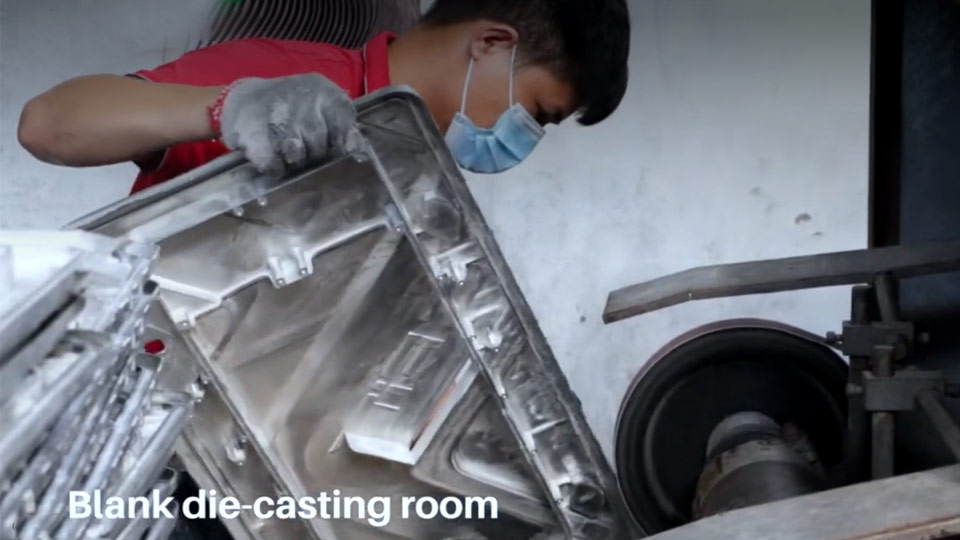
The high-pressure die-casting process involves melting aluminum alloy at high temperatures and then injecting the molten aluminum alloy into a pre-designed mold under high pressure, ensuring that all fine structures within the mold are fully filled with the molten alloy.
After the molten aluminum alloy cools and solidifies, the mold is removed to obtain the basic die-cast aluminum LED cabinet components. These are then CNC-machined, ground, and cut to shape the metal blanks, ultimately producing the desired die-cast aluminum LED cabinet.
Unlike conventional aluminum profiles, die-cast aluminum produced through high-pressure die casting offers higher strength and superior quality for LED cabinets.
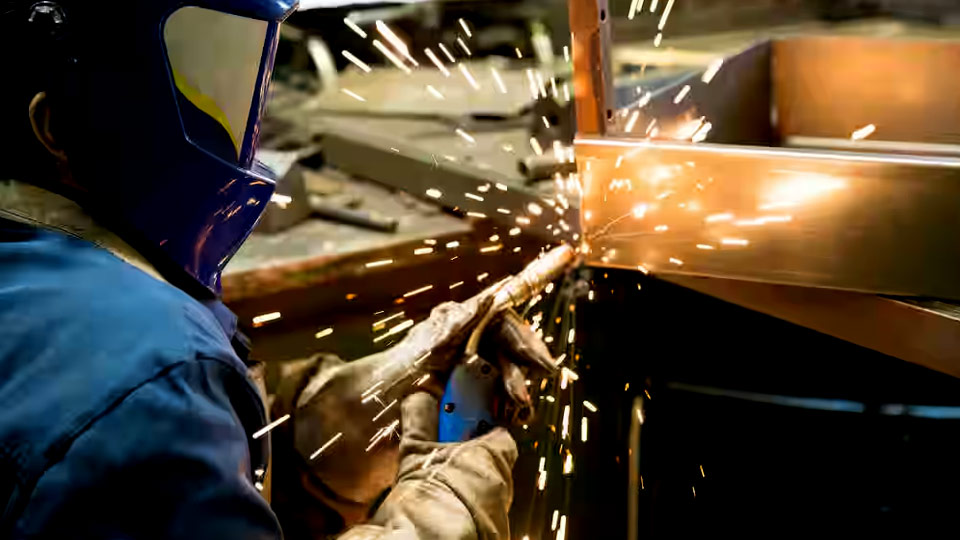
Step-by-Step Guide to the LED Cabinet Manufacturing Process
We have broken down the LED cabinet production process into the following steps. By reading the text below, you can quickly understand the manufacturing process of LED cabinets.
- Material Selection: First, select the material for the LED cabinet based on its intended application. For example, ferroalloys have low production costs and a simple machining process; aluminum alloys are lightweight, allowing for lighter, more portable LED cabinets with superior corrosion resistance, making them well-suited for outdoor environments.
- Material Cleaning: Once the materials are prepared, they must be cleaned in advance to ensure the metal surfaces are free of oil, dust, and other contaminants.
- Cutting/Die Casting: Select shearing machines, CNC machines, or laser equipment as needed to cut metal materials according to the drawings.
- Bending/CNC Machining: Set the bending angle on the CNC press brake as required, bend the metal materials in the order of inside to outside, and specify the punching force and duration to prevent springback after bending, ensuring the bending accuracy of the metal materials.
- Welding/Assembly: Secure the various metal frames and components of the LED cabinet through welding. If non-laser welding is used, secondary alignment and grinding of weld slag are typically required.
- Surface Pretreatment: Clean the surface of the finished LED cabinet to remove oil and grease accumulated during processing. Perform phosphating to enhance the metal surface’s adhesion to the coating, followed by water rinsing to remove residual chemicals. Finally, place the rinsed metal in an environment of 80 °C – 100 °C for 10 – 15 minutes of drying.
- Coating Treatment: Depending on requirements, select methods such as powder coating, anodizing, or galvanizing to treat the surface of the LED metal cabinet. This enhances the cabinet’s aesthetic appeal and prevents oxidation caused by moisture and corrosive gases on the surface.
- Cabinet Assembly: Assemble the finished LED cabinet components according to the drawings and secure them with screws.
- Flatness Testing: Use instruments to inspect the flatness of the metal LED cabinet’s surface and edges; flatness deviation must not exceed ± 0.5 mm.
- Waterproof Testing: Test the LED cabinet’s water resistance through spray and immersion tests; this test applies only to outdoor LED cabinets.
- Packaging: Clean the finished metal LED cabinets, wrap them in flexible protective materials, and complete the packaging.
Quality Inspection Process for LED Cabinets
After the LED cabinets are manufactured, a rigorous quality inspection process serves as the benchmark to ensure that the cabinets maintain excellent structural strength and meet standard installation precision requirements following installation.
Generally, LED display manufacturers conduct the following quality inspections on finished LED cabinets:
Visual Inspection
- Tools Required: No tools required; visual inspection is sufficient.
- Inspection Process: Visually inspect the finished LED cabinet to confirm that the contours are smooth and free of scratches, bubbles, color variations, pinholes, or missed spray coating.
- Acceptance Criteria: Ensure the cabinet’s surface texture and color are uniform and consistent, with an intact surface coating and no signs of scratches or damage.
Flatness Inspection
- Tools Used: Spirit level, electronic level, or laser flatness tester.
- Inspection Process: Place the LED cabinet horizontally and use a spirit level to measure the cabinet’s diagonals and edge lines, or use a laser flatness tester to perform spot testing.
- Acceptance Criteria: The overall flatness error of the LED cabinet must be within ± 1 mm/m², and the flatness tolerance between LED modules must be within ± 0.5 mm.
Inspection of Dimensional Tolerances and Diagonal Tolerances
- Tools Used: Tape measure, vernier caliper, spirit level, height gauge.
- Inspection Process: Measure and calculate a series of dimensional tolerances for the LED cabinet, including overall dimensions, frame spacing, side panel spacing, and column spacing.
- Acceptance Criteria: The dimensional deviation of the LED cabinet should be within ± 0.5 mm, and the diagonal tolerance should be within ± 1 mm.
Hole Position Accuracy Inspection
- Tools used: Tape measure, vernier caliper, spirit level, height gauge.
- Inspection process: Inspect the diameter tolerances of drilled holes in the LED cabinet, as well as spacing tolerances such as hole position height.
- Acceptance criteria: Ensure that the tolerances between hole positions and hole diameters for all components are within ± 0.2 mm.
Load-bearing Test
- Tools used: Digital scale, weights, support frame, dial indicator.
- Test Procedure: Apply 1.2 to 1.5 times the rated load to load-bearing areas such as the LED cabinet’s joints, top crossbeams, and guide rails, and maintain this load for 24 hours. After the test, use a dial indicator to measure the deformation at the load-bearing points of the LED cabinet.
- Acceptance Criteria: The LED cabinet must show no permanent deformation, no cracking at welded joints, and the rear door must open and close normally.
Water Resistance Test (Outdoor LED Cabinet)
- Tools Used: Water spray device, immersion device.
- Test Procedure: Conduct water spray and immersion tests on the LED cabinet to evaluate its water resistance.
- Acceptance Criteria: No water ingress inside the LED cabinet after the test; internal components operate normally when powered on.
Dust Resistance Test (Outdoor LED Cabinet)
- Tools Used: Dust test chamber, talcum powder.
- Test Procedure: Place the LED cabinet inside a dust-proof test chamber and conduct an 8 hours dust-blowing test to evaluate the cabinet’s dust resistance.
- Passing Criteria: After 8 hours, no dust should have entered the rear housing of the LED cabinet.
Salt Spray Test
- Equipment Used: 5% sodium chloride solution, pH meter, deionized water, salt spray test chamber.
- Test Procedure: Place the LED cabinet in the salt spray test chamber, set the temperature to 35 °C, and continuously spray a mist of 5% sodium chloride solution inside the chamber for 48 to 72 hours. After the test, remove the LED cabinet, clean it, and inspect it.
- Acceptance Criteria: The coating on the surface of the LED cabinet must show no signs of blistering, corrosion, or similar defects.
Coating Adhesion Test
- Tools Used: Adhesive tape, brush, magnifying glass, and grid cutter.
- Test Procedure: Use a grid cutter to score 100 1 mm × 1 mm squares on the surface of the LED cabinet. Apply adhesive tape and, after ensuring it is securely affixed, quickly peel it off. Use a magnifying glass to inspect for coating peeling.
- Acceptance Criteria: The area of coating peeling must be less than or equal to 5% to pass.
Assembly Test
- Tools Required: LED modules, cables, screws, connectors, spirit level, tape measure, and multimeter.
- Test Procedure: Assemble the LED modules onto the LED cabinet, secure them with screws, connect the cables and other components, then power on the system. Inspect the gaps between LED modules, the panel flatness, and verify normal electrical operation.
- Acceptance Criteria: All modules assembled on the LED cabinet must operate normally; screws must tighten securely without stripping; there must be no visible gaps between LED modules, and any gaps must be 0.5 mm or less.
Packaging Test
- Tools Used: Visual inspection, tape measure.
- Inspection Process: Inspect whether the outer packaging of the LED cabinet is secure, whether the internal shock-absorbing protective packaging meets standards, and whether the label information on the packaging is accurate.
- Acceptance Criteria: The LED cabinet packaging must be secure and provide strong protection, and the label information must be accurate.
FAQ
Are There Differences in Manufacturing Processes When Producing LED Cabinets from Different Materials?
There are certain differences in manufacturing processes depending on the material used for LED cabinets.
While the production processes for LED cabinets made from metal raw materials are relatively similar, there are significant differences when using non-metallic raw materials, such as nanopolymers or carbon fiber.
Why Is CNC Machining so Important in LED Cabinet Manufacturing?
CNC machining enables highly efficient, repeatable processing and ensures cutting precision of ± 0.1 mm for LED cabinets. This high precision machining ensures smooth cabinet edges and seamless joints between cabinets, guaranteeing visual consistency for the final LED display.
Does Manufacturing LED Cabinets with Special Shapes Require More Complex Processes?
Yes, when manufacturing LED cabinets with more unique shapes, there are additional steps involved in processes such as metal bending and cutting, making the overall process relatively more complex.
Which Manufacturing Process Produces the Most Reliable Cabinets?
Currently, we recommend choosing die-cast aluminum LED cabinets produced using high-pressure die-casting.
This is because cabinets manufactured through die-casting offer higher inherent strength and greater resistance to physical impact; Additionally, die-cast aluminum is lighter in weight, which contributes to the structural stability of the LED display.
Are There Manufacturing Deviations Among LED Cabinets Produced by Different Factories?
No. Professional LED cabinet manufacturers process and produce cabinets strictly according to CAD drawings, with manufacturing precision reaching up to ± 0.05 mm. Therefore, there are no issues with manufacturing deviations.
Summary
When selecting LED cabinets manufactured using different production processes or materials, the procurement costs will vary, as will the durability of the cabinets. You should choose the appropriate manufacturing process based on your project budget, application requirements, and installation environment.
If you prefer not to manage the procurement of LED cabinets and other components yourself, you can contact our sales specialists directly through the inquiry window on the JYLED website. Our sales specialists will develop a tailored procurement plan based on your specific needs.