TFT and LED are display technologies used in different types of monitors. Want to understand their differences more deeply? Which one is better? Let’s dive in.
What is TFT?
TFT stands for Thin Film Transistor, primarily used to manufacture LCD or OLED displays. It controls the deflection angle of liquid crystal molecules through thin-film transistors, enabling the backlight to produce a wider range of colors. Highly adaptable, it’s commonly used in monitors for tablets, computers, and other devices.
What is LED?
LED stands for Light Emitting Diode. Its applications are extremely versatile: it can serve as the backlight for LCDs, be used independently to create LED bulbs, or even be assembled into LED displays. To contrast with TFT-based LCDs, we’ll primarily focus on LED displays manufactured using LED technology.

How to distinguish display devices made with TFT and LED technologies?
Brightness
TFT displays primarily use cold cathode fluorescent lamps (CCFLs) or LEDs as backlight sources. Light is refracted over a certain distance, resulting in screen brightness levels of 250–450 nits. This makes them suitable for indoor environments with relatively low ambient light.
LED displays emit uniform, consistent brightness directly. Depending on the type of LED chips used, they can provide different brightness levels to meet the requirements of various projects. For example:
- SMD1515-based LED displays offer 500 nits for indoor applications.
- SMD3535-based LED displays offer 5500 nits for outdoor environments.
Screen Shape
TFT displays are rectangular and cannot be customized into alternative shapes. LED displays, beyond standard rectangles, can utilize custom cabinets to achieve shapes like spheres, cubes, tree horns, hexagons, and so on.
Contrast Ratio
LED displays achieve a 10,000:1 contrast ratio, delivering perfect blacks and whites. This enables vivid imagery with natural color and tonal transitions, offering a viewing experience rich in color depth and visual impact.
TFT displays gradually attenuate light transmission, producing deeper grays and whites with a 1000:1 contrast ratio. This generally meets most users’ daily viewing needs.
Clarity
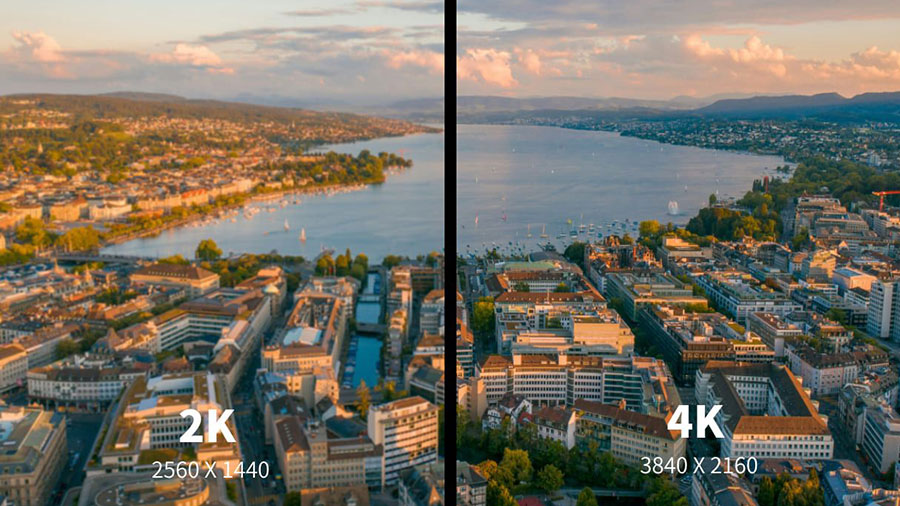
TFT screens integrate multiple backlight components to deliver 2K or 4K high-resolution images, providing a high-definition viewing experience. LED displays achieve resolutions exceeding 8K through varying pixel pitch LED panels and tiling configurations, delivering highly detailed, pixel-free visual experiences.
Color Performance
LED displays utilize the principle of three primary colors and feature 8 RGB channels capable of displaying over 16 million color combinations, creating vivid, immersive experiences.
TFT displays utilize thin-film transistors to broaden light refraction, covering wider color gamuts (100% sRGB and DCI-P3). However, their overall color performance remains slightly inferior to that of LED displays.
Refresh Rate
TFT-based display devices inherently lack refresh rates; they require integration with liquid crystal panel technologies like VA or IPS to achieve specific refresh rates. For example, a TFT monitor with VA technology offers a 60Hz refresh rate, while one with IPS technology provides 240Hz, both delivering smooth and natural display performance.
LED technology employs a unified IC system to zone-control screen LEDs, enabling refresh rates up to 7680Hz. This effectively eliminates screen tearing, stuttering, and flickering, delivering a more coherent visual experience with faster response times.
For photography needs, high-refresh-rate LED displays deliver crisp, smooth visuals without moiré patterns on devices like smartphones or cameras, ensuring an optimal shooting experience.
Energy Efficiency
Compared to TFT displays with 67% energy efficiency, LED technology optimizes circuit layout to deliver sustained luminance with minimal power consumption. This boosts overall energy conversion efficiency (over 87.4%), helping you reduce electricity costs.
Viewing Angle
TFT technology, compatible with other LCD panel technologies, enables displays with viewing angles ranging from 130° to 150°. Beyond this range, images appear blurred and reflective.
LED-based displays offer a 160° viewing angle both horizontally and vertically, effectively expanding the screen’s influence and enhancing viewing experiences from diverse angles.
Screen Size
TFT displays face size limitations, with individual screens capped at 110 inches, making them suitable only for small to medium-sized projects. LED displays, however, feature a modular design allowing unlimited tiling and customizable screen sizes to meet your project dimensions.

How to Choose Between TFT and LED Displays?
TFT technology enhances screen brightness and color reproduction, enabling the creation of small to medium-sized displays suitable for daily scenarios like office work, streaming shows, and document editing.
LED displays significantly outperform TFT monitors in both visual quality and functionality, with versatile applications spanning commercial, entertainment, sports, and transportation sectors.
For instance, in commercial settings, LED displays capture attention through visually striking advertisements, boosting campaign visibility. In sports arenas, wide-angle LED screens accurately convey scores and game details to spectators, enhancing engagement.
Frequently Asked Questions
Why choose LED displays over TFT monitors for large-scale projects?
Unlike TFT monitors, which have size limitations and visible black seams when tiled, LED displays enable seamless integration of multiple cabinets. This delivers a perfectly flat, uninterrupted viewing experience.
TFT vs. LED: Which technology offers superior heat dissipation in display devices?
We conducted multiple thermal tests on TFT and LED displays of equivalent sizes, including continuous operation for 72 hours and use in high-temperature environments. Results consistently show that LED displays outperform TFT monitors in heat dissipation.
This advantage stems from LED technology’s use of high-thermal-conductivity metal materials in display construction, enabling rapid heat transfer from internal components to the exterior and improving screen operational efficiency.
Do LED displays have a longer lifespan than TFT displays?
Yes. TFT displays have an average lifespan of 50,000 hours, while LED displays average 100,000 hours—twice as long. This allows for extended use and reduces replacement costs.
JYLED can customize LED displays to meet your exact requirements!
JYLED possesses advanced LED technology and maintains close partnerships with several renowned LED control software companies. We can tailor LED displays specifically for your project needs.