Project overview
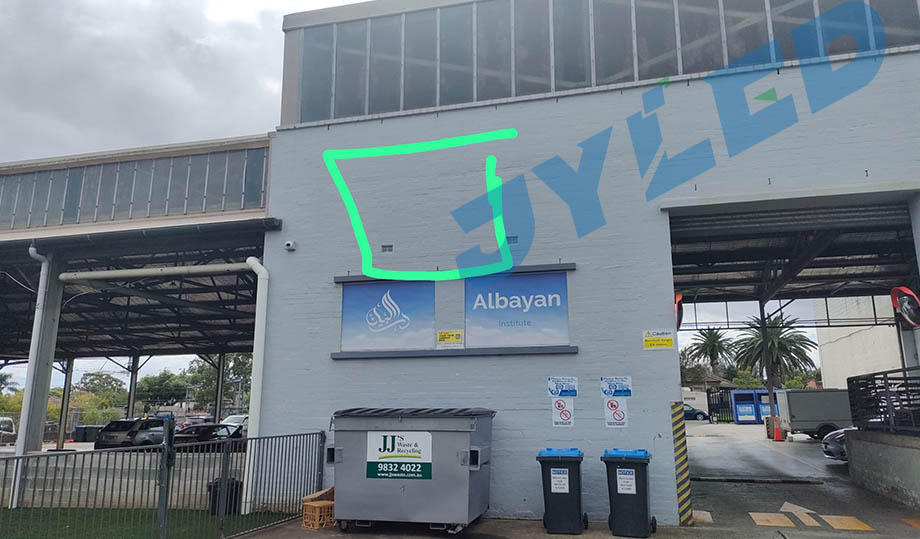
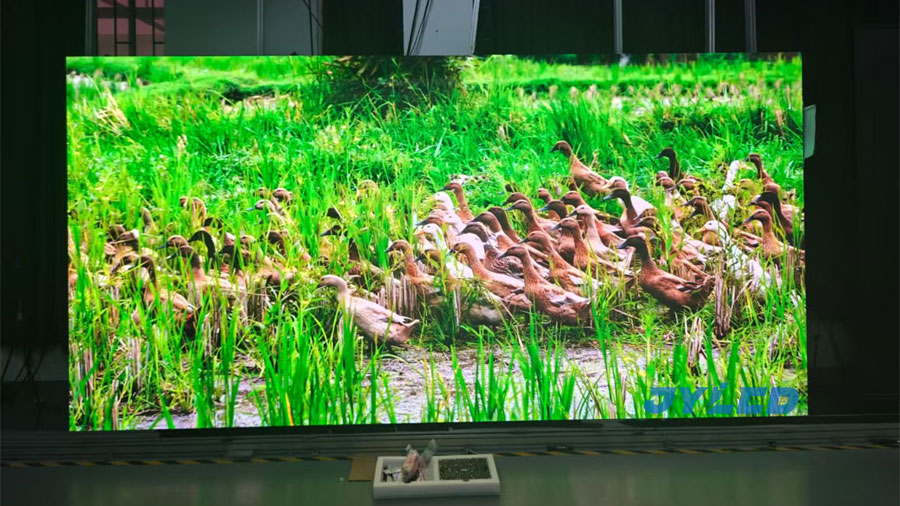
The customer for this project owns a large shopping mall in Panama. The final product selected for the project was a P1.538 COB LED display. The screen, measuring 1 × 6 m with a total area of 6 m², was suspended from the ceiling in the center of the mall.
The customer purchased the LED display primarily to present product advertisements, promotional campaigns, and announcements for other important events. This allows shoppers to receive information about mall activities as soon as they enter, helping the mall increase its revenue.
- Project location: A shopping mall in Panama
- Installation date: June 2026
- Installation method: Suspended installation
- Screen pixel pitch: 1.538 mm
- Refresh rate: 3840 Hz
- Packaging technology: COB
- Screen brightness: Up to 750 nits
- Screen area: 6 m² (1 m × 6 m)
- Screen thickness: 10 cm
- Ingress protection rating: IP32
- Maintenance method: Front maintenance
Why choose a P1.538 LED display?
According to the mall floor plan provided by the customer, the shopping mall is a rectangular space measuring 8 × 20 m. The customer initially wanted three identical small LED displays suspended from the ceiling for promotional use during holidays and special sales events.
The customer planned to install one LED display at each of three locations—5 m, 10 m, and 15 m from the mall’s main entrance—so that the screen content could reach shoppers throughout the mall.
Given the mall’s actual layout, shoppers can come within approximately 1.5–1.8 m of a screen when walking underneath it. JYLED’s engineers therefore recommended a P1.538 display. Its optimal viewing distance is 1.54–3.08 m, helping ensure that nearby shoppers see a clear, detailed image.
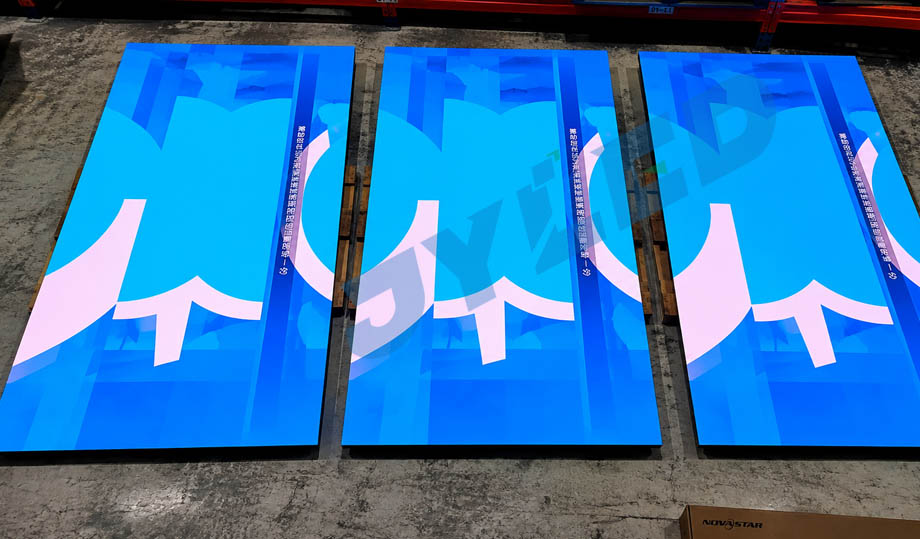
The customer initially confirmed a plan involving three 2 × 1 m P1.538 LED displays. We configured one NovaStar MCTRL300 video processor for each display to manage its content. The customer later decided to combine the three displays into one LED video wall in the center of the mall, so we changed the control system to one NovaStar MCTRL660.
Why choose COB LED panels?
To provide a wider viewing angle, we selected a P1.538 LED display featuring COB packaging technology. The P1.538 COB LED panels offer the following advantages:
- Wider viewing angle: A conventional LED display has a viewing angle of 160°, while this COB LED display offers a 170° viewing angle, allowing the image to reach more viewers on both sides.
- Lower power consumption: COB technology simplifies the LED chip circuitry and reduces overall power consumption, helping users save on electricity costs during long-term operation.
Specifications of the P1.538 indoor LED display in Panama
Category | Model | Brand | Quantity |
LED | 1212 RGB | Nationstar | 2,535,000 pcs |
LED module size | 250 × 250 mm | JYLED | 96 pcs |
LED cabinet size | 250 × 1000 mm | JYLED | 24 pcs |
| Cabinet material | Die-cast aluminum | JYLED | / |
| Control device | NovaStar MCTRL660 | NovaStar | 1 pc |
Power supply | 200 W | XingXiu | 96 pcs |
Strict aging tests ensure reliable screen brightness
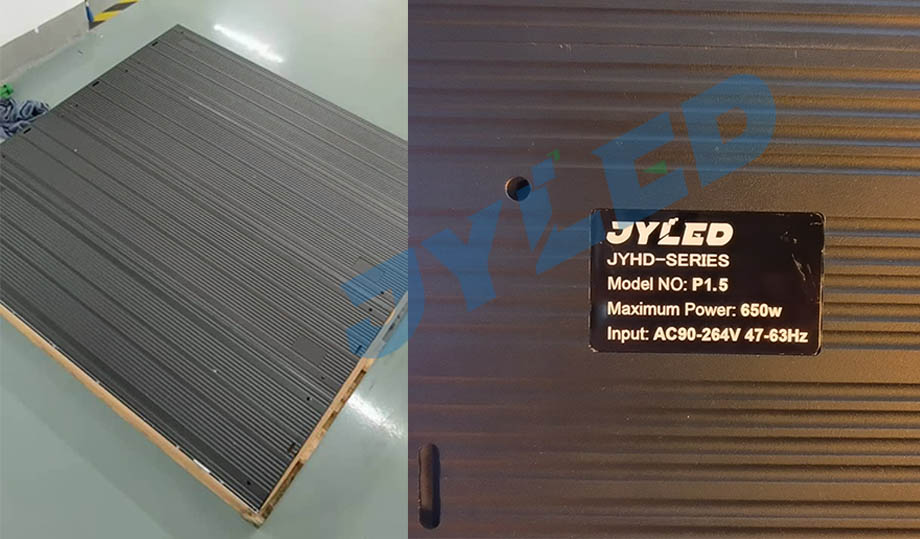
Before shipment, JYLED’s factory conducts a 72-hour aging test on the P1.538 LED display. The aging test serves the following purposes:
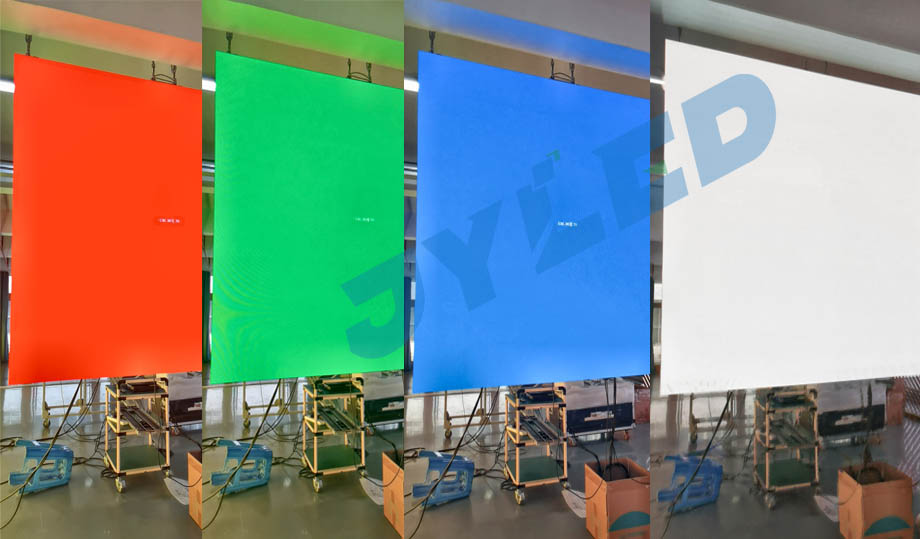
Step 1: Detect defective LEDs and uneven brightness
The screen cycles through solid red, green, blue, white, and other colors. This allows workers to quickly identify defective or dead LEDs, uneven brightness, color differences, and other problems so that any nonconforming modules can be removed promptly.
Step 2: Verify stable LED display operation
The screen plays video content, allowing workers to check for color shifts and verify the stability of the electrical circuits during operation.
Packing and shipping the LED cabinets
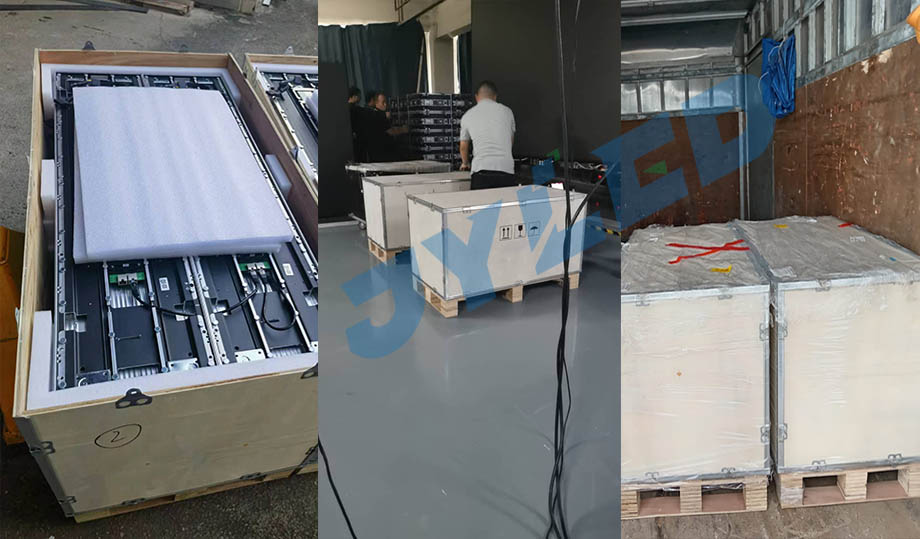
Workers pack the LED display and its components only after all LED modules and cabinets have been manufactured and passed quality inspection. They then contact JYLED’s official freight forwarding partner to collect the shipment.
The customer in Panama selected a fixed-installation solution, so the screen would not need to be installed and dismantled frequently. To reduce the customer’s costs, we recommended wooden-crate packaging and sea freight to the destination port, where the customer could collect the shipment.
Engineers provide installation and operational testing guidance
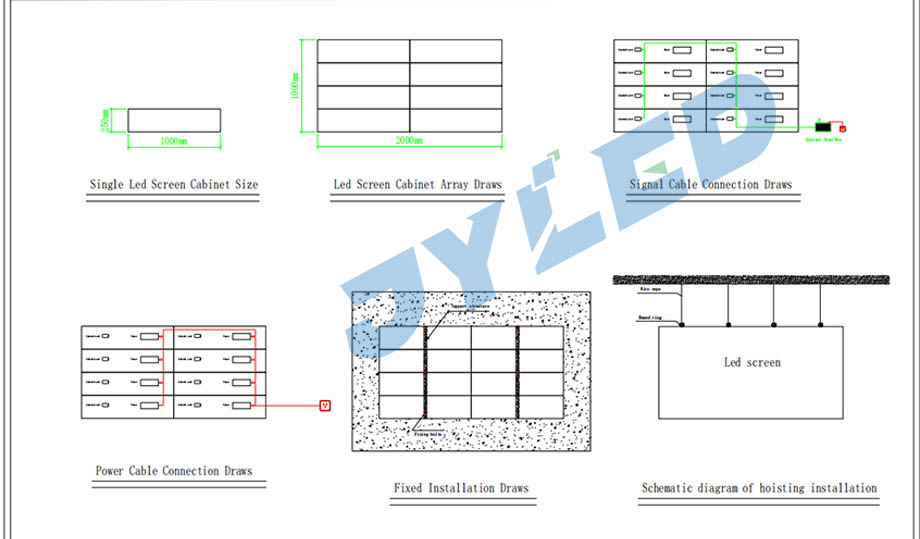
The customer had no previous experience installing LED displays. JYLED’s engineers therefore prepared illustrations showing how to install the LED modules, along with detailed diagrams for installing the LED cabinets.
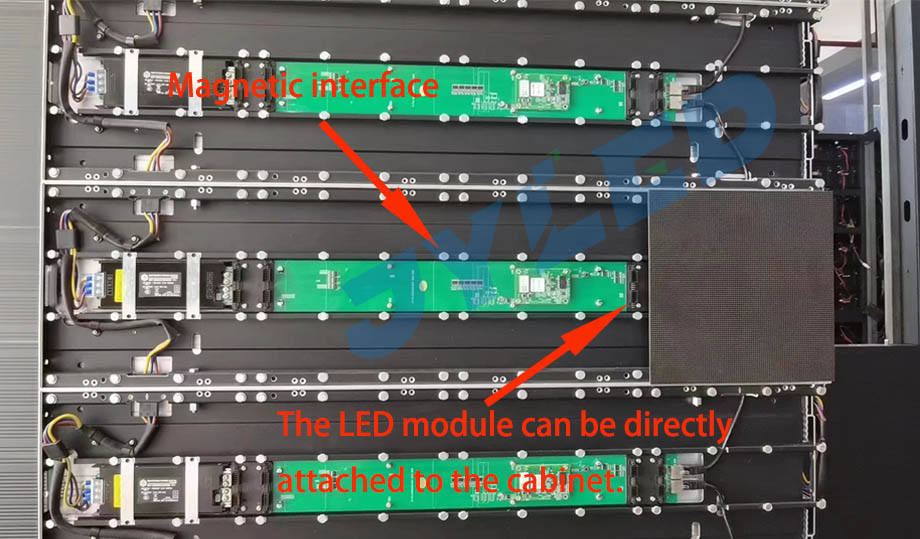
The display uses magnetic LED modules, allowing workers to attach a module to an LED cabinet in approximately three seconds. This magnetic design also supports front maintenance, making LED module installation and removal fast and convenient.
The LED cabinets have evenly spaced screw holes. Workers only need to install the mounting components and use the corresponding screw holes to secure the LED cabinets.
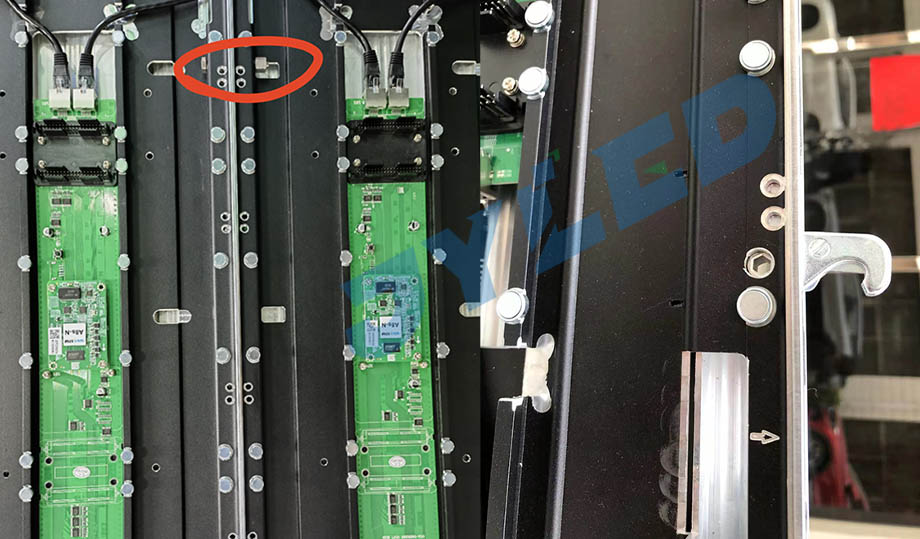
After joining the LED cabinets, workers can connect the power and signal cables between the cabinets according to the drawings, ensuring that the LED display operates correctly.
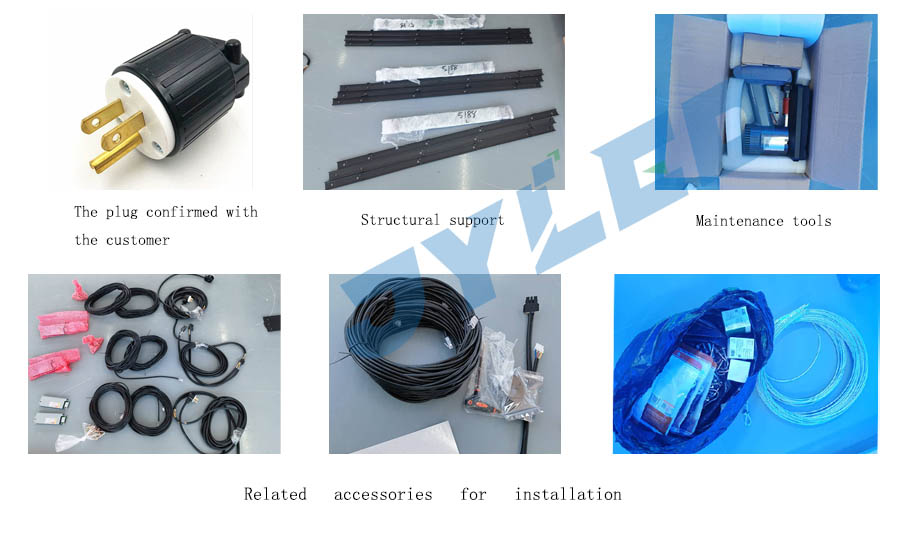
In addition, the engineers photograph each important component required to operate the screen and explain its purpose to the customer. This helps prevent confusion about which components to use during subsequent installation and operation.
In addition to preparing the necessary installation materials in advance, the customer contacted JYLED’s engineers for remote installation assistance after receiving the shipment. The engineers guided the workers in real time as they installed the LED cabinets and cables and connected the LED video processor to manage the displayed content. Assistance continued until the image met the customer’s expectations.
Conclusion
After the customer installed the P1.538 LED display in the shopping mall in Panama, the highly visible screen allowed the mall to promptly communicate information about promotions and new products to shoppers, encouraging purchases.
According to the customer’s feedback, the mall’s revenue increased by approximately 5%–8% within one to two months after the display was installed.
FAQ
What Are the Standard Module Size, Module Resolution, And Pixel Density of a P1.538 LED Display?
A P1.538 LED display has a pixel density of 422,500 pixels/m². Standard module sizes include 320 × 160 mm and 250 × 250 mm. This project used standard 250 × 250 mm modules, each with a resolution of 162 × 162 pixels.
Can a P1.538 LED Display Achieve Native Full HD or 4K Resolution?
A P1.538 LED display with custom-sized LED modules can achieve native Full HD or 4K resolution, although customization will increase the cost. We recommend assembling the screen with standard-sized P1.538 LED cabinets. A resolution slightly above or below Full HD or 4K will not produce a significant difference in perceived display quality.
How Should You Choose Among P1.25, P1.538, P1.667, And P1.86?
As the pixel pitch increases, the optimal viewing distance becomes longer. For the same screen area, the resolution becomes lower, and the corresponding purchase cost also decreases.
You should select the appropriate LED display model based on the installation site and actual project requirements. If you are unsure which model is suitable for your project, you can contact JYLED’s engineers for a recommended solution.
How Much Does a P1.538 LED Display Cost, And What Project Information Is Required for an Accurate Quotation?
The price of a P1.538 LED display depends not only on the pixel pitch but also on the refresh rate, screen dimensions, packaging technology, LED cabinet material, control system, and other factors. When requesting a quotation, please provide the installation site, screen dimensions, viewing distance, expected content, and other relevant project information so that you can receive an accurate quotation.
Should a P1.538 LED Display Use SMD, GOB, Or COB Packaging?
For a fine-pitch LED display of this type, we generally recommend COB packaging. COB technology can reduce the production cost of fine-pitch displays, making it more cost-effective than the other two packaging technologies. COB LED panels also provide a wide viewing angle and detailed images.